

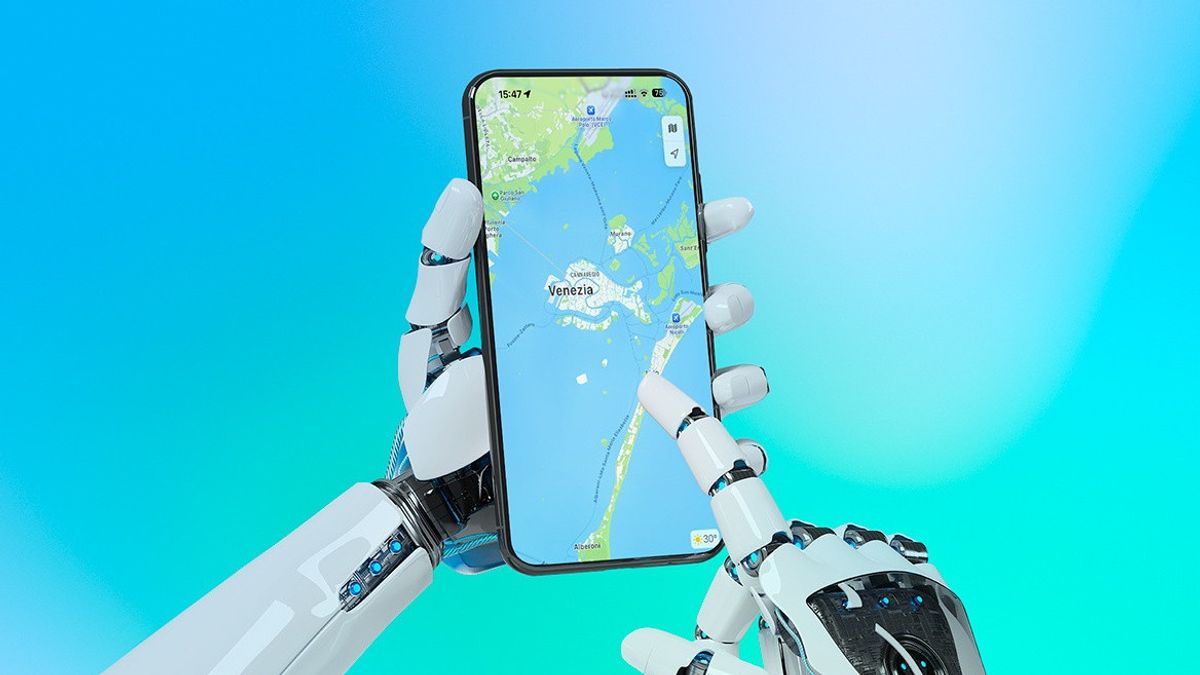


JAKARTA - In recent years, artificial intelligence (AI) has become an integral part of internet use, changing the way we seek and verify information.
At the peak of the holiday season, Kaspersky decided to find out how often people use AI in planning travel agendas, and what aspects tourists are ready to entrust to artificial intelligence.
As a result, a survey involving 3,000 respondents from 15 countries confirmed that AI had become a widely spread tool among active internet users, 72% of respondents admitted to using AI at least once.
The most popular use of AI is for research (76%), followed for work purposes (45%) and learning (40%). Meanwhile, entertainment (39%) and technology experiments (39%) occupy the next position. The use of AI for travel planning is only 28%.
Even so, the level of satisfaction of AI users in travel planning is very high: 96% are satisfied, with 44% assessing perfect' and 52% good'. A total of 84% of respondents even said they would return to using AI in the future.
In the context of travel, AI is mostly used for research. A total of 70% of respondents rely on AI to find events or activities, 66% to choose accommodation, 60% to look for restaurants, and 58% to help with ticket purchases.
SEE ALSO:
-
 | TEKNOLOGI
ChatGPT Segera Hadirkan Parental Controls, Didukung Masukan Ahli Kesehatan Mental
03 September 2025, 09:30 -
 | TEKNOLOGI
Komdigi Tegaskan Komitmen Jaga Ruang Digital yang Aman dan Sehat
03 September 2025, 08:35 -
 | TEKNOLOGI
TikTok Tambahkan Fitur Voice Note, Foto, dan Video di DM, Saingi WhatsApp dan Instagram
03 September 2025, 09:01 -
 | TEKNOLOGI
Chatbot AI Bisa Dimanipulasi dengan Sanjungan dan Tekanan Sosial
03 September 2025, 04:05
Interestingly, families with children are more active in utilizing various AI functions than childless tourists, suggesting that AI can help save time.
However, for direct bookings, AI users are still limited. Only 45% of respondents booked hotels via AI, 43% booked tickets, and 38% ordered restaurants.
Interestingly, 45% of respondents also used AI to answer questions related to visas and migrations, which Kaspersky said could raise its own concerns.
The English, Chinese, Japanese, Arabic, and French versions are automatically generated by the AI. So there may still be inaccuracies in translating, please always see Indonesian as our main language. (system supported by DigitalSiber.id)


