
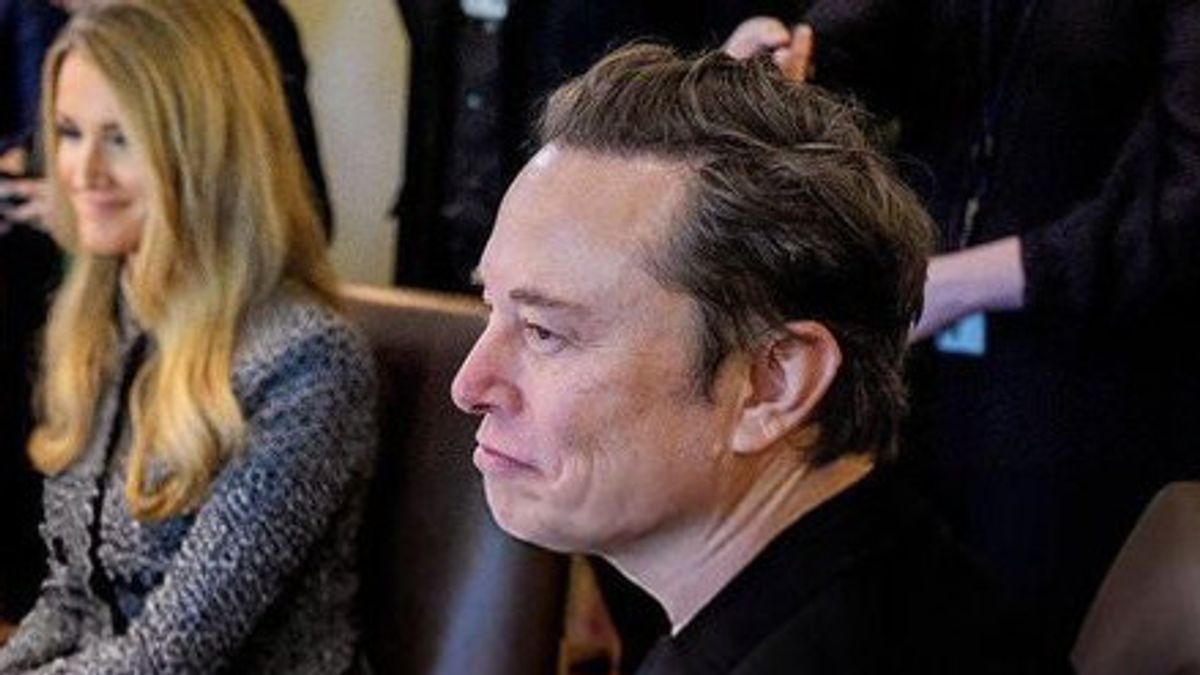


JAKARTA - billionaire Elon Musk's artificial intelligence (AI) startup on Monday, August 25, sued Apple and creator ChatGPT, OpenAI, in Texas federal court, United States. The lawsuit accuses the two of conspiring illegally to hinder competition in the artificial intelligence industry.
According to lawsuit documents, Apple and OpenAI are accused of "locking the market to maintain their monopoly and prevent innovators like X and xAI from competing."
Apple, in its partnership with OpenAI, has integrated the ChatGPT into its operating system for the iPhone, iPad, and Mac.
"If it weren't for his exclusive deal with OpenAI, Apple would have no reason not to feature the X app and the Grok app more prominently on its App Store," the lawsuit continued.
SEE ALSO:
-
 | TEKNOLOGI
Industri Gim Lokal Sudah Maju, Namun Masih Terkendala Akses Pendanaan
26 Agustus 2025, 19:30 -
 | TEKNOLOGI
Google Akan Verifikasi Pengembang Aplikasi Android di Luar Play Store
26 Agustus 2025, 19:05 -
 | TEKNOLOGI
Komdigi Buka Lelang 1,4 GHz, Internet Murah 100 Mbps Rp100 Ribu Bisa Terwujud?
26 Agustus 2025, 18:05 -
 | TEKNOLOGI
Google Akan Kuras Baterai Pixel 10 Setelah 200 Siklus Pengisian Daya
26 Agustus 2025, 17:35

In their lawsuit, xAI stated that they demanded compensation which was estimated at billions of dollars.
"This latest lawsuit is consistent with the pattern of harassment that Mr. Musk continues to abuse," an OpenAI spokesperson said in a statement.
Apple has not yet responded immediately to a request for comment.
On Monday, Musk, through his social media platform, X, echoed the allegations in the lawsuit by writing, "One million reviews with an average of 4.9 for @Grok and Apple still refusing to mention Grok on any list."
Previously, Musk had threatened to sue the Cupertino, California-based company. He wrote on X that Apple's behavior "made any AI company other than OpenAI impossible to reach #1 on the App Store."
OpenAI's chatGPT has become the fastest growing consumer app in history months after its launch in late 2022.
Musk's xAI acquired X in March for $33 billion to improve his chatbot training skills. Musk has also integrated Grok chatbot into a vehicle made by his electric car company, Tesla.
xAI launched less than two years ago and competed with Microsoft-backed OpenAI, as well as with Chinese startup DeepSek.
Antitrust legal experts who are not involved in the lawsuit say that Apple's dominant position in the smartphone market can strengthen xAI's claim that the company illegally tied its iPhone sales with a ChatGPT from OpenAI.
However, they also mentioned that Apple could argue on the grounds that partnerships with OpenAI are a competitive business decision in the environment, and Apple has no obligation to help its competitors gain market share.
Herbert Hovenkamp, a lecturer at the University of Pennsylvania law school, said Apple may also argue that there are security or operational reasons to integrate AI into its operating system.
Broadly speaking, the lawsuit could provide a court in the United States with the first chance to assess whether there is a defined market for AI and what it includes, an issue of thresholds in antitrust litigation.
"This is a preliminary sign of how courts will treat AI, as well as antitrust and AI," said Christine Marijuw, a professor at the University at the Buffalo School of Law.
Separately, Musk has also sued OpenAI and its CEO, Sam Altman, in California's federal court to stop the company's transition from a nonprofit to a profit-oriented business. Musk co-founded OpenAI with Altman in 2015 as a non-profit organization.
Apple's App Store practice has been the focus of various lawsuits. In one of the ongoing cases by video game maker "Fortnite", Epic Games, a judge ordered Apple to allow greater competition for in-app payment options.
The English, Chinese, Japanese, Arabic, and French versions are automatically generated by the AI. So there may still be inaccuracies in translating, please always see Indonesian as our main language. (system supported by DigitalSiber.id)


