

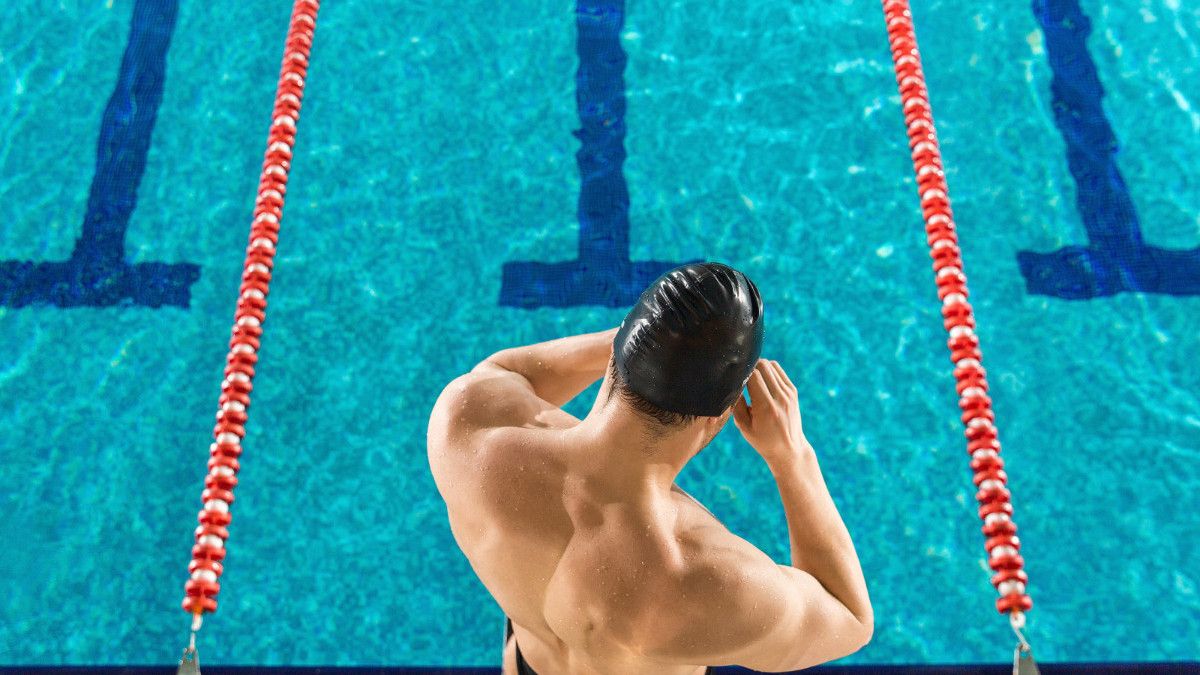


YOGYAKARTA - Swimming is one of the most popular water sports in the world. Besides being a recreational activity, it is also a competitive event strictly regulated by official international bodies.
In every competition, pool size plays a crucial role in ensuring fairness and accuracy of timing. Therefore, understanding pool length based on international standards is crucial for coaches, athletes, and sports facility managers.
History of Swimming Pool Standardization
Swimming pool size standards are established by the Fédération Internationale de Natation (FINA), the international governing body for swimming. The purpose of this standardization is to ensure that every pool used in competitions has the same size and depth, so that competition results can be objectively compared worldwide.
Before the existence of official standards, each country had different pool sizes, making it difficult to measure times and set world records. Now, every swimming pool used for international competition must meet the technical requirements set by FINA. Also, learn how to breathe deeply while swimming.
Swimming Pool Lengths Based on International Standards
According to FINA regulations, there are two types of pools used in official competitions: long course pools and short course pools.
1. Long Course Pool
This type of pool has a length of 50 meters according to international standards. This pool is used in major events such as the Olympics and World Championships. It has a minimum width of 25 meters with an average depth of 2 meters or more. The number of lanes used is eight to ten, each approximately 2.5 meters wide.
2. Short Course Pool
Short course pools are 25 meters long and are used in national championships or specific competitions such as the FINA World Swimming Championships (25m). Although shorter, this type of pool still adheres to strict standards in terms of depth, lane width, and automatic timing system.
Swimming Pool Depth and Structure
In addition to the length of the swimming pool according to international standards, depth is also an important factor that should not be overlooked. FINA stipulates a minimum depth of 2 meters to prevent excessive waves and ensure swimmers' safety during starts and turns.
The pool walls must be perpendicular and smooth to allow swimmers to execute their finishing touches and turns perfectly. Each lane is demarcated by a lane rope to reduce water turbulence and prevent disturbance to swimmers in adjacent lanes.
Starting and Timing System
In professional swimming competitions, accurate timing is crucial. Therefore, swimming pools must be equipped with starting blocks and electronic timing systems installed at both ends of the pool.
Automatic touchpads record the time when swimmers start, turn, and touch the finish line. All of these systems are adjusted to the length of the swimming pool according to international standards to eliminate time discrepancies due to differences in distance.
The Function of Standardizing Swimming Pool Sizes
The implementation of standard swimming pool sizes is not only for competition purposes, but also for safety and training efficiency. With uniform dimensions, athletes from various countries can train under the same conditions as in official competition venues.
Furthermore, facilities that meet internationally standardized swimming pool lengths can serve as national training venues or host large-scale competitions. This standardization also helps world record bodies objectively verify athletes' times.
Generally, the international standard swimming pool length is 50 meters for long courses and 25 meters for short courses. These dimensions are set by FINA to ensure uniformity and fairness in time measurement across all swimming competitions worldwide. A minimum depth of two meters, a lane width of 2.5 meters, and equipment such as lane ropes and touch pads are also essential components of the international standard.
By understanding and implementing these standards, coaches, athletes, and swimming facility managers can create a professional and competitive training environment and support the advancement of Indonesian swimming on the global stage.
So, after learning about swimming pool lengths based on international standards, check out other interesting news on VOI.ID. It's time to revolutionize your news!
The English, Chinese, Japanese, Arabic, and French versions are automatically generated by the AI. So there may still be inaccuracies in translating, please always see Indonesian as our main language. (system supported by DigitalSiber.id)


