



JAKARTA - The government will set a new policy that will have an impact on electric vehicles. Through the Minister of Home Affairs Regulation (Permendagri) Number 11 of 2026 which was enacted on April 17, 2026, electric vehicles are now included in the regional taxation scheme.
The policy brought significant changes, especially for battery-based electric vehicles or battery electric vehicles (BEV). If previously received various incentives, now owners of electric vehicles, both two-wheeled and four-wheeled, are starting to be subject to Motor Vehicle Tax (PKB) and Motor Vehicle Name Return Tax (BBNKB).
Previously, these two components were released as an effort to encourage the adoption of environmentally friendly vehicles. However, this new rule does not necessarily make the tax on electric vehicles uniform throughout the region.
Regional governments are given the authority to determine the amount of tax, so that the nominal amount imposed can vary, even remain zero rupiah depending on the policies of each region. President Director of Chery Group Indonesia Zeng Shuo, stated that his party is ready to follow the applicable regulations.
"We are ready for this new policy," said Zeng Shuo at the handover of the iCAR unit in Kuningan, South Jakarta, not long ago.
He added that the company did not want to speculate on the impact of this policy on consumer interest. "If that we can't predict, but what we can do is follow government regulations and regulations," he said.
Regarding the potential adjustment of the price of electric vehicles, Zeng emphasized that the decision will be made after the rules are in place and see the market response. "We will decide after the regulation is in place and the feedback from customers," said Zeng Shuo.
Previously, electric vehicles in Jakarta enjoyed a number of incentives, such as exemption from PKB and exemption from odd-even rules. However, with the enactment of the latest Permendagri, electric vehicles are no longer completely tax-free.
Ownership and the process of changing the name are still subject to tax, including PKB and BBNKB. Even so, the central government still opens the opportunity for incentives, both in the form of tax reductions and exemptions, as stipulated in Article 19 of the policy.
With this scheme, the tax policy for electric vehicles in the future is no longer uniform, but depends on the policies of each local government.
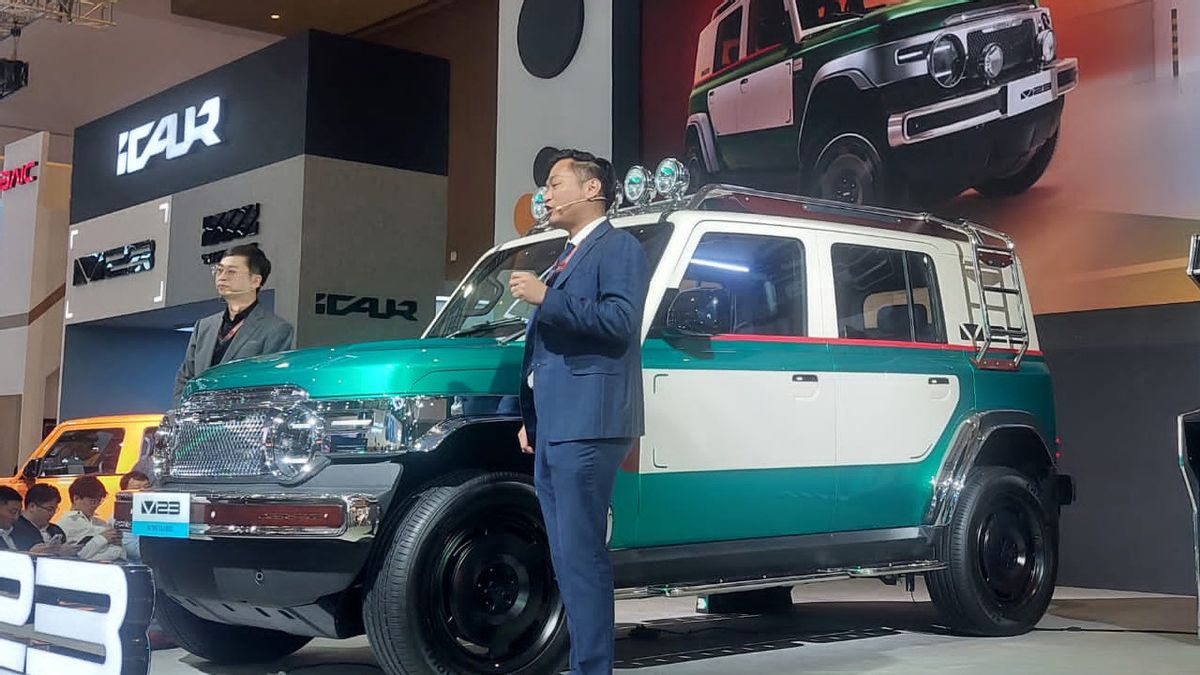
Photo: President Director of Chery Group Indonesia Zeng Shuo. (Photo: Indra/VOI
The English, Chinese, Japanese, Arabic, and French versions are automatically generated by the AI. So there may still be inaccuracies in translating, please always see Indonesian as our main language. (system supported by DigitalSiber.id)
Most Popular Tags
#Prabowo Subianto #donald trump #2026 World Cup #Febrie Adriansyah #8791Popular


