

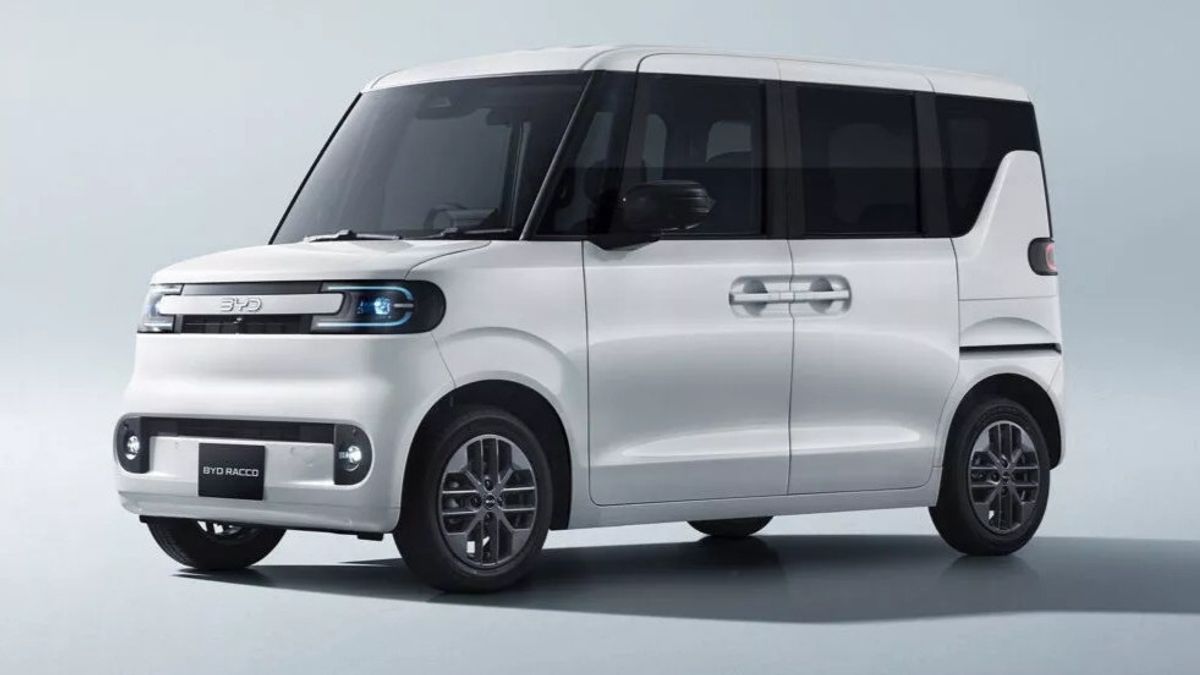


JAKARTA - The penetration of electric vehicles in Japan is still relatively low, with a contribution of less than 2 percent to new car sales. However, this does not prevent Chinese electric vehicle manufacturer BYD.
BYD tried its luck by launching an electric kei car last year to penetrate the domestic market. However, the effort is now facing a major challenge.
The Japanese government is known to have significantly cut subsidies for BYD vehicles, to only 150,000 yen or around Rp16 million. This figure has dropped drastically compared to the previous range of 350,000 yen to 400,000 yen, or around Rp37 to Rp42 million.
This step is inseparable from the revision of the policy on subsidies for electric vehicles in Japan, which now prioritizes vehicles with locally produced batteries. Meanwhile, the BYD model still relies on batteries made in China.
The policy is considered an effort by Japan to strengthen the domestic automotive industry amid the onslaught of Chinese manufacturers that are rapidly developing globally, including BYD which is now the sixth largest car manufacturer in the world.
In the new scheme, the Toyota bZ4X still receives the highest subsidy of up to 1.3 million yen or Rp138 million. The Nissan Ariya, which previously received a subsidy of 1.29 million yen, will also be adjusted to 1 million yen starting in 2027.
Interestingly, the Japanese government's support does not only flow to local brands. Tesla actually received a subsidy increase of 400,000 yen to 1.27 million yen, which is suspected to be related to the use of batteries from Panasonic.
Launching from Carscoops, Tuesday, March 31, Audi also enjoyed an increase in subsidies of around 320,000 yen to penetrate the figure of more than 1 million yen. Meanwhile, a number of Hyundai electric vehicle models also received an increase in incentives this month.
As reported by Nikkei Asia, the increase in subsidies will not be permanent. Starting in January, assistance for a number of brands such as Audi and Hyundai will be cut again, although the amount of reduction has not been announced.
Before this latest trimming policy was implemented, BYD had actually admitted its less competitive position in Japan. "We are in a very unfavorable position," said the company's head of the Japanese unit, Atsuki Tofukuji.
"The price difference [with companies like Toyota Motor] has increased to almost 1 million yen. We can't compete with the price of 350,000 yen," he continued.
The English, Chinese, Japanese, Arabic, and French versions are automatically generated by the AI. So there may still be inaccuracies in translating, please always see Indonesian as our main language. (system supported by DigitalSiber.id)


