

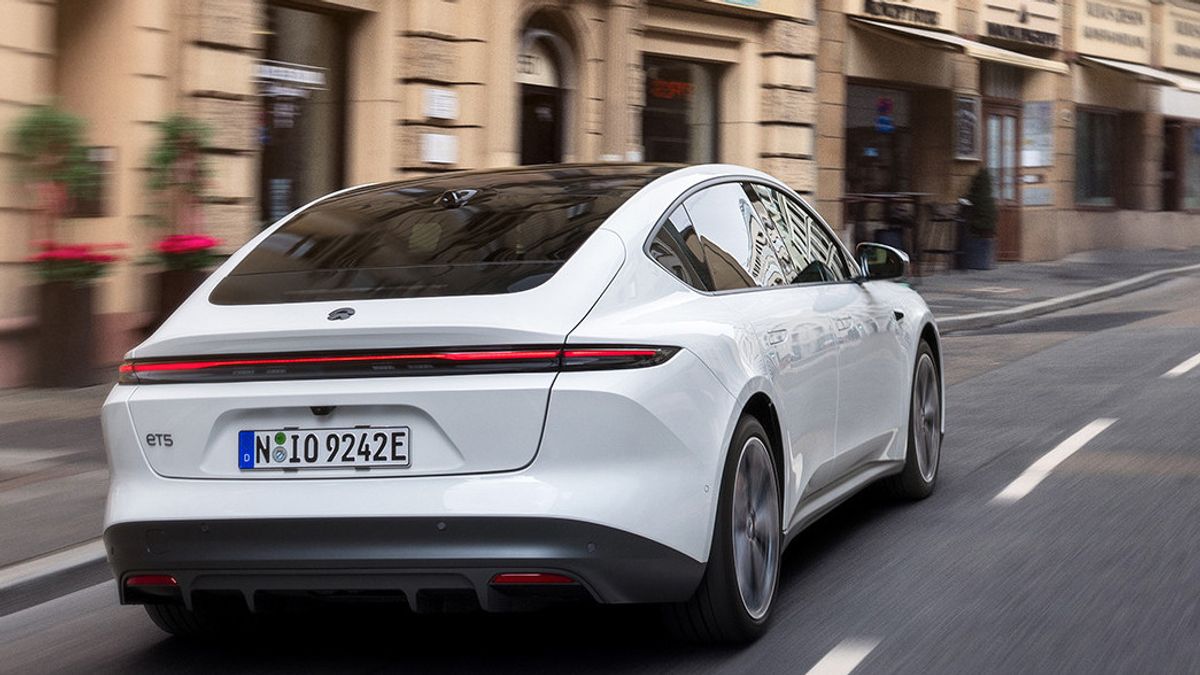


JAKARTA - Concerns about data security have resurfaced in Europe. This time, Poland is said to be preparing to impose restrictions on Chinese-made electric vehicles, especially in sensitive military areas.
This step follows a similar policy that was first implemented by the United Kingdom, which restricted Chinese electric car access to military zones. This is part of an effort to prevent potential leaks of confidential information.
Modern automotive technology ranging from cameras, radars, to sensors is considered capable of collecting sensitive data without the user's knowledge. As the population of electric vehicles in China increases on European roads.
In a recent study in Poland, even these cars are referred to as smartphones on wheels. The study highlights the ability of smart vehicles to scan the surrounding environment while recording important geolocation data, which potentially poses serious safety risks.
"Smart cars have a very large data collection capability through high-resolution cameras, sensors, and LiDAR systems, which use active 3D mapping technology," said Paulina Uznańska, the study's author.
"This creates a very high potential for the use of these vehicles for intelligence analysis purposes," he continued, as quoted by the national news agency PAP, Tuesday, February 3.
In response to the findings, the Chief of Staff of the Polish Army, Wiesław Kukuła, is reported to be issuing an official directive soon. Where, prohibit Chinese-made vehicles from entering all military installations in the country, including the surrounding parking areas.
Meanwhile, the Polish Ministry of National Defense confirmed that it was drafting a policy regarding the restrictions. In Britain itself, members of parliament have highlighted that the Chinese government has a legal basis for accessing data collected by cameras, sensors, and radars on vehicles using Chinese-made technology.
With a similar approach, the ban in Poland is expected to target not only brands such as BYD, MG Motor, Nio, XPeng, and Aiways. But also any vehicle that uses Chinese-made software or sensor components.
Not stopping at the military sector, a number of industry observers predict that similar restrictions have the potential to expand to other vital infrastructure, including airports. However, experts assess that the policy must be designed very carefully to remain in line with EU competition law and avoid potential negative reactions from regulators.
The English, Chinese, Japanese, Arabic, and French versions are automatically generated by the AI. So there may still be inaccuracies in translating, please always see Indonesian as our main language. (system supported by DigitalSiber.id)
Most Popular Tags
#Prabowo Subianto #donald trump #2026 World Cup #Febrie Adriansyah #8791Popular


