


JAKARTA – Despite facing difficult times due to declining sales, mass layoffs, and factory closures, Nissan hasn't given up. The Japanese manufacturer is instead continuing its efforts to recover with various new innovations that it believes will change the course of its future.
According to a report by InsideEVs on Tuesday, October 28, Nissan still has high hopes for the development of solid-state batteries and appears to be on track to be one of the first automakers to bring them to market.
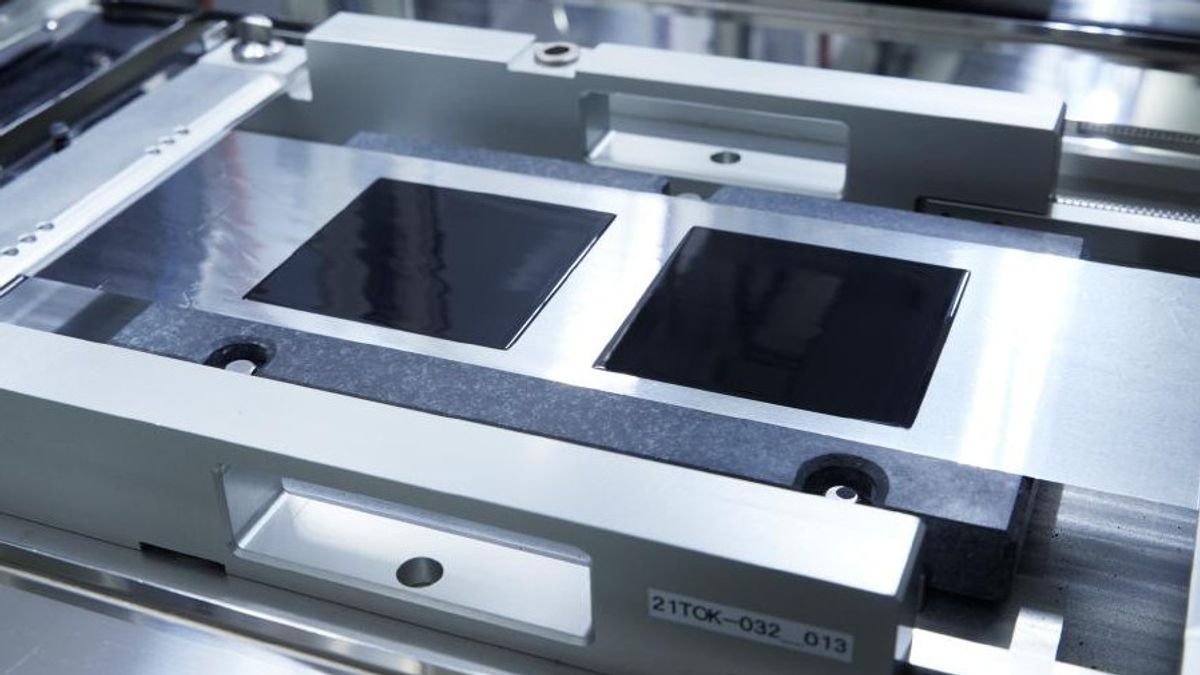
Nissan has even developed a prototype solid-state battery cell that it claims will be able to double the range of electric vehicles (EVs) when it enters production. Citing a Nikkei report, Nissan's solid-state battery has reportedly achieved its target performance for mass production, thanks to a collaboration with American startup LiCAP Technologies.
The Sacramento-based startup is known for its expertise in developing dry electrode technology, which eliminates the wet coating process—a typically expensive and time-consuming production step. Conventional wet-coating methods involve mixing active materials, conductive additives, and binders with solvents to form a liquid slurry that is then coated onto aluminum and copper sheets before being dried at high temperatures.
In contrast, the dry-coating method eliminates solvents and liquid slurry by directly mixing the raw materials into a solid powder and then applying it to the current collector using a roll press. This process is considered more efficient, faster, and environmentally friendly.
However, implementing the dry electrode method on a large scale remains a major challenge for the industry. Nissan has been operating a pilot production line for solid-state batteries since early this year. Meanwhile, LiCAP Technologies operates a 300-megawatt-hour production line in California for its Active Dry Electrode (ADE) technology.
LiCAP is now one of several American startups racing to master the future of the battery industry—delivering technology with longer ranges and shorter charging times.
The English, Chinese, Japanese, Arabic, and French versions are automatically generated by the AI. So there may still be inaccuracies in translating, please always see Indonesian as our main language. (system supported by DigitalSiber.id)


