
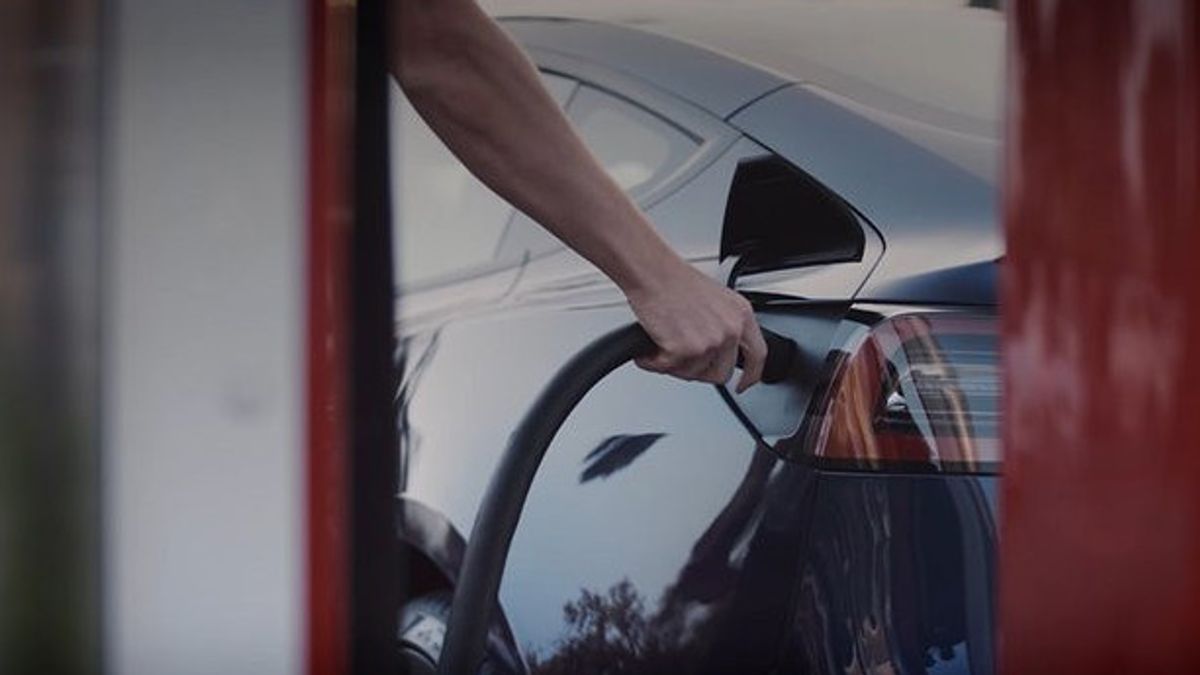


JAKARTA – For electric vehicle (EV) owners, battery life is one of the biggest concerns. Recently, a scientific study sparked heated debate after several media outlets misinterpreted it. Many believe that aggressive driving or "revving" an electric car can actually extend battery life. However, experts confirm that this understanding is completely wrong.
The study, published in the science journal Nature under the title "Dynamic cycling enhances battery lifetime," as reported by Carscoops on Monday, August 25, found that batteries subjected to dynamic discharge cycles (similar to real-world usage) aged more slowly than batteries tested with constant current cycles in the laboratory. Some then interpreted "dynamic" as "sporty driving" or pressing the accelerator pedal hard.
However, before you rush to accelerate your EV, battery experts from Aviloo clear up this misconception. They explain that aggressive driving will inevitably cause the battery to age faster. Why? Because fast driving increases energy consumption, which means more charge cycles, more stress on the battery, and accelerated degradation.
Aviloo conducted tests on 402 identical EVs and found that efficient driving is the most effective way to extend battery life. Aviloo expert Nikolaus Mayerhofer stated that efficient driving can save around 10 percent of energy.
"This means that 100,000 km of efficient driving is roughly equivalent to 110,000 km of battery life with aggressive driving," he explained.
SEE ALSO:
-
 | MOBIL
Irit BBM, Geely Galaxy M9 PHEV Tembus 40.000 Unit Pemesanan dalam 24 Jam
25 Agustus 2025, 10:18 -
 | OTOINFO
Mengenal Sistem Mengemudi "Hands-Free" Canggih Generasi Terbaru dari Subaru
25 Agustus 2025, 09:42 -
 | MOBIL
Mitsubishi Delica Mini Dapat Pembaruan, Desain Eksterior hingga Interior Berubah Total
23 Agustus 2025, 12:19
Aviloo does not dispute the findings of the Nature study, only the public's misinterpretation. To maximize EV battery life, experts still recommend widely recognized best practices:
- Drive as efficiently as possible.
- Avoid using fast charging unless absolutely necessary.
- Don't charge to 100 percent regularly.
- Don't leave your car parked for long periods with a full battery.
However, there's good news for those who find the tips above too much trouble. A separate study in Germany found that a VW ID.3 lost only 13 km of range after driving 172,000 km in four years. This is despite the car being almost always fully charged and frequently left parked with a full battery.
This demonstrates the remarkable durability of modern batteries, although driver style remains a significant factor in maintaining long-term battery health.
The English, Chinese, Japanese, Arabic, and French versions are automatically generated by the AI. So there may still be inaccuracies in translating, please always see Indonesian as our main language. (system supported by DigitalSiber.id)


