


JAKARTA - The two-year Auto Shanghai automotive exhibition is again held on an unprecedented scale. Even with all the current global crises, the cast is more lively than the previous exhibition. It is recorded from the data of the organizers, the exhibition which opens April 23 and will end on May 2, which will be attended by nearly 1,000 domestic and international exhibition participants crowded the exhibition space, marking a high enthusiasm for the development of the automotive industry, especially in the era of the new energy vehicle (NEV).
However, amid the sparkling innovation and dominance of electric vehicles, reported by CarNewsChina, Monday, March 28, the Auto Shanghai 2025 was also marked by the absence of a number of well-known automotive brands. Their absence is in the spotlight and indicates a significant shift in trends in the global automotive landscape, especially in the dynamic Chinese market.
The Absence Of The Korean Giants And A Number Of European Brands
A surprising phenomenon occurred with the simultaneous absence of three South Korean automotive giants: Hyundai, Kia, and Genesis. This is the first time since entering the Chinese market in 2002, the big brands from the Land of Ginseng have not participated in this prestigious exhibition. Their absence is thought to have occurred in the midst of the struggle of the Korean brand which experienced a decline in market share in China, holding only 1.6 percent by the end of 2024.
Although not present at the exhibition, Beijing Hyundai actually held a strategic communication meeting in Shanghai a few days before the event. On that occasion, they introduced their first pure electric SUV platform, ELEXIO. Despite current challenges, the company affirms its commitment to the Chinese market through the "In China for China to Global" strategy, signaling ambition to make China a production base for the global market.
In line with Hyundai, their luxury division, Genesis, has previously announced entering "era 2.0" with a focus on more mature operations while preparing for further expansion in China's future market.
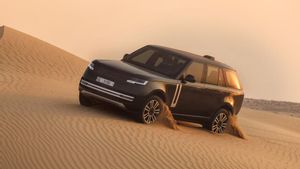
Apart from Korean brands, a number of European brands, particularly from France and Britain, have also chosen not to participate in the Auto Shanghai 2025. France's Citroatur and Peugeot, as well as Jaguar and Land Rover from the UK, are not visible at the exhibition hall. Land Rover chose a different path by holding separate communication events to discuss their electrification strategy in China.
Another interesting trend is the reduced presence of top luxury brands. Unlike the 2023 exhibition, where Maserati, Lamborghini, Rolls-Royce, Bentley, and Porsche share pavilions, this year only Bentley and Porsche maintain their existence in Auto Shanghai. This withdrawal coincided with a significant decline in sales in China's ultra-luxury segment. 53 percent annual decline in the first quarter of 2025 for vehicles with prices above 1 million yuan (around Rp. 2.3 trillion rupiah).
SEE ALSO:
Local Brand Domination In Premium Segment
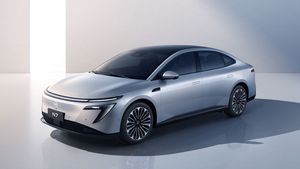
Amid the decline in imported luxury brands, China's domestic brands are actually increasingly showing its tail in the premium segment. The luxury brand BYD, Yangwang, which recently surpassed 10,000 cumulative sales units, leads the pavilion alongside other BYD subsidiaries. In addition, newcomers to MAextro S800, which openly targeted Maybach and Rolls-Royce consumers, made its debut ahead of its official launch in May. This move indicates the big ambition of local producers to seize the high-end market.
The electric vehicle startup sector (EV) has also experienced a significant shift. Several startups that are facing financial difficulties, such as HiPhi, Jiyue, and Neta, are not visible to their noses at the exhibition. The three companies are indeed grappling with quite heavy operational challenges, ranging from HiPhi who is entering the bankruptcy process, Jiyue who is involved in a dispute with suppliers, to Neta who is in debt problems.
As a substitute for them, new players such as Xiaomi Automotive, Leapmotor (now supported by Stellantis), and the HIMA brand under Huawei are attracting great attention. Their presence represents the latest wave of innovations from China's increasingly mature and competitive automotive industry.
Despite the absence of several old players, Auto Shanghai 2025 still recorded a record number of participants, demonstrating the vitality and attractiveness of China's automotive market. The dominance of new energy vehicles (NEV) at this exhibition further emphasizes the direction of the global automotive industry towards electrification. The success of local brands in penetrating the premium segment and the emergence of new players in the EV sector provide an overview of the increasingly fierce competition and innovation that continues to grow in the world's largest automotive market.
The English, Chinese, Japanese, Arabic, and French versions are automatically generated by the AI. So there may still be inaccuracies in translating, please always see Indonesian as our main language. (system supported by DigitalSiber.id)
Most Popular Tags
#Prabowo Subianto #donald trump #Febrie Adriansyah #8791 #giias 2026Popular


