


In the midst of severe congestion, a man was found lifeless inside his car. The location is on the Jelambar flyover, West Jakarta. He is 51 years old. The car broke down, the traffic was total.
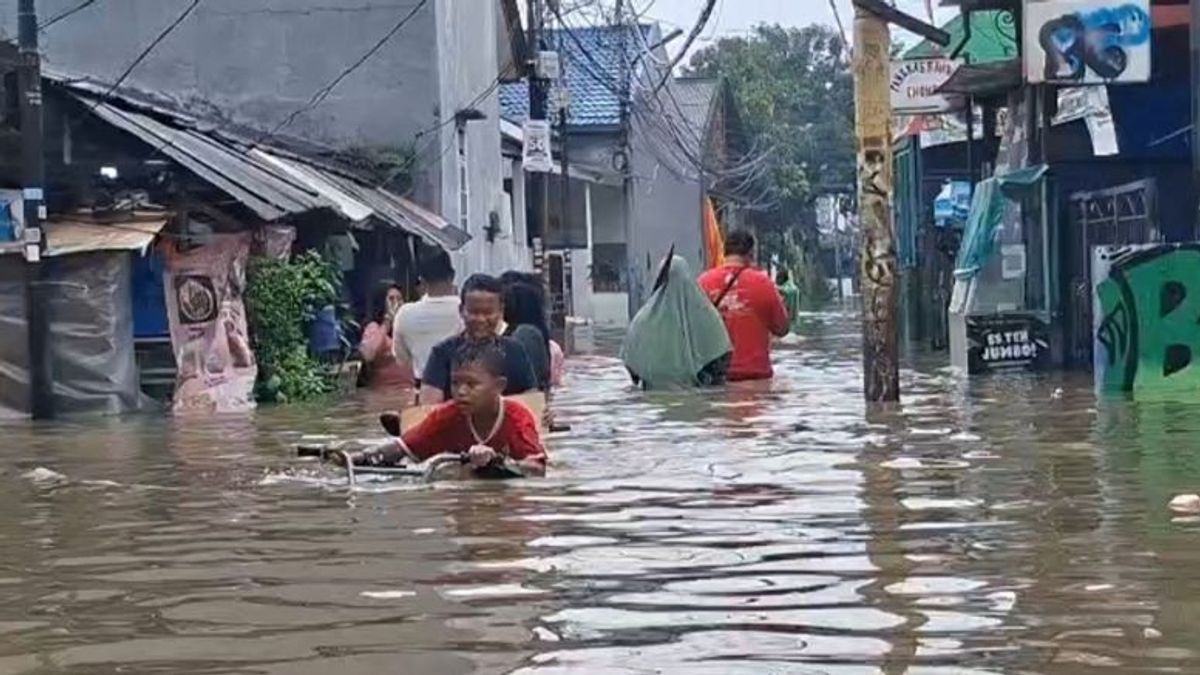
This is not a normal accident. The incident occurred in the midst of an emergency flood situation that paralyzed the city. The puddles at many points are not just about clogged water channels or overflowing rivers due to heavy rain. But it reflects the fragility of Jakarta's space and water management system. The city is sinking again.
As of Friday, January 23, more than 143 RTs were affected. Dozens of main roads were paralyzed. Schools returned to online learning. Offices urged working from home. Floods are no longer a surprising event, but rather a recurring seasonal pattern.
This problem is not new. Since colonial times, Jakarta has been known to be prone to flooding. The Dutch government built large canals to control the water, one of which is still visible behind the State Palace. This means that from the beginning this area has had hydrological vulnerability.
This flood has been reviewed by experts many times. It is always experienced by the Governor of DKI. And everyone also knows that now the problem is very complex. From the Puncak area which is constantly being concreted, to the Jakarta land which is slowly sinking. The rivers are narrowed and covered with sedimentation. The marshes and swamps are shrinking drastically. In fact, the Minister of State Secretary Prasetyo Hadi said that from around 1,000 ponds that once existed in Jabodetabek, now there are only around 200.
Floods also hit buffer areas such as Bekasi and Tangerang, even West Bandung experienced landslides. But in Jakarta, flooding is like an annual routine. So often, on social media floods are sometimes treated like a normal spectacle. People seem to use it as entertainment. This attitude towards flooding seems to close its eyes to the main problem, namely the city's spatial planning which continues to be eroded. The absorption area is converted into residential and business centers.
Technical solutions such as normalized times, infiltration wells, biopores, retention ponds, or weather modification are indeed important. But all of them are just tools. Flood management needs one map, one direction, one decisive action. Without political commitment and the courage to break the chain of mistakes, we will only repeat the same disaster.
The death of the man in the car is not just a sad news. But a symbol that Jakarta not only needs drainage, but direction. Not only need heavy equipment, but also firmness. And most importantly, it is no longer a need for promises, but the real presence of leaders.
Indeed, high rainfall plays a role. Efforts to modify the weather have been made, but the technology cannot completely stop the rain. It only works to reduce or shift the intensity in certain areas. This means that the root of the problem remains in the spatial layout and water management that has not been fully arranged.
This year, the Governor of DKI Jakarta ensured the normalization of three rivers, namely the Ciliwung River, Kali Krukut, and Kali Cakung Lama. For Ciliwung, the DKI Provincial Government is tasked with freeing the land for residents' settlements, while the physical development is carried out by the central government. This step shows that there are structural efforts that are starting to be mobilized, although the process is not easy and requires cross-authority coordination.
We appreciate this step. However, the problem of Jakarta flooding goes far beyond one or two projects. Now the ball is in the hands of the Governor of DKI Jakarta, Pramono Anung. With his long experience in the DPR and the cabinet, he faces a real test of leadership. Flooding is not solved by discourse, but by concrete decisions, policy consistency, and the courage to rearrange the system. The next few years will determine whether Jakarta will break out of the annual flood cycle, or remain trapped in the old pattern.
The English, Chinese, Japanese, Arabic, and French versions are automatically generated by the AI. So there may still be inaccuracies in translating, please always see Indonesian as our main language. (system supported by DigitalSiber.id)


