
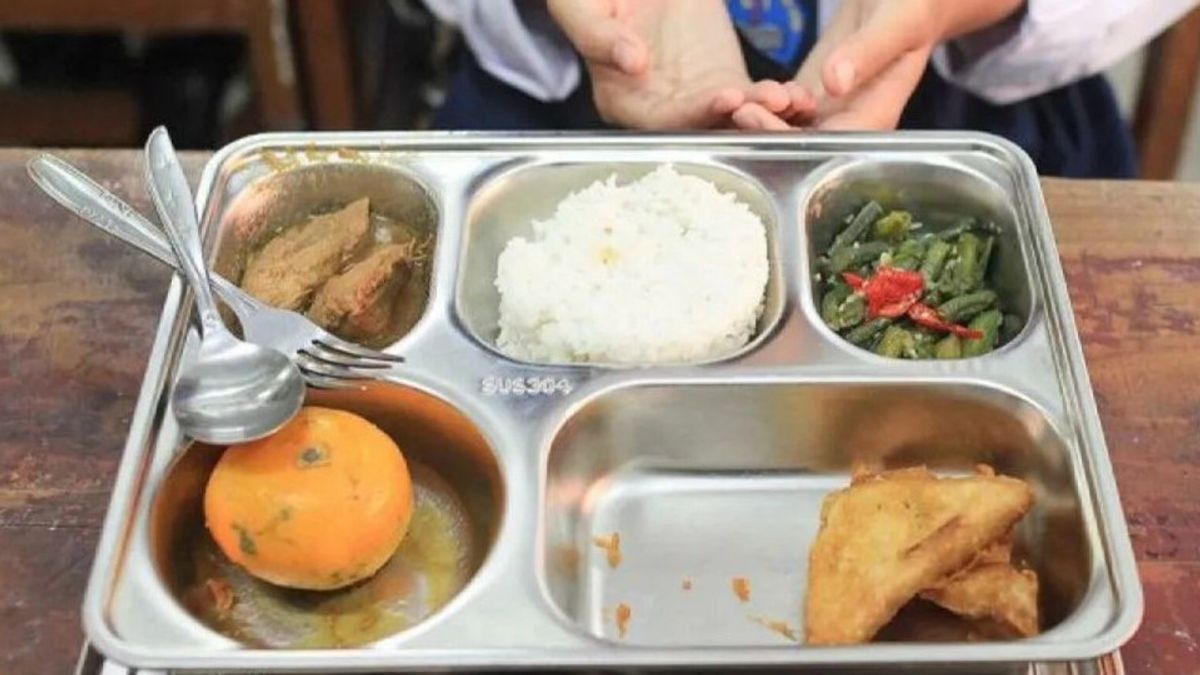


President Prabowo Subianto emphasized that child safety must be a priority amidst the wave of poisonings that have tarnished the Free Nutritional Meals (MBG) program. He ordered a thorough evaluation and ensured that hygiene standards are upheld without compromise.
Data from the National Nutrition Agency (BGN) as of September 22, 2025, showed 4,711 children had been victims of poisoning. Education monitor JPPI estimates the number could reach 6,452 cases by the end of September. The wave of poisonings has spread across regions.
Laboratory results in West Java revealed shocking findings: Salmonella and Bacillus cereus bacteria in one of the MBG partner kitchens. The problem goes beyond stale food, but rather serious flaws in the hygiene chain.
Health Minister Budi Gunadi Sadikin admitted that some MBG kitchens do not yet have a Certificate of Hygiene Sanitation (SLHS). The Head of BGN added that many kitchen workers lack experience—evidence of weak training and supervision.
Commission IX of the House of Representatives (DPR) demanded a thorough evaluation of MBG governance, highlighting weak standards and oversight.
Yet, MBG is touted as a flagship program to improve child nutrition and build a golden generation. National National Agency (BGN) data as of August 22, 2025, recorded more than 20.5 million beneficiaries with over 6,100 Nutrition Fulfillment Service Unit (SPPG) kitchens operating in 38 provinces. The ultimate target is 82.9 million children and 32,000 kitchens. However, only about 19% of the kitchen target has been realized. Funds absorbed were only around IDR 19.3 trillion as of September 28, 2025, compared to IDR 13 trillion previously.
In West Bandung, this program was even declared an Extraordinary Event (KLB) due to dozens of students being simultaneously poisoned, before the KLB status was lifted at the end of September.
The Food and Drug Authority (BPOM) and several regional health offices have emphasized the importance of hygiene standards in food preparation in school kitchens. However, in reality, many kitchens lack adequate equipment, lack trained personnel, and rely on volunteers without technical training. Nutritious menus are often prepared without considering the cold chain or the shelf life of fresh ingredients. Quality control? Probably almost non-existent. If there were, the poisoning could have been avoided.
Behind the glitz and glamour of nutritional promises, a logistical and structural crisis lurks. The fresh food distribution system is not yet ready. Storage and transportation infrastructure are still minimal. Food quality audit mechanisms are lax. Partnerships with the private sector are growing rapidly, but not always accompanied by strict oversight. All SPPG kitchens built by August 2025 are even funded through non-APBN schemes, opening up opportunities for distortion and imbalances in quality control.
The MBG program is almost run like a short-term political project, not a sustainable public service. When poisoning emerges, public trust collapses. If even free lunches can harm children, how can the public trust other major programs?
This article is not a call to cancel the MBG. Rather, it is a call to save it—not with patchwork, but with bold, systems-based redesign.
We agree with President Prabowo Subianto's stance, as mentioned at the beginning of this article. Therefore, emergency measures and redesign are inseparable:
- Comprehensive independent audits. Oversight must not remain on paper. External audits will uncover systemic weaknesses and reduce moral hazard.
- Moratoriums on problematic kitchens. Kitchens that have not passed laboratory tests must be temporarily closed to prevent posing a threat to the food distribution chain.
- Standardized regional kitchens with a cold chain. The "one school, one kitchen" model must be abandoned. Central kitchens with strict standards allow for the safe distribution of nutritious food.
- Partnerships with local farmer cooperatives. In addition to improving menus, this step fosters regional economies and strengthens food security.
- Transparent daily quality audits. Data on poisonings, sanctions, and improvements must be published to maintain public trust.
- Strengthening kitchen human resources. Training and certification are mandatory before funds are disbursed. Nutritionists, teachers, universities with culinary majors, and culinary/catering vocational schools must be involved.
Most importantly, change your perspective. The MBG is not a public relations project, but rather a social infrastructure project. It requires realistic stages, rigorous evaluation, and commitment across regimes. Better slow and high-quality progress than fast and harmful to the nation's children.
If the country truly wants to provide nutritious food to tens of millions of children, it must be prepared to work like a farmer. Slow, diligent, and aware that the harvest cannot be forced to come early. And those around the President must also be prepared to accept criticism. Journalists who ask questions about the problematic MBG should not have their reporting cards revoked at the palace.
The English, Chinese, Japanese, Arabic, and French versions are automatically generated by the AI. So there may still be inaccuracies in translating, please always see Indonesian as our main language. (system supported by DigitalSiber.id)


