
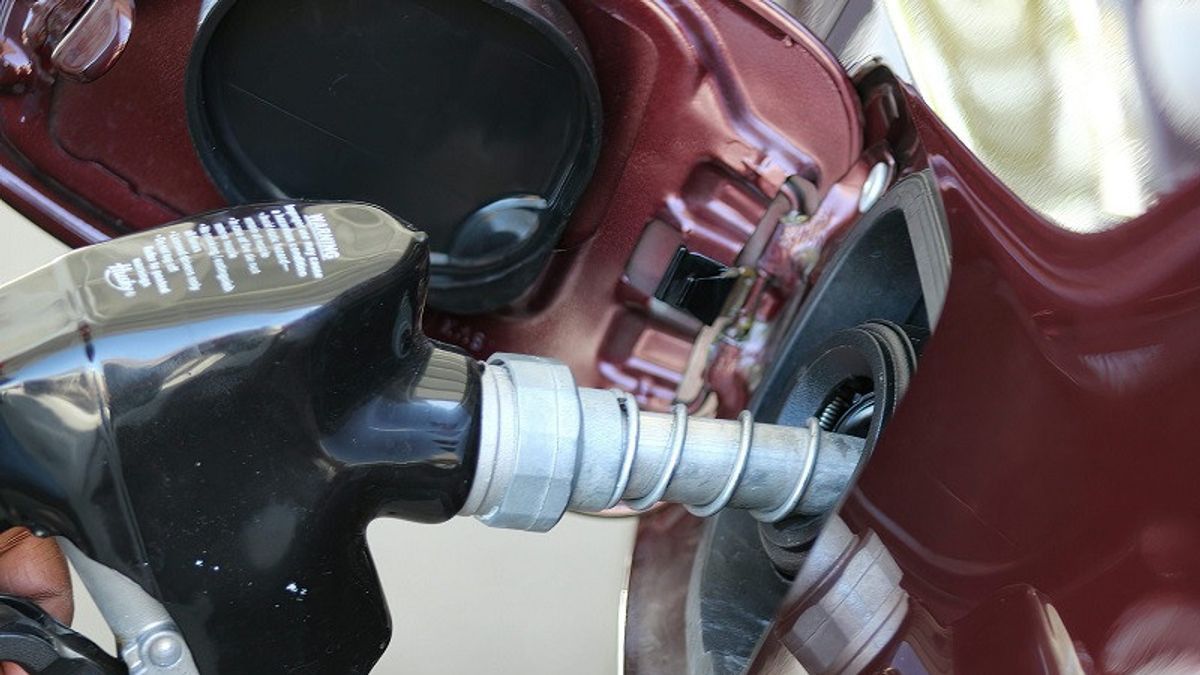


In recent weeks, drivers who usually fill up at private gas stations—Shell, Vivo, and BP—have begun to become restless. Fuel stocks at these networks frequently run out. Even when available, long lines are inevitable.
Undeniably, since the adulteration scandal at Pertamina surfaced, many users have switched to private gas stations. Trust has begun to waver.
Private companies have traditionally imported their own fuel. They submit their demand plans to the Ministry of Energy and Mineral Resources to obtain import quotas. Previously, this process ran smoothly. However, in February 2025, Minister of Energy and Mineral Resources Bahlil Lahadalia changed the regulations. Fuel import permits, which were previously valid for one year, are now valid for only six months. This policy is part of an overhaul of the fuel import and export trade system. Importers are required to have a trading or processing permit and report import realization every three months or at any time upon request.
Bahlil also reminded Pertamina to improve quality and service to remain competitive with private gas stations. Consumers have been choosing alternatives not only for price, but also for the quality and speed of service. Responding to fuel shortages at private gas stations like BP, Shell, and Vivo, Bahlil emphasized that import quotas have increased by 110 percent compared to 2024. "For example, company A received 1 million kiloliters last year. This year, it's increased to 1.1 million. This means everyone has received additional supplies," he said.
According to Bahlil, if private stocks run out and they want more, the solution is to collaborate with Pertamina. If the government increases the import quota again, the trade balance could be disrupted. "If you want more, please collaborate with Pertamina. Pertamina represents the state," he emphasized. Bahlil denied accusations that the government wants to monopolize the downstream oil and gas business by limiting private sector space. He said the directive to purchase fuel from Pertamina is simply a form of business collaboration or business-to-business (B2B). "This is not a matter of business competition. This is a matter of Article 33 of the 1945 Constitution, which states that the needs of the people are better controlled by the state. But that doesn't mean the state controls everything," Bahlil explained.
Similarly, PT Pertamina (Persero) President Director Simon Aloysius Mantiri emphasized that there is no one-stop import policy. "Import policies remain through each business entity," he said after being summoned by President Prabowo Subianto last week.
The 10 percent additional quota for fuel imports in 2025 leaves Pertamina Patra Niaga's remaining quota at approximately 7.52 million kiloliters by the end of the year. This is sufficient to allocate an additional 571,000 kiloliters to private gas stations. The government also guarantees that prices will not increase due to additional imports.
However, despite the government's assurances, the reality on the ground is different. Consumers continue to struggle to find stock. Some private gas stations have even closed operations early due to supply shortages. Experts believe this problem is not simply a logistical failure, but rather a failure of trust. Consumers want not only fuel availability, but also quality that meets claims, reasonable service, and price transparency. Accusations of "adulteration," issues with incorrect RON (Regular Reaction Number) numbers, and vehicle engine problems have heightened concerns.
Pertamina, which is being pushed to take over much of its supply—both importing base fuel for private companies and supplying itself—faces a test. It's not just about replenishing stocks, but also about proving that the goods sold are pure, that quality is maintained, and that transparency is clear. If the policy of importing solely through Pertamina is implemented as the norm, significant risks lurk. The spirit of oil and gas liberalization, which has long provided space for the private sector in the downstream sector, could be eroded. Business competition could weaken, even leaving businesses in limbo.
The investment climate could also be disrupted. Foreign investors may be hesitant to invest if import policies and quotas can be changed at any time or forced through "collaboration" schemes that benefit certain parties. Furthermore, the public is likely to become even more skeptical. Issues about quality and service will continue to loom large. Broken trust is difficult to restore with mere speeches or promises.
The fuel shortage at private gas stations is no accident. It's the result of a lack of transparency, and perhaps also a signal of a structural desire to strengthen state dominance through Pertamina. The government and Pertamina must act. The adulterated fuel case and the oil mafia issue have damaged the company's image. Transparency must be evident: from import sources, additive composition, to base prices. Improvements in fuel quality need to be demonstrated through RON (number of RON), emissions, and engine safety standards. Pertamina's own gas station services must be competitive. Maintain cleanliness, speed, stock reliability, opening hours, and facilities.
Concrete steps are needed to restore public trust. The government should establish an independent auditing agency to regularly and transparently monitor fuel quality. Strict sanctions must be imposed on internal or operators found selling adulterated fuel. Import quota reports should be published quarterly for public oversight. The Ministry of Energy and Mineral Resources also needs to establish a transparent mechanism for evaluating import permits and not rely on the process solely on a single state-owned enterprise.
The most dangerous aspect is not simply empty gas stations. It's even more frightening if the public loses trust in the country's largest state-owned energy company—Pertamina. When stocks return to normal, they may lose confidence. The damage isn't just to logistics or quotas, but to the belief that national energy is managed fairly and cleanly. Everyone agrees that the people's livelihoods are controlled by the state. Pertamina is indeed a representative of the state. However, cases of adulteration or oil mafia issues must not be repeated. Pertamina must improve its services and demonstrate transparency to truly restore public trust.
The English, Chinese, Japanese, Arabic, and French versions are automatically generated by the AI. So there may still be inaccuracies in translating, please always see Indonesian as our main language. (system supported by DigitalSiber.id)
Most Popular Tags
#Prabowo Subianto #donald trump #2026 World Cup #Febrie Adriansyah #8791Popular


