
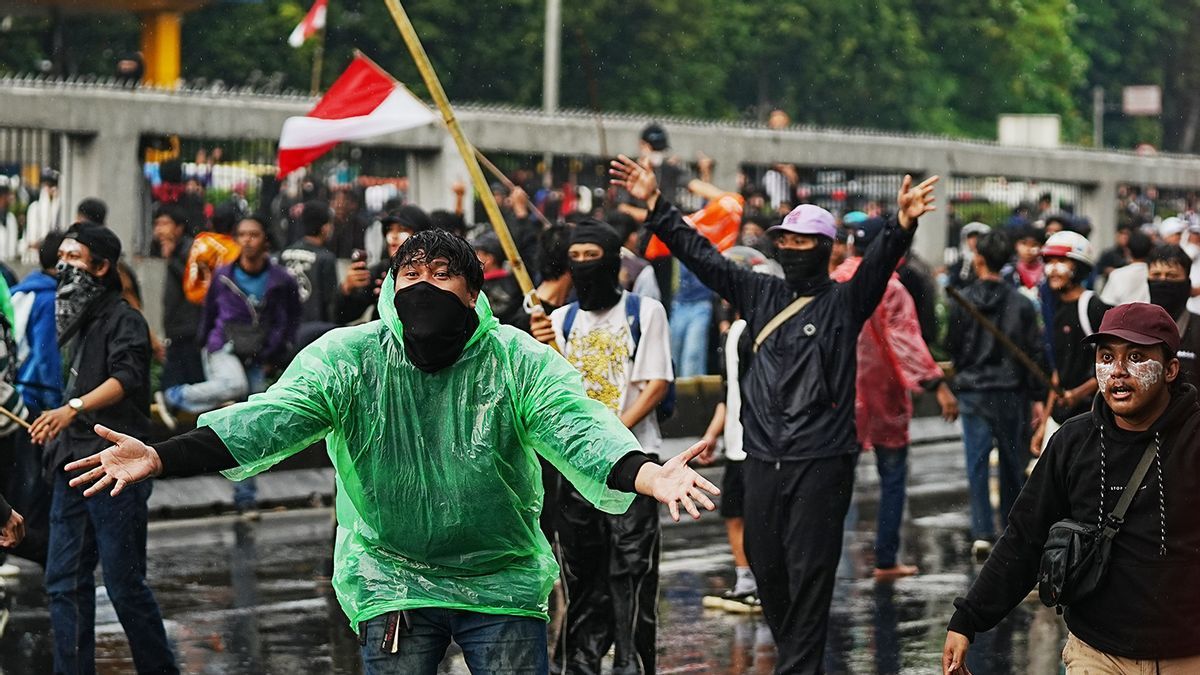


The heat in Jakarta wasn't just from the boiling asphalt. From Senayan, reckless remarks by members of the House of Representatives (DPR) and dancing over increased allowances ignited public anger, spreading to the streets, burning down police stations and the Regional People's Representative Council (DPRD) building in Makassar and West Nusa Tenggara (NTB). Victims fell. Affan Kurniawan, an online motorcycle taxi driver, was killed after being run over by a Brimob vehicle, sparking even greater protests. Three lives were also lost in Makassar due to the burning of the DPRD.
President Prabowo Subianto intervened. He paid his respects at Affan's house and called for a commitment to justice. But the public had already lost patience. The question that resonated was simple: Is the DPR still worthy of trust?
It all started with members of the DPR who spoke out of turn—insulting the people in the midst of a crisis. Jusuf Kalla stated that the cause of the demonstrations was clear. The DPR insulted the people with careless remarks.
The NasDem and Golkar factions hastily suspended Ahmad Sahroni, Nafa Urbach, and Adies Kadir. PAN suspended Eko Patrio and Uya Kuya. "A manifestation of the party's responsibility," claimed NasDem. But the people saw it as nothing more than a patchwork quilt.
Anger raged. The homes of Sahroni, Eko Patrio, and Uya Kuya were looted. Nafa Urbach wept, apologizing. Finance Minister Sri Mulyani's house was also vandalized. Even shopping malls were targeted. From Prilly Latuconsina to Ariel, everyone spoke out: don't harm the common people.
Unrest transcended national borders. International musician EAJ Park joined in the criticism. President Prabowo even canceled a visit to China.
The economic impact was immediate. The Jakarta Composite Index (JCI) plummeted 2.35 percent, investors held back capital, and the Financial Services Authority (OJK) rushed to ensure banking stability. But what truly collapsed was public trust—the most fragile asset in a democracy.
The common people suffered the most. Online motorcycle taxi drivers lost their livelihoods, vendors suffered losses, and daily workers were unable to work. Demonstrations are a right, but anarchy only creates new victims.
While the parties were busy saving face, the House of Representatives (DPR) promised to be more careful in their words. The President invited Islamic organizations and also summoned political party leaders to calm the situation. But the root of the problem is deeper. Politics is trapped in image, not substance. Members of the House of Representatives (DPR) are busy creating content on social media, instead of gathering people's opinions.
Now, what has emerged is no longer just anger, but "Street Parties." Without structure, without articles of association (AD/ART), the people are controlling the rhythm of the demonstrations, forcing the state to react. This crisis reverses political logic: the DPR can survive without the people, but the people can survive without the DPR. And that is dangerous.
This is the biggest correction post-reformasi. Not only for the DPR, but for the entire political elite. If they remain deaf, the people will write history in their own way—on the streets, with fire, with victims.
One thing must be remembered. Anger must not turn into anarchy. We hope. There must be no more casualties. Don't let economic activity be disrupted. Because in the end, the greatest losers are the common people themselves. Street Parties may be born from disappointment, but democracy must not be burned down with them.
The English, Chinese, Japanese, Arabic, and French versions are automatically generated by the AI. So there may still be inaccuracies in translating, please always see Indonesian as our main language. (system supported by DigitalSiber.id)
Most Popular Tags
#Prabowo Subianto #donald trump #2026 World Cup #venezuela #konflik timur tengahPopular


