

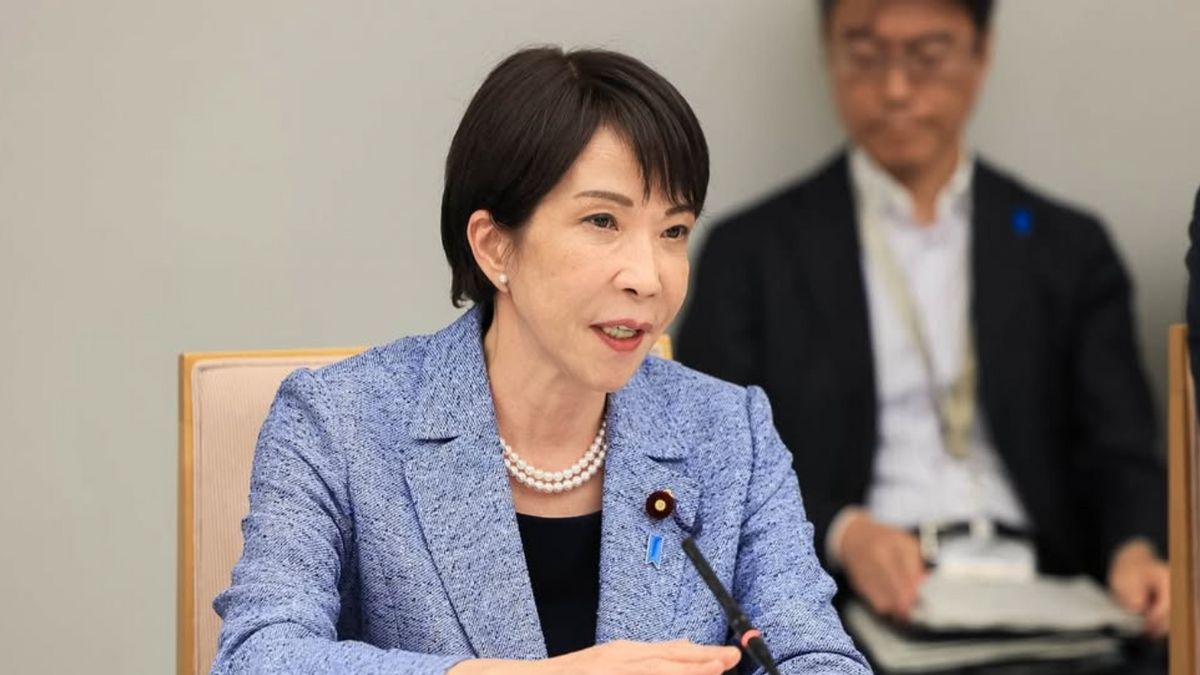


JAKARTA - The Japanese government will draw up an additional budget for the 2026 fiscal year worth more than 3 trillion yen or about 19 billion US dollars to anticipate rising energy prices amid prolonged Middle East tensions.
Japanese Prime Minister Sanae Takaichi said the draft budget would likely be submitted to parliament next week.
He also said the government would use a reserve fund of 500 billion yen to help households pay utility bills in the July-September period, when air conditioning needs increase.
The support measure, which is scheduled to be approved by the cabinet on Tuesday, is expected to reduce energy costs by about 5,000 yen per household for three months, Takaichi said.
Takaichi said the additional budget for the fiscal year that started in April would be financed through the issuance of additional deficit-covering bonds. However, he dismissed concerns that the move would affect the bond market.
Market concerns over Japan's deteriorating fiscal conditions and accelerating inflation have driven up borrowing costs, with yields on 10-year government bonds hitting their highest level in about three decades.
As reported by ANTARA from Kyodo, Monday, May 25, Takaichi also explained that the total issuance of bonds would not change because the government no longer needed to issue about 3 trillion yen of bonds previously planned for the 2025 fiscal year thanks to increased tax revenue and other sources of income.
The government will also establish a special reserve fund to respond to the impact of the situation in the Middle East, such as the soaring price of crude oil, said Takaichi.
"We will further increase our efforts to ensure that people's lives, livelihoods, and economic activities are not disrupted," he said, adding that the planned budget was designed to "make every possible effort to minimize risks."
Takaichi's announcement came after pressure from both the ruling and opposition parties for the government to prepare additional funds to deal with the rise in crude oil prices after the United States and Israel's attacks on Iran in late February and the effective closure of the Strait of Hormuz.
Resource-poor Japan relies heavily on oil imports from the Middle East through the Strait of Hormuz, which is a key global energy shipping route.
As a result of Japan's efforts to diversify suppliers, Takaichi said the country's oil procurement would reach around 80 percent compared to the previous year's level and Japan could possibly secure supplies until spring 2027.
Meanwhile, the prime minister has maintained his stance of refusing to ask the Japanese public to limit energy use. According to him, Japan is not yet at the stage where the government needs to make such a request "in a way that could hinder economic activity."
When asked about the possibility of revising subsidies for distributors to maintain the average price of gasoline at around 170 yen per liter, he did not rule out the possibility.
A number of lawmakers from the ruling and opposition parties had previously proposed reducing the gasoline subsidy program to reduce fiscal pressure on the heavily indebted country.
The English, Chinese, Japanese, Arabic, and French versions are automatically generated by the AI. So there may still be inaccuracies in translating, please always see Indonesian as our main language. (system supported by DigitalSiber.id)
Popular


