

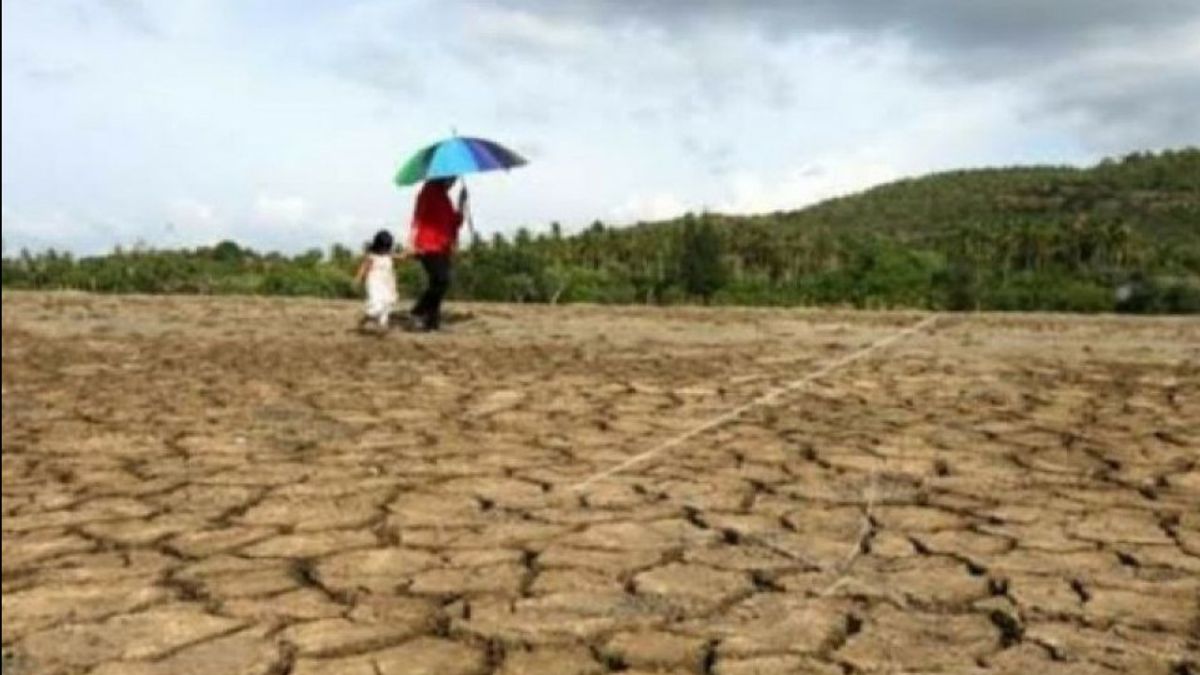


JAKARTA - President Prabowo Subianto has begun preparing a national strategy to deal with the threat of El Nino, which is expected to hit Indonesia starting in mid-2026. The government pays great attention to the potential for long droughts, water crises, and forest and land fires (karhutla) which are at risk of increasing due to this climate phenomenon.
BMKG estimates that El Nino will begin to affect Indonesia from June 2026 and has the potential to last until March or May 2027. This phenomenon is predicted to make the dry season longer, the temperature hotter, and rainfall decreases in a number of areas.
Head of the Meteorology, Climatology and Geophysics Agency (BMKG) Teuku Faisal Fatani said President Prabowo had given direct instructions for early anticipation measures to be taken before the impact of El Nino spread further.
"The President gave instructions to the BMKG to strengthen weather modification operations so that we can anticipate the drought that coincides with El Nino as well as possible," Faisal said in his statement, Sunday, May 24.
The main strategy prepared by the government is to expand weather modification operations (OMC) in various drought-prone areas. The operation will be carried out gradually to maintain water supply in reservoirs, ponds, dams, and water catchment areas during the dry season.
According to Faisal, this step is important because El Nino has the potential to significantly reduce national water reserves, especially in agricultural areas and areas with high dependence on rain.
"El Nino can cause the dry season to be longer and drier," he said.
In addition to maintaining water resilience, the government is also focusing on forest and land fire prevention strategies which are estimated to increase during the dry season. BMKG together with related ministries have begun mapping hot spots or hotspots in areas prone to karhutla, especially in the peat areas of Sumatra, Kalimantan, and Sulawesi.
Six provinces are said to be priority surveillance because they have a high risk of peatland fires. These include Riau, Jambi, and South Sumatra.
"There are six provinces that are the focus of forest and fire control, including Riau, Jambi, and South Sumatra," said Faisal.
The government also uses data on groundwater conditions from the Ministry of Environment to determine when weather modification operations need to be carried out. If the water surface in peatland falls below the safe limit, artificial rain will be immediately attempted to maintain the moisture of the land so that it is not easily flammable.
BMKG estimates that the peak of the dry season will occur in August to September 2026. This condition makes the government begin to accelerate cross-ministerial, agency, and regional government coordination so that the impact of El Nino does not interfere with the food, energy, and public health sectors.
The early anticipation strategy is considered an important step because the previous El Nino phenomenon had triggered long droughts, reduced food production, and smog due to forest fires in various regions of Indonesia.
The English, Chinese, Japanese, Arabic, and French versions are automatically generated by the AI. So there may still be inaccuracies in translating, please always see Indonesian as our main language. (system supported by DigitalSiber.id)


