
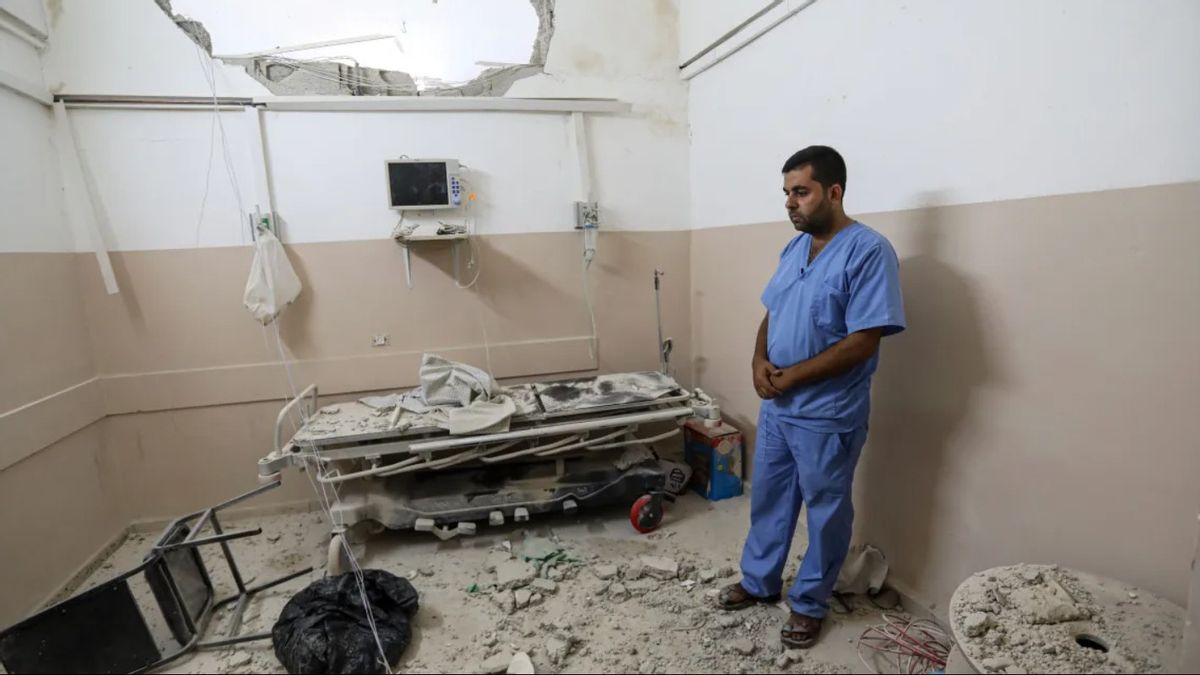


JAKARTA - The World Health Organization (WHO) Regional Office for the Eastern Mediterranean described the destruction of human health and life in the occupied Palestinian territories, including East Jerusalem, as a terrible tragedy.
In a statement issued by the WHO Regional Office on Thursday, Dr. Hanan Balkhy, the organization's regional director, said "since October 2023, more than 72,000 people have been killed and another 182,000 injured," adding "in 2025 alone, almost 26,000 additional deaths were reported," reported WAFA (22/5).
Further explained, after the ceasefire in October 2025, the killing of civilians continued, health services remained disrupted, and humanitarian access remained limited.
It is stated that there is currently no fully functioning hospital in Gaza, stressing that there is no hospital in northern Gaza that is operating at all. In addition, more than half of the essential medicines have been exhausted, while thousands of patients still need immediate medical evacuation.
The WHO stressed that infectious diseases continue to spread amid population density and deteriorating health conditions, and that mental health needs are enormous, while the risk for mothers and newborns increases sharply.
In the West Bank, the organization said the situation continued to deteriorate due to increased violence and movement restrictions, noting that the Palestinian Authority's financial crisis had severely limited health services, with public hospitals providing only emergency services.
The organization, along with its partners, continues to work in very difficult conditions, showing that they have applied for funds of 648 million US dollars to fund the health response in 2025, but so far have only received 75 percent of that amount.
In addition, despite these obstacles, the organization provided the necessary support to send more than 4,000 metric tons of emergency medical supplies to Gaza and facilitated the delivery of fuel that has kept the health system functioning. Meanwhile, in the West Bank, the organization continues to expand emergency care and treatment for injured victims.
The regional director emphasized that political statements alone were not enough to sustain humanitarian operations, calling for the protection of health services, the continuation of humanitarian aid distribution, and the lifting of restrictions that hindered the arrival of essential medical supplies and emergency medical teams.
He also called for continued international support to restore and expand health services, reduce reliance on medical evacuations, and reopen referral pathways from the West Bank.
The English, Chinese, Japanese, Arabic, and French versions are automatically generated by the AI. So there may still be inaccuracies in translating, please always see Indonesian as our main language. (system supported by DigitalSiber.id)


