

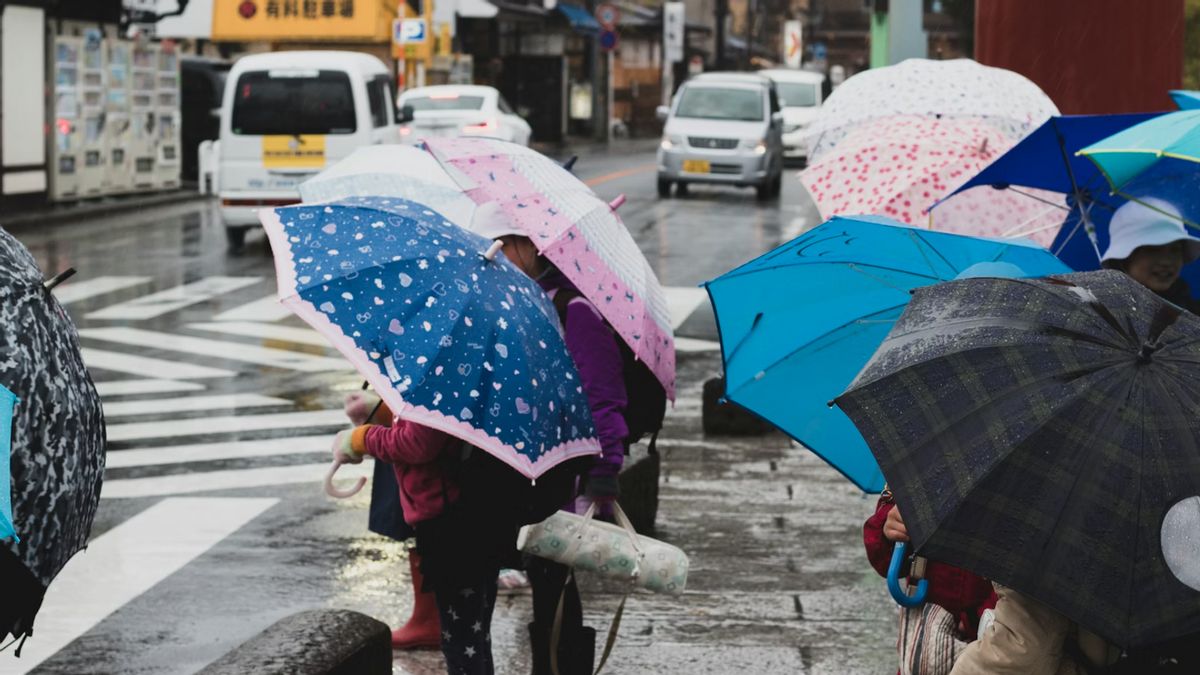


JAKARTA - The population of children in Japan has shrunk to around 13.29 million as of April 1, down 350,000 from the previous year, marking a new record low.
The ratio of children under 15 years of age fell 0.3 percentage points to 10.8 percent of the total population, which is also the lowest figure since comparable data were released in 1950, according to data from the Japanese Ministry of Internal Affairs and Communications ahead of the National Children's Day holiday on Tuesday.
The figure, including foreign residents, is calculated using population estimates based on national censuses conducted every five years.
Although the Japanese government has prioritized measures to address the declining birth rate and set the period up to 2030 as "the last chance to reverse the trend," the decline has continued for 45 years despite efforts such as expanding financial support for households raising children.
Based on gender, there are 6.81 million boys and 6.48 million girls in Japan, according to the data.
Meanwhile, based on their age, there are 3.09 million children aged 12 to 14 years, while another 2.13 million children are aged 0 to 2 years. This figure shows a declining trend in the number of children born.
The number of children born in Japan in 2025, including foreign nationals, reached an all-time low of 705,809, declining for the 10th consecutive year, according to preliminary data released by the Ministry of Health, Labor, and Welfare.
The population of children in Japan has been declining since 1982, after reaching its peak in 1954 with a number of 29.89 million people, while the second birth wave was observed between 1971 and 1974.
The child ratio has also continued to decline for 52 consecutive years since 1975.
According to a UN survey conducted at different times, Japan has the second lowest child ratio among 38 countries with a population of at least 40 million.
South Korea recorded the lowest figure at 10.2 percent of its total population.
The English, Chinese, Japanese, Arabic, and French versions are automatically generated by the AI. So there may still be inaccuracies in translating, please always see Indonesian as our main language. (system supported by DigitalSiber.id)
Most Popular Tags
#Prabowo Subianto #donald trump #Febrie Adriansyah #8791 #giias 2026Popular


