


Iran said on Sunday it had received a response from the United States to its latest proposal in peace talks, a day after President Donald Trump said he would likely reject Iran's proposal because "they haven't paid a big enough price."
State media reported Washington had conveyed its response to Iran's 14-point proposal via Pakistan, and Tehran was now studying it.
However, there has been no immediate confirmation from Washington or Islamabad regarding the US response.
"At this stage, we are not conducting nuclear negotiations," the state media quoted Iran's Foreign Ministry spokesman Esmaeil Baghaei as saying, apparently referring to Iran's proposal to postpone talks on nuclear issues until after the war ended and both sides agreed to lift the opposing blockade against shipping in the Gulf, Al Arabiya reported from Reuters (4/5).
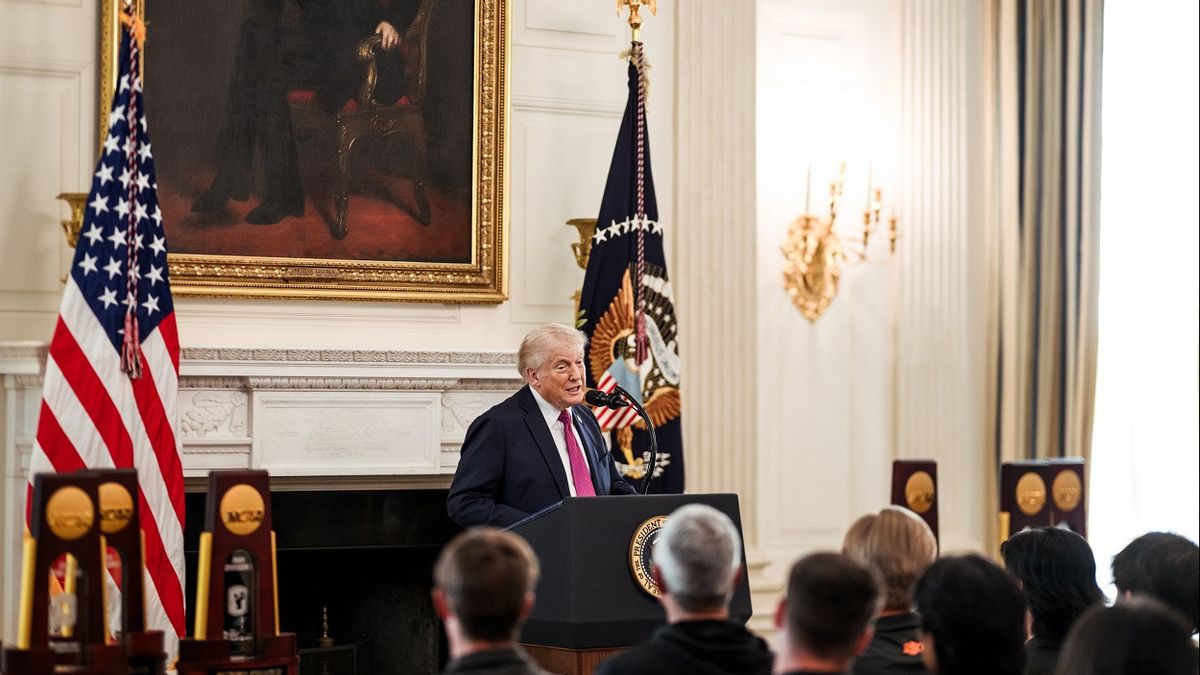
Earlier, President Trump on Saturday said he had not reviewed the exact wording of Iran's peace proposal, but would likely reject it.
"I will soon review the plan that Iran has just sent to us, but I cannot imagine that the plan can be accepted because they have not paid a sufficiently high price for what they have done to humanity and the world over the past 47 years," he said.
The US and Israel suspended their bombing campaign against Iran four weeks ago. Washington and Tehran officials then held peace talks mediated by Pakistan in Islamabad, following the cessation of mutual attacks. However, efforts to hold further meetings have so far failed.
Iran submitted its latest proposal on Thursday, and a senior Iranian official confirmed on Saturday that Tehran envisaged ending the war and resolving the delivery impasse first, while talks on Iran's nuclear program were postponed for later.
Iranian media said Tehran's 14-point proposal includes the withdrawal of US forces from nearby areas, lifting the blockade, releasing frozen assets, paying compensation, lifting sanctions, ending the war on all fronts including Lebanon, and creating a new control mechanism for the strait.
It is known that Iran has blocked almost all shipments from the Gulf other than its own shipments for more than two months. Last month, the US imposed its own blockade on ships from Iranian ports.
Speaking on condition of anonymity to discuss secret diplomacy, the senior Iranian official said Tehran believed its latest proposal to postpone nuclear talks to a later stage was a significant change aimed at facilitating an agreement.
"Within this framework, negotiations on more complicated nuclear issues have been moved to the final stage to create a more conducive atmosphere," the official said.
Although President Trump initially said on Friday that he was not satisfied with the Iranian proposal, the Republican politician said on Saturday that he was still considering it.
"They told me about the concept of the deal. They will give me the right words now," he told reporters.
When asked if he might restart an attack on Iran, President Trump replied: "I don't want to say that. I mean, I can't say that to a reporter. If they behave badly, if they do something bad, now we'll see. But it's a possibility that could happen."
The proposal to postpone talks on nuclear issues until a later stage seems to contradict Washington's repeated demands that Iran accept strict restrictions on its nuclear program before the war can end.
Washington wants Tehran to hand over its stockpile of highly enriched uranium of more than 400 kg (900 pounds), which the United States says could be used to make a bomb.
Meanwhile, Iran says its nuclear program is peaceful, although it is willing to discuss some restrictions in return for the lifting of sanctions, such as those it received in the 2015 deal that the previous Trump administration abandoned in 2018.
Despite repeatedly saying he was in no rush, Trump is under domestic pressure to break Iran's stranglehold on the Strait of Hormuz, which has choked off 20 percent of the world's oil and gas supplies and driven up U.S. gasoline prices.
Republicans face the risk of a negative reaction from voters over higher prices in the November midterm congressional elections.
The English, Chinese, Japanese, Arabic, and French versions are automatically generated by the AI. So there may still be inaccuracies in translating, please always see Indonesian as our main language. (system supported by DigitalSiber.id)
Most Popular Tags
#Prabowo Subianto #donald trump #2026 World Cup #Febrie Adriansyah #8791Popular


