



JAKARTA - Amazon has long been imagined as a dense forest that is almost empty of human traces. New findings in Brazil show that the picture is wrong.
Quoted from The Independent, Friday, April 24, an archaeological survey along the BR-156 highway, Amapa State, northern Brazil, found important relics from the pre-European colonization period.
From the nine excavation points, researchers found a pottery vase that was suspected of being used as a burial jar. They also found small artifacts in the shape of human faces.
Lúcio Flávio Costa Leite, manager of the Archaeological Research Center at the Amapa Scientific Research and Technology Institute, said the findings came from a road project that also opened up the forest. Therefore, projects like this have a complicated side of providing new knowledge, but also demand permanent protection.
The findings on BR-156 reinforce the view that the Amazon was not a "human desert" before the arrival of the colonizers. The area was once inhabited by an advanced, interconnected indigenous community, able to read the forest carefully.
The pottery found shows a variety of styles and techniques. Traces of cultural influence stretch from Para State in Brazil to the Caribbean.
"I often discuss this with students. We usually think of technology as computers and microchips," Costa Leite said, quoted by The Independent. "In fact, all of this requires a careful reading of the landscape and a deliberate choice of materials."
Archaeologist Manoel Fabiano da Silva Santos said the Amazonian soil layer is like a timeline. The upper layer contains Portuguese porcelain and nails, a sign of European occupation. The deeper layer contains pottery of indigenous people before colonization.
The artifact will be added to the collection of the State of Amapa, which contains about 530 thousand objects. The oldest collection is about 6,140 years old.
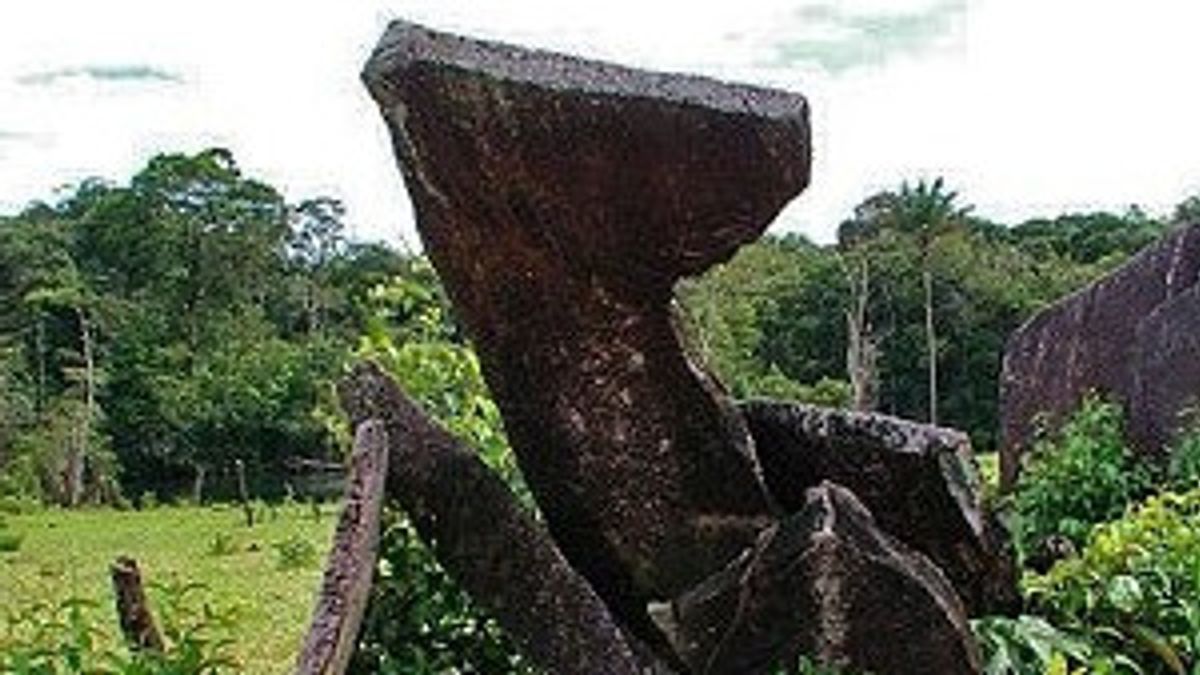
One of the most striking sites is in Calcoene. There is a stone monument that is about 1,000 years old, consisting of 127 carved monoliths arranged in a circle with a diameter of about 30 meters.
The site has been dubbed "Stonehenge Amazon" because it reminds of the stone monument in England. Researchers found that the arrangement of the stones marked the sunrise point at the winter solstice in the Northern Hemisphere.
Archaeologist Mariana Petry Cabral said the stones did not come from the site. The stones were brought from elsewhere in the area. Subsequent excavations also found the site to be a burial ground.
The site was discovered by scientists in 2005 and is now being processed into a national park. If approved, more people will be able to visit it.
Modern archaeological research shows that indigenous people do not only live in the Amazon. They help shape the forest through long-term landscape management.
Eduardo Neves, a professor of archaeology at the University of Sao Paulo, has been leading the Amazon Revealed project since 2023. The project uses satellite scans to search for hidden sites under the forest canopy.
The results of the scan found a network of roads, patterns of settlements, and traces of landscape changes. The findings show that the ancient Amazonian people did not live isolated in small villages.
"When people imagine indigenous tribes, they often imagine small villages isolated in the middle of the jungle. However, evidence shows a high level of connectivity between various settlements," Neves said, quoted by The Independent.
The findings in Amapa add to evidence that ancient Amazonian peoples were not a small group cut off from the outside world. They built networks, managed forests, and left a newly legible footprint after thousands of years.
The English, Chinese, Japanese, Arabic, and French versions are automatically generated by the AI. So there may still be inaccuracies in translating, please always see Indonesian as our main language. (system supported by DigitalSiber.id)
Most Popular Tags
#Prabowo Subianto #donald trump #2026 World Cup #Febrie Adriansyah #8791Popular


