
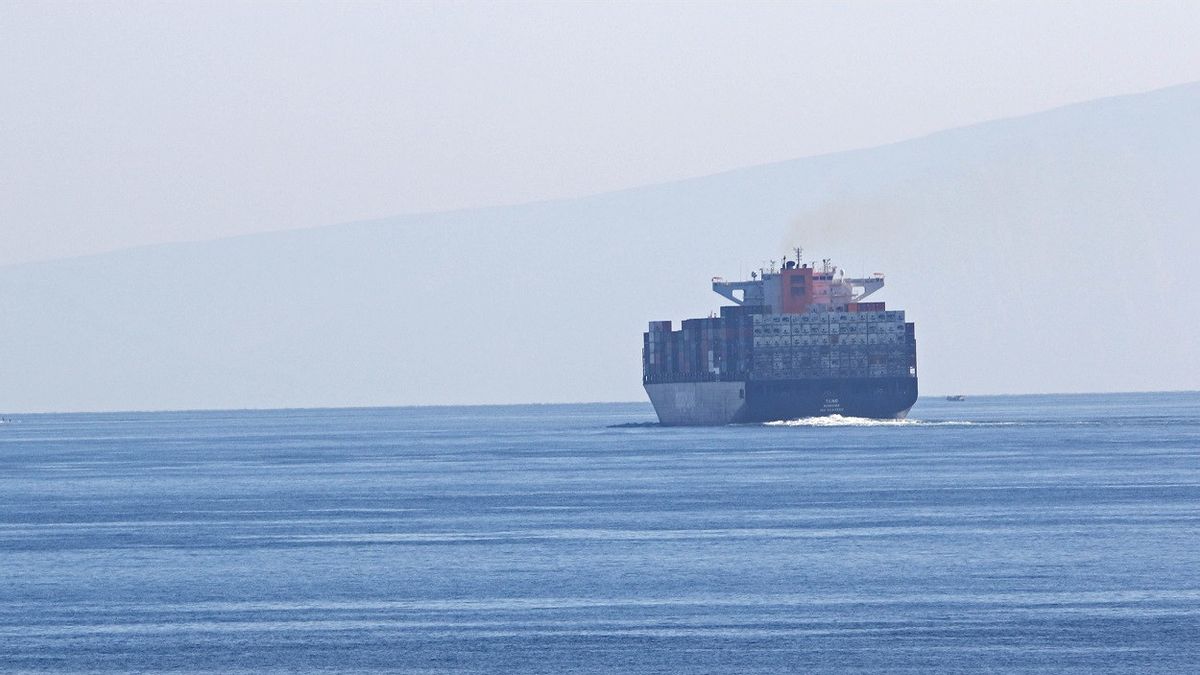


Gulf states said on Thursday they would revise and resubmit a U.N. Security Council resolution to protect shipping in the Strait of Hormuz, after an earlier draft failed to pass, showing deep divisions among major powers.
"The Gulf region is at the heart of global economic stability. Its security is inseparable from global security," Kuwait's envoy to the United Nations, Tareq Al Banai, told the General Assembly, launching The National (17/4).
He spoke on behalf of the UAE, Bahrain, Saudi Arabia, Qatar, and Jordan, as well as his own country.
It is known that the Strait of Hormuz, which is one of the main global oil and gas supply routes, has been effectively closed since the start of the US-Israeli war against Iran. Almost 20 percent of the world's oil supply passes through the strait in peacetime.
Al Banai said the Gulf states would intensify consultations to gain wider support for the revised resolution based on international law and freedom of navigation.
"As recognition of the seriousness of the current threat. We will continue to coordinate closely with member countries in preparation for submitting a new draft resolution," he said.
Previously, Russia and China vetoed a draft resolution submitted by Gulf and Arab countries on the situation in the Strait of Hormuz and surrounding waters on April 7.
The core provision of the draft resolution "encourages" member states to coordinate defense measures to protect navigation through the strait, including by escorting ships, and to prevent attempts to disrupt maritime traffic.
Furthermore, it was stated that Iran's actions in and around the strait constitute a threat to international peace and security, and demand that Tehran immediately cease all attacks and threats against commercial shipping, as well as any attempt to impede freedom of navigation.
Russia's Deputy Ambassador to the UN, Anna Evstigneeva, said the Security Council "was essentially asked to give the green light for the use of certain defensive measures under the pretext of ensuring maritime security."
"This would be tantamount to granting full permission for continued aggressive actions and further escalation," he added.
Meanwhile, Iran's envoy to the United Nations, Amir Iravani, said the vetoes by China and Russia were "timely, justified and necessary."
Al Banai said the council's failure to adopt the resolution did not absolve any party of responsibility.
"On the contrary, it sends the wrong message to the world that threats to international waterways can occur without a decisive collective response from international bodies responsible for maintaining international peace and security," he said.
Gulf states warned that continued disruption to the vital waterway could worsen global supply chains and food security, adding that a new approach would help build a broader consensus.
On Friday, Fiji, Jamaica, Malta, and Singapore criticized the use of the veto in the UN that blocked a resolution on the Strait of Hormuz, reaffirming that free transit through the strait is a non-negotiable right under the UN Convention on the Law of the Sea.
They warned that the disruption threatened global trade, energy markets, and smaller economies, and urged all parties to restore safe shipping lanes.
The English, Chinese, Japanese, Arabic, and French versions are automatically generated by the AI. So there may still be inaccuracies in translating, please always see Indonesian as our main language. (system supported by DigitalSiber.id)
Most Popular Tags
#Prabowo Subianto #donald trump #2026 World Cup #Febrie Adriansyah #8791Popular


