

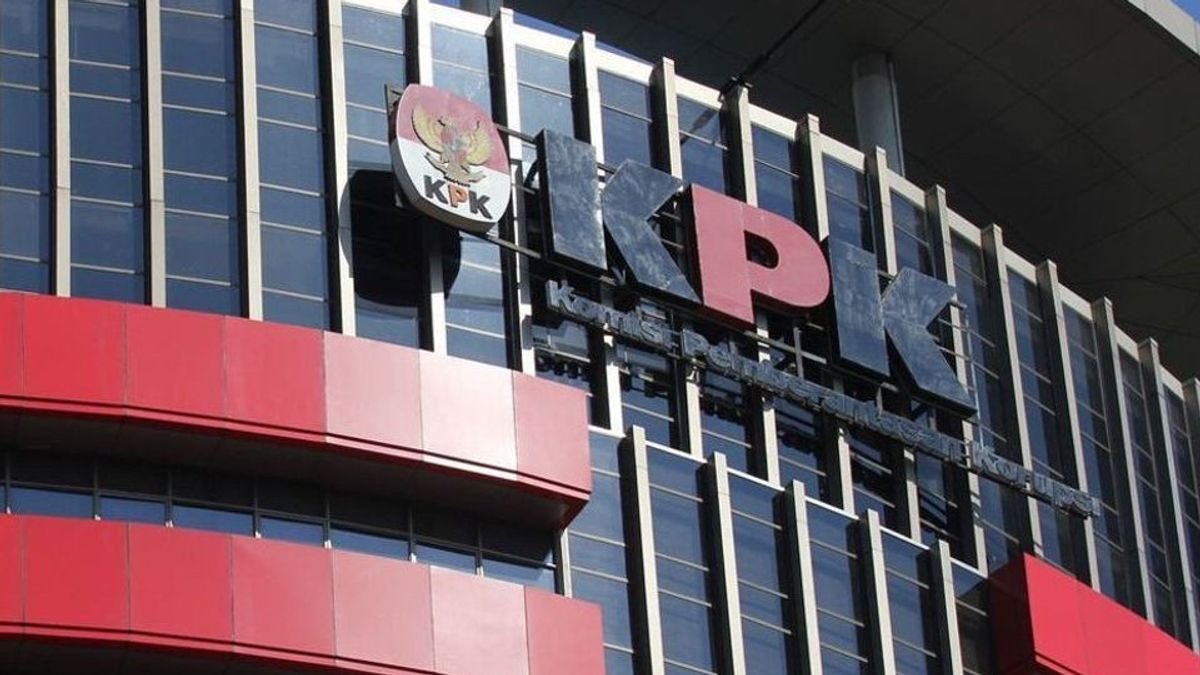


JAKARTA - The Corruption Eradication Commission (KPK) has implemented a combination of working from home or work from home (WFH) and working from the office or work from office (WFO) starting Friday, April 10.
KPK spokesman Budi Prasetyo said the policy of the combination work scheme was to support energy efficiency programs without disrupting services to the public. The number of arrangements is said to be in accordance with the needs of each work unit.
"Today, the first Friday, the KPK has started to implement a combination of work for employees in the KPK environment, namely working from home (BDR) and working from the office (BDK). This combination of work is an implementation to support government policies related to energy efficiency, while ensuring that public services are well-run," said Budi through a written statement, Friday, April 10.
Budi explained that the public services that remained open directly were Public Information Services (PIP), libraries, public complaints, and reporting the Wealth Report of State Managers (LHKPN). Then the enforcement work was also not disturbed by this work scheme arrangement.
"The examination of witnesses is still there," he said.
Meanwhile, for online-optimized services, among others, anti-corruption and gratification reporting.
"Including reporting gratification is optimized online through the application https://gol.kpk.go.id," he explained.
Budi further explained that the implementation of this work pattern was also accompanied by the optimization of information technology and digital platforms. So, the performance and service to the public are still maintained.
"In supporting the implementation of this combination of work methods, the KPK also optimizes information technology, as well as various digital platforms, including in the dissemination of information and education for the public," he said.
"This is also a form of transformation of the work culture to ensure that the quality of institutional performance and services is maintained well," concluded Budi.
The English, Chinese, Japanese, Arabic, and French versions are automatically generated by the AI. So there may still be inaccuracies in translating, please always see Indonesian as our main language. (system supported by DigitalSiber.id)


