

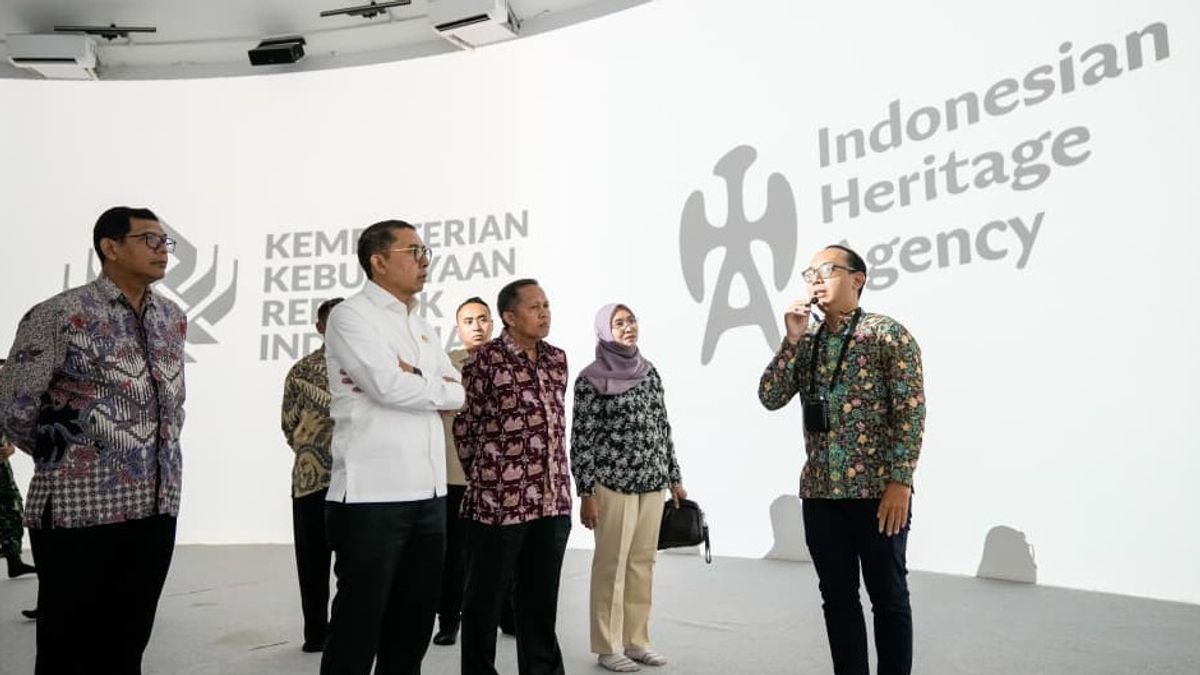


YOGYAKARTA - Minister of Culture (Menbud) Fadli Zon highlighted the changing face of the Yogyakarta Struggle Museum, which now presents the history of the nation's struggle in a more immersive way. According to the Minister of Culture, this is important so that Indonesia's journey from the era of national awakening to maintaining independence does not stop as an old story that is far from the younger generation.
When reviewing the museum on Saturday, March 28, Fadli saw firsthand the revitalization of the exhibition, which is now made more contextual and communicative. He assessed that this approach makes history easier for visitors to capture.
"In this museum we can witness the journey of the nation's struggle, from the birth of Budi Utomo to the Proclamation of Independence and the period of defending the Republic of Indonesia, which is now presented in an immersive and easier to understand way," said Fadli.
He also alluded to Yogyakarta's important position in national history, including when it became the capital of the country in 1946 and when it faced Dutch military aggression. According to him, the traces are strongly reflected in the narrative built by the museum.
Fadli assessed that the strength of this museum is not only in the story, but also in the collection of artifacts, dioramas, and reliefs by Edhi Sunarso which make history feel more alive.
"The younger generation needs to see firsthand how the history of the nation's struggle is presented here, because this museum presents a story that is closer and easier to digest," he said.
The Yogyakarta Struggle Museum was initiated by Sri Sultan Hamengku Buwono IX in 1958 to commemorate the 50th anniversary of the National Awakening. Construction began in 1959 and was completed in 1961. This museum has a main building in the form of a circle and 40 sand cement reliefs by Edhi Sunarso depicting the historical journey of the nation from the national movement to independence.
Currently, the museum houses memorabilia, statues of national figures, as well as thematic exhibitions that are constantly updated, and managed by the Ministry of Culture through the Museum and Cultural Heritage Service Agency.
The English, Chinese, Japanese, Arabic, and French versions are automatically generated by the AI. So there may still be inaccuracies in translating, please always see Indonesian as our main language. (system supported by DigitalSiber.id)


