
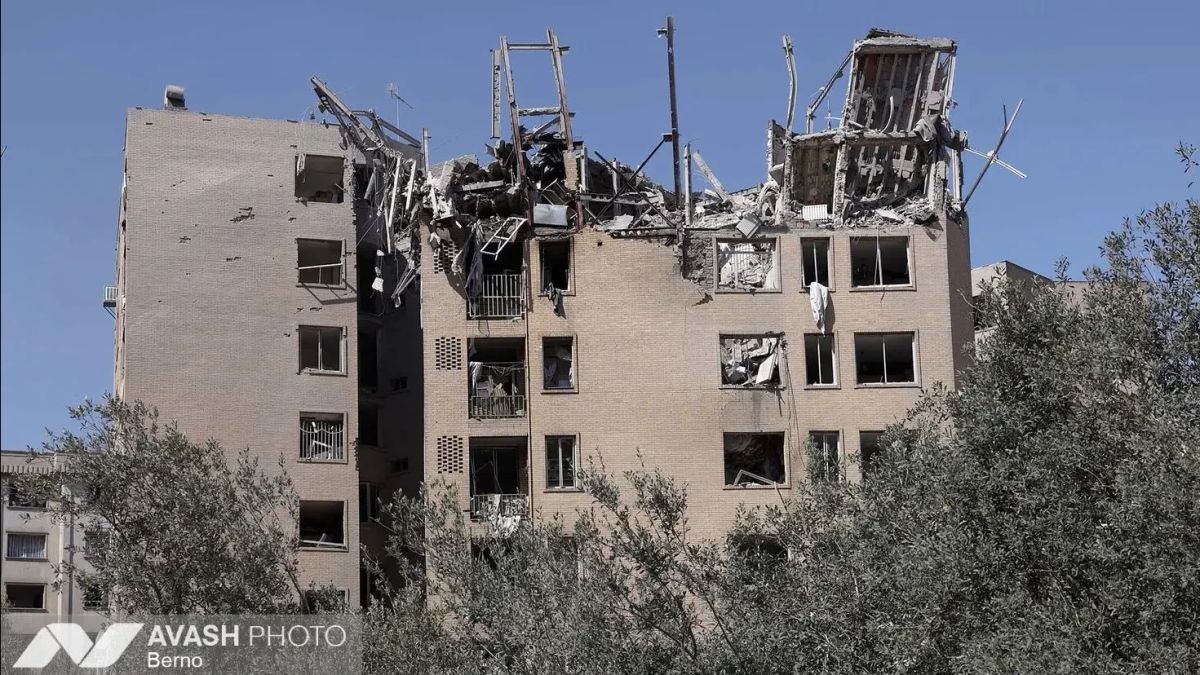


JAKARTA - Member of the DPR from the Gerindra Faction, Azis Subekti, assessed that the global economy is now on the verge of the Strait of Hormuz, which was closed due to the Iran-Israel-United States war. So world leaders are starting to read the same war map.
"There is a long lesson in geopolitical history: the world is rarely really calm around energy routes. From the Suez Canal to the Strait of Malacca, from the Black Sea to the Persian Gulf, modern civilization has always stood on narrow arteries where oil, gas, and world trade flow. Today, those arteries are again beating tensely in the Strait of Hormuz," Azis Subekti said in his statement, Thursday, March 19.
According to him, about a fifth of the world's oil passes through this narrow strait. If it is blocked even for a few weeks, the global economy will feel the fever. Energy prices soar, inflation puts pressure on household kitchens, and political stability in many countries can be shaken.
"Therefore, when the Iran-Israel conflict heats up and the shadow of American confrontation appears in the Gulf, world leaders are not watching from afar. They all read the same map, but with different interests," he said.
In Washington, continued Azis, Donald Trump saw the Gulf crisis in a frame that had long shaped American geopolitics: the sea must remain open to world trade. America views the stability of the Strait of Hormuz not only as a regional interest, but as part of a global architecture built since World War II.
"The energy route must be safe, and must not be under the threat of one regional power. Therefore, Washington supports Israel's military operations against Iran, while also pressuring its allies to join in guarding the Gulf shipping lanes," he said.
"However, behind this firmness, America is also aware of a bitter historical reality: Iran is not Iraq, and not Afghanistan. A ground invasion of the country would almost certainly be a long and costly war. Then Washington's strategy will likely remain limited military pressure, air strikes, intelligence operations, and economic pressure in the hope that Tehran will return to the negotiating table," continued the Gerindra legislator from the Central Java constituency.
On the other side of the world, said Azis, Chinese President Xi Jinping read the Gulf crisis from a much more pragmatic angle. He assessed that China is the largest oil importer in the world. Most of the oil comes from the Middle East and passes through Hormuz.
"If the strait is disturbed, the first to feel the impact is not Washington or Brussels, but the factories in Shanghai, Shenzhen, and Guangzhou. Therefore, Beijing took the classic position of Chinese diplomacy: calling for de-escalation, refusing to engage in military operations, and opening itself up as a mediator. For China, stability is more important than anyone's victory in this conflict," said Azis.
Meanwhile in Moscow, Russian President Vladimir Putin sees the situation with a different calculation. Russia does not want Iran to collapse, but Russia is also in no hurry to end the conflict.
In the Kremlin's geopolitical logic, said Azis, every crisis that preoccupies America in the Middle East means two advantages: Washington's focus on Europe is reduced, and world energy prices tend to rise. "The Gulf crisis, in Russia's perspective, is not just a threat. It is also a maneuvering space," he added.
Meanwhile, in the Gulf itself, the King of Saudi Arabia, Salman bin Abdulaziz Al Saud faces a classic dilemma. Iran is Saudi Arabia's strategic rival for decades. However, a major war with Iran also risks destroying the stability of the region, which is the heart of the Gulf economy.
"Riyadh therefore takes a very cautious position: supporting pressure on Iran, but not wanting its territory to turn into an open war base. Saudi diplomacy today is like walking a tightrope over a geopolitical abyss," said a member of the House of Representatives Commission II, which deals with the government.
Then in Tehran, Masoud Pezeshkian faced pressure that touched the core of the country's existence. Since the 1979 Revolution, Iran's strategy has always had one simple principle: if attacked, expand the conflict.
Azis views, Iran does not always try to win the war quickly. Instead, he is trying to make the war expensive for his opponents. "Ballistic missiles, drones, and regional militia networks are part of that strategy, a form of asymmetric escalation designed to put pressure on opponents without having to face them directly in a major conventional war," he said.
For Benjamin Netanyahu, said Azis, the conflict with Iran is part of a battle that has been going on for decades. Israel sees Iran as the greatest strategic threat to the future of the country. Therefore, Israel's military operations against Iranian targets are not just a response to the latest situation. It is part of a long-term strategy: weakening Iran's ability to project power in the region.
"In Tel Aviv's view, delaying confrontation will only make the threat greater in the future," he said.
If all these positions are simplified, according to Azis, the world today is divided into three circles of interests. Offensive circle: United States and Israel.
The circle of resistance: Iran and its militant networks. The circle of balance: China, Russia, and some Gulf and European countries.
"Between these three circles stands a point that they all watch: the Strait of Hormuz. It is not just a shipping lane. It is a giant valve of the global economy," he said.
If you read the pattern of the history of the Middle East conflict, according to Azis, the future of this crisis is likely to move in three directions. First, a major war is unlikely to turn into a ground invasion of Iran. The country is too big and too complex to be conquered quickly.
Second, the conflict is likely to spread regionally - to Lebanon, Syria, Iraq, even the Red Sea - but still within the limits that the major powers are trying to control. Third, the biggest surprise could come from the economy. If the Strait of Hormuz is really disrupted, global energy prices could soar sharply and trigger social pressures in various countries.
"History shows that energy crises often trigger unexpected domestic political changes. In the end, history rarely moves through one big decision. It often grows from a series of small steps that accelerate each other. Today the world may be standing at one of those points," said Azis.
"In Washington, Beijing, Moscow, Riyadh, Tehran, and Tel Aviv, world leaders read the same map, but imagine a different future. And among all these calculations, the Strait of Hormuz remains standing like a narrow gate where the pulse of the world's energy flows. If the door is closed, even for a moment, the world will be reminded again how fragile modern civilization stands on oil, trade, and the balance of power," he continued.
"History always has a simple way to remind humans: whoever controls the energy line, he is the one who holds the pulse of the world," concluded Azis Subekti.
The English, Chinese, Japanese, Arabic, and French versions are automatically generated by the AI. So there may still be inaccuracies in translating, please always see Indonesian as our main language. (system supported by DigitalSiber.id)
Most Popular Tags
#Prabowo Subianto #donald trump #2026 World Cup #Febrie Adriansyah #8791Popular


