
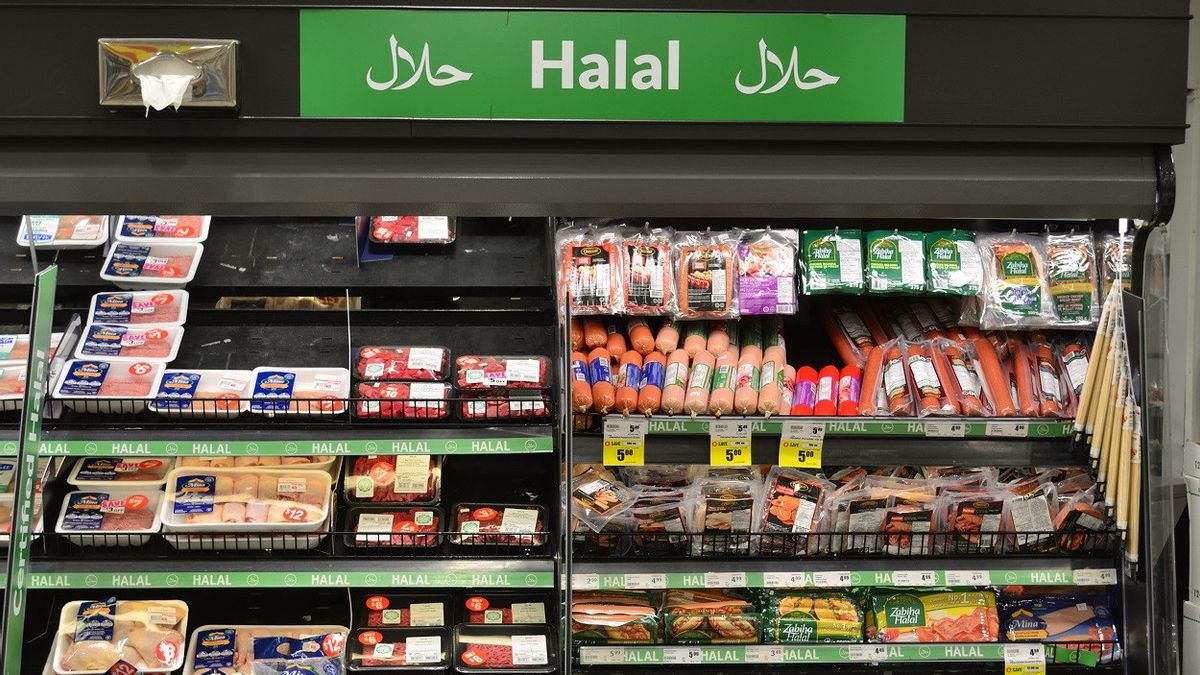


JAKARTA - The government will begin diplomatic efforts to further expand the network of South Korean partner countries under a mutual recognition agreement (MRA) for halal certification, with the aim of increasing Korean food exports to global Muslim markets.
The Minister of Agriculture, Food, and Rural Affairs Song Mi-ryung last month said the government would focus on expanding agreements to support domestic private halal certification institutions. The more agreements Korea has with halal certification authorities in other countries, the more Muslim markets Korean food producers can access directly, without having to ask for inspections by foreign authorities for halal label approval.
Halal certification requires manufacturers to comply with Islamic sharia provisions throughout the entire process, from the preparation of materials to manufacturing, storage, and logistics.
Private halal certification institutions in Korea with a network of global reciprocal recognition agreements can evaluate Korean food products and approve them as halal on behalf of foreign halal authorities.
"The most important thing is that the government should focus its efforts on the MRA (Memorandum of Recognition/Joint Recognition Agreement) issue so that Korean food companies can export more," Song said at a press conference at the ministry's headquarters, reported by The Korea Times (10/3).
"We plan to invite halal experts from abroad to Korea and listen to their consultations. These measures will improve the current trading environment among countries, governments, private institutions, and companies throughout Korea and the global Muslim market," he said.
Indonesia, Malaysia, the United Arab Emirates, and Saudi Arabia are currently Korea's main targets for MRA expansion, according to the government.
Song's statement followed his attendance at Gulfood 2026, the largest international food trade fair in the Middle East, held in Dubai from January 26 to 30. Korean companies signed 14 memorandums of understanding worth 8 million US dollars at the event.
The most popular K-food products at the exhibition are products that are trending globally such as gimbap (seaweed rice rolls with various ingredients), tteokbokki (rice cake boiled in spicy red chili paste), and instant noodles, as well as fresh products such as berries and Shine Muscat grapes.
Korean beef, known as "hanwoo," is also among the flagship products. A hanwoo breeder cooperative in Gangwon Province began exporting Korean beef to Dubai last September, marking Korea's first hanwoo export to the Middle East.
Last week, the ministry held an event in Singapore to celebrate the launch of Korean meat products, inviting about 160 guests to the Marina Bay Sands hotel.
"People in Singapore say that hanwoo has a balanced taste that neither Japanese wagyu nor American and Australian beef have. I agree with Korean celebrity chef Ahn Sung-jae when he said during the event that a little salt is enough to enjoy the delicious taste of hanwoo," Song said.
"Singapore, with its high average income level and advanced gastronomy industry, can become an important market for Korean food," he said.
It is known that the South Korean government has allocated more than 700 billion won in the form of subsidies to exporting companies and designated 30 embassies abroad as "Korean food export bases" to promote Korean food products.
The English, Chinese, Japanese, Arabic, and French versions are automatically generated by the AI. So there may still be inaccuracies in translating, please always see Indonesian as our main language. (system supported by DigitalSiber.id)
Most Popular Tags
#Prabowo Subianto #donald trump #Febrie Adriansyah #8791 #giias 2026Popular


