

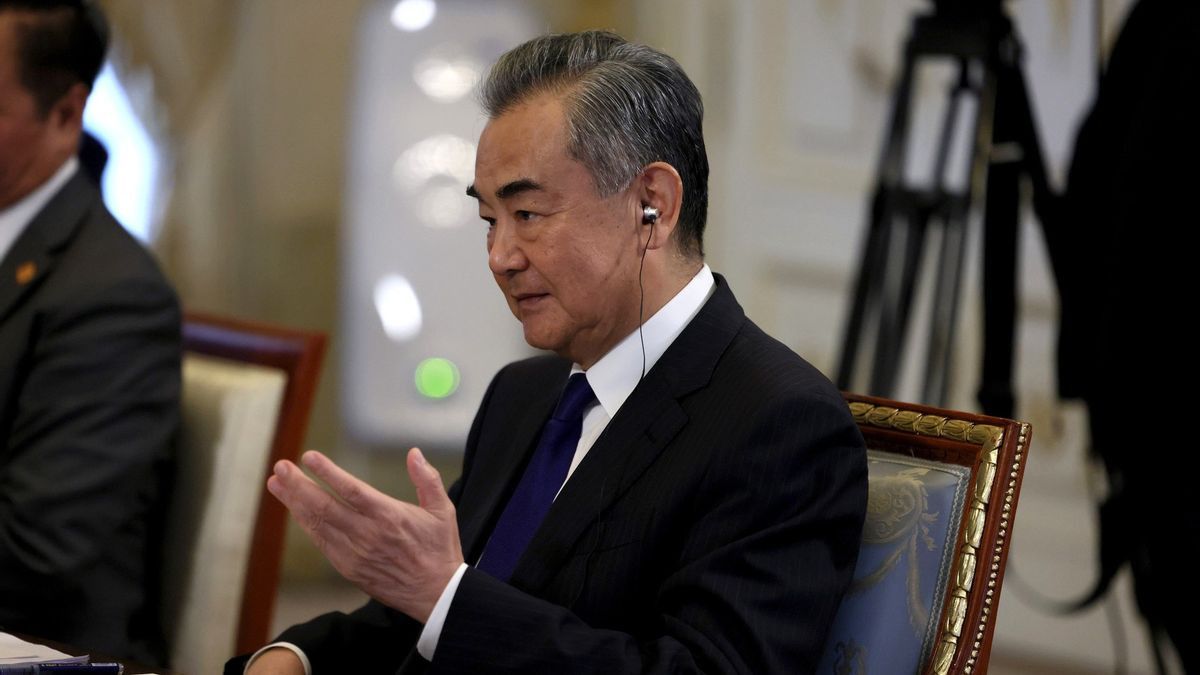


China is accelerating diplomatic moves as the Iran conflict heats up in the Middle East. According to China Daily, Thursday, March 12, 2026, Beijing strengthened communication with a number of related countries and sent special envoys to the region to contain the spread of the conflict.
In the last 10 days, Chinese Foreign Minister Wang Yi, as written by China Daily, had 11 telephone conversations with his counterparts from Russia, Oman, Iran, France, Israel, Saudi Arabia, the United Arab Emirates, Kuwait, Bahrain, Qatar, and Pakistan. These countries include direct parties, neighboring countries in the Gulf region, to major powers that have influence in this crisis.
Chinese Foreign Ministry spokesman Guo Jiakun said that since the beginning of the conflict, Beijing has been pushing for a ceasefire, dialogue, negotiations, and political settlement. China, he said, will continue to strengthen communication and voice justice as a permanent member of the UN Security Council.
The move was reinforced by the dispatch of China's special envoy for Middle East issues, Zhai Jun. He carried out back-and-forth diplomacy in the region. In Riyadh, Zhai met with Secretary-General of the Gulf Cooperation Council Jasem Mohamed Albudaiwi and Saudi Foreign Minister Faisal bin Farhan Al Saud. On Tuesday, he continued his visit to the United Arab Emirates and met with Sheikh Abdullah bin Zayed Al Nahyan. According to China Daily, officials welcomed Beijing's mediation efforts and assessed that China remained in a fair position.
Wednesday's conflict entered its 12th day. Concerns are now not only about civilian casualties, but also the risk of wider economic disruption. Iran's ambassador to the United Nations, Amir Saeid Iravani, said more than 1,300 civilians had been killed and 9,669 civilian locations had been destroyed by the US and Israeli military attacks since February 28.
In Beijing, Wang said this war should not have happened and was not beneficial to anyone. China Daily also quoted a researcher at the Chinese Academy of Social Sciences, Tang Zhichao, who assessed that China chose not to take sides like a number of Western countries. According to him, Beijing's move is based on a commitment to peace as well as respect for the sovereignty and territorial integrity of other countries.
The English, Chinese, Japanese, Arabic, and French versions are automatically generated by the AI. So there may still be inaccuracies in translating, please always see Indonesian as our main language. (system supported by DigitalSiber.id)
Most Popular Tags
#Prabowo Subianto #donald trump #2026 World Cup #Febrie Adriansyah #8791Popular


