

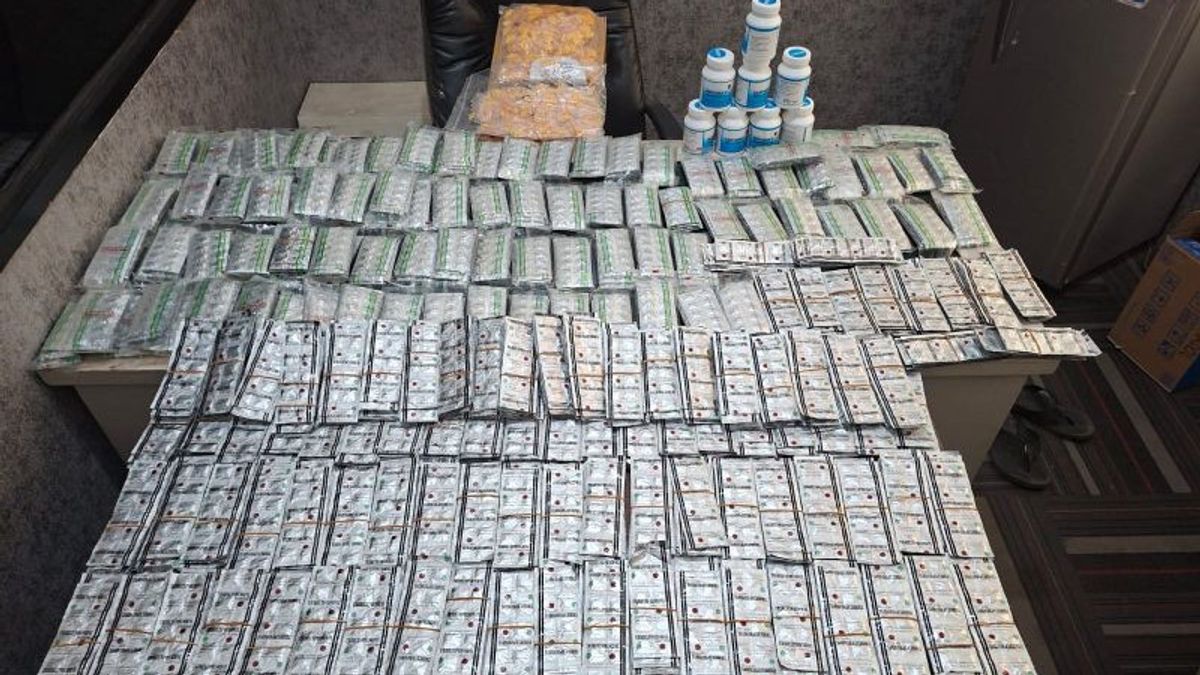


Guru Besar and Consultant Gastroenterology and Hepatology from the Faculty of Medicine, University of Indonesia at Cipto Mangunkusumo Hospital, Ari Fahrial Syam, emphasized that the pain reliever Tramadol is a hard drug that should not be sold freely to the public.
According to Ari, the use of the drug must be through a doctor's prescription because it has the potential to cause dependence if used improperly.
"This includes hard drugs and must be prescribed by a doctor. So it shouldn't be sold freely," said Ari when contacted from Jakarta, Antara, Wednesday, March 11.
He explained that tramadol is often used in the medical world to relieve mild to moderate pain. In practice, the drug is often combined with Paracetamol to increase the effectiveness of treatment.
However, its status as a hard drug makes its use to be under the supervision of medical personnel.
According to Ari, the restriction was carried out because tramadol has the potential to cause addiction if used carelessly.
"Tramadol is a painkiller that doctors often use to treat mild to moderate pain. But this is also a hard drug because it is often abused and can cause dependence," he said.
He explained that some people who take tramadol can feel increased energy, feel fresher, and have a better mood.
The effect makes some users feel more confident or more comfortable, especially if they have previously experienced pain or discomfort in the body.
"Because it has the property of relieving pain, people who previously felt sore or uncomfortable can immediately feel better. This is what makes this drug often abused," said Ari.
He added that the continuous use of tramadol without the supervision of a doctor can trigger dependence. If a person has addiction, the body will continue to "ask" for the drug.
When use is discontinued, sufferers can experience various symptoms, such as difficulty sleeping, restlessness, muscle pain, to tremors or tremors.
A number of studies also show that the abuse of tramadol can cause various side effects, including headaches, dizziness, drowsiness, digestive disorders, seizures, weakness, anxiety, difficulty urinating, euphoria, menstrual disorders, and hallucinations.
In more severe cases, the use of tramadol without a prescription or in excessive doses can trigger an overdose that can potentially cause the pupils of the eyes to shrink, vomiting, respiratory depression, coma, and cardiac arrest.
Therefore, Ari emphasized that the public needs to understand that tramadol is not a free drug that can be consumed indiscriminately.
"The use of this drug must be through examination and doctor's prescription to be safe and in accordance with the patient's medical needs," he said.
The English, Chinese, Japanese, Arabic, and French versions are automatically generated by the AI. So there may still be inaccuracies in translating, please always see Indonesian as our main language. (system supported by DigitalSiber.id)
Most Popular Tags
#Prabowo Subianto #donald trump #2026 World Cup #Febrie Adriansyah #8791Popular


