
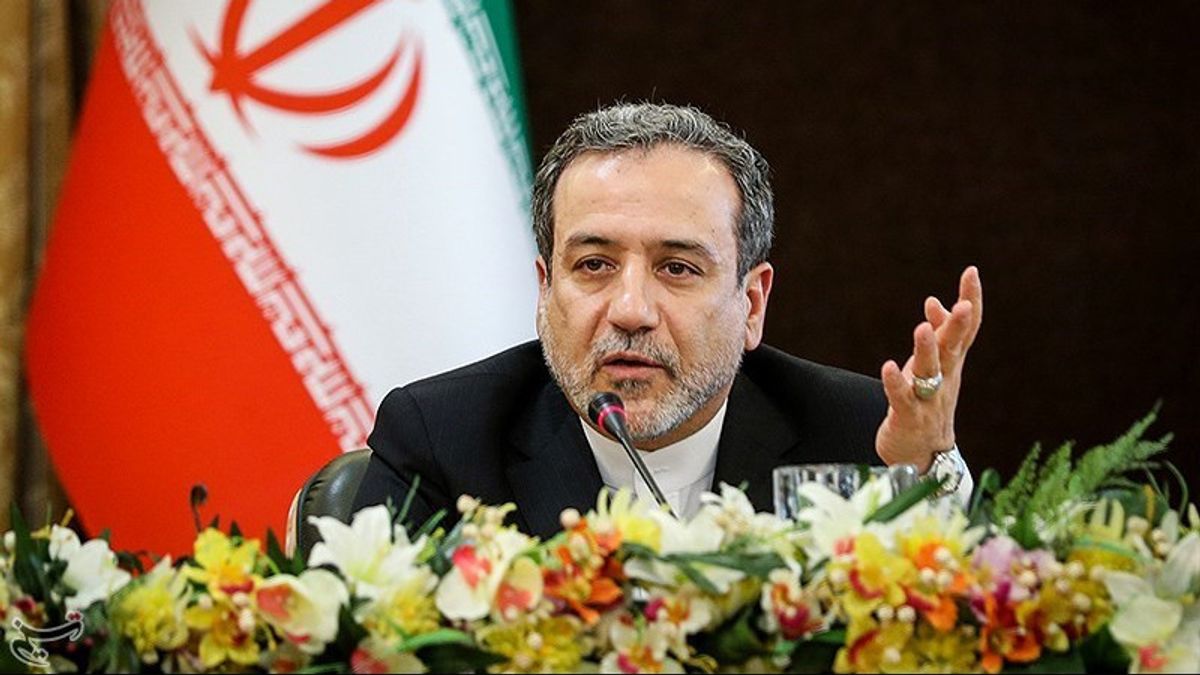


Iran on Sunday reiterated it would not end its uranium enrichment program, rejecting a key demand by the United States two days after resuming negotiations on a nuclear deal.
"Zero enrichment will never be acceptable to us. Therefore, we need to focus on discussions that accept enrichment within Iran while building trust that enrichment is and will remain for peaceful purposes," Foreign Minister Abbas Araghchi said at a forum in Tehran, launching The National (9/1).
Foreign Minister Araghchi led the Iranian delegation that held indirect talks with US negotiators led by special envoy Steve Witkoff in Oman on Friday.
The talks, mediated by Oman in Muscat, follow weeks of tension amid a US military buildup in the region, prompting Iran's supreme leader Ayatollah Ali Khamenei to warn of a regional war if his country was attacked.
"Iran's persistence in uranium enrichment is not only technical or economic, but rooted in the desire for independence and dignity," Foreign Minister Araghchi explained.
"No one has the right to tell the Iranian nation what they should or should not have," he said.
Foreign Minister Araghchi reiterated that Iran's missile program, which the US wants to include in negotiations, has never been part of the agenda.
"Far from it, Menu Araghchi spoke of mixed signals from the US, saying some indications showed seriousness, while the continuation of sanctions and certain military activities raised doubts about Washington's intentions, as reported by the state news agency IRNA.
The Iranian theocratic regime last month faced the biggest challenge to its rule since the 1979 Revolution, when protests caused by economic hardship swept across the country.
The U.S. Human Rights Activist News Service said it had confirmed more than 6,500 protesters were killed as authorities cracked down on protests after imposing an internet blackout on January 8.
Far back in 2015, Iran along with the US, China, France, Germany, Russia, Britain and the EU agreed to the Joint Comprehensive Plan of Action (JCPOA), under which sanctions against Iran were lifted in compensation for Tehran limiting its uranium enrichment.
However, President Donald Trump withdrew from the agreement during his first term in 2018. After that, Iran openly violated the agreed restrictions.
New nuclear talks that began last year were due to enter a sixth round, but were suspended after Israel launched a 12-day war on Iran, in which the US took part by bombing three nuclear sites before President Trump announced a ceasefire.
The English, Chinese, Japanese, Arabic, and French versions are automatically generated by the AI. So there may still be inaccuracies in translating, please always see Indonesian as our main language. (system supported by DigitalSiber.id)

