

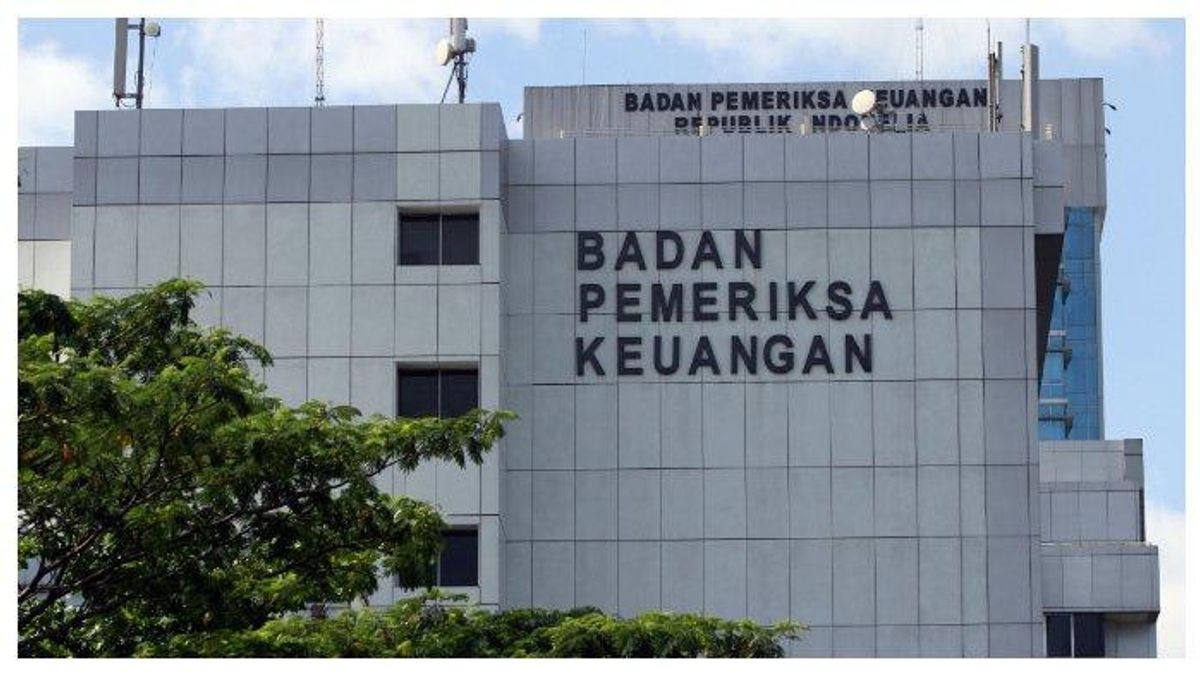


JAKARTA - Indonesian Audit Watch (IAW) urges the Financial Audit Agency (BPK) to conduct a performance audit specifically on the legal and social aspects or legal-social audit on the entire process of acquisition and management of assets by the Forest Area Regulation Task Force (Satgas PKH) and PT Agrinas Palma Nusantara (APN). The audit is considered important to ensure that the principles of the rule of law and justice are not sacrificed in the process of state asset acquisition.
The Founding Secretary of IAW, Iskandar Sitorus, said that audits were needed to test the work reports and performance of the PKH and APN Task Force, which had been considered successful after thousands of hectares of land had returned to state control. However, behind the claim of success, IAW assessed that there were unresolved social and legal issues.
According to Iskandar, about 20 percent of the land managed by APN has been handed over to the community as plasma gardens in a number of areas, including in Rokan Hulu, Riau. Administratively, this step is seen in line with the provisions of the Plantation Law. However, IAW highlighted more complex conflicts in North Padang Lawas, North Sumatra, and Rokan Hulu, Riau.
"In that area, there are still legal cases in court against the PKH and APN Task Force. The public is suing on the same basis, namely the 20 percent plasma rights that they have not received," said Iskandar, Monday, January 26.
Iskandar explained that in Rokan Hulu, the transfer of plasma land by APN was not given to the community group that was suing, but to another group. This, according to IAW, caused injustice for the community who chose to fight for their rights through the legal system.
IAW noted that there were two main lawsuits related to the issue. The first lawsuit was filed by the Simangambat indigenous people in North Padang Lawas to the Padangsidimpuan District Court. They demanded the fulfillment of the 20 percent plasma rights which were considered neglected, both by the previous company and after the land was taken over by the state through the APN.
The second lawsuit was filed by the Rokan Hulu indigenous people to the Pasir Pengaraian District Court Class II. The substance of the lawsuit is similar, namely related to the obligation of plasma that has not been realized and the abandonment of the public's rights in the process of land acquisition by the state.
"These two lawsuits are separate, but have the same spirit. This shows the structural symptoms of state failure in two eras, namely failing to force private companies to obey the law and now failing to enforce transitional justice when the state takes over," said Iskandar.
IAW assesses that this attitude reflects a dangerous policy ambivalence. On the one hand, the state through the APN states compliance with Law Number 39 of 2014 concerning Plantation, especially the obligation of plasma. But on the other hand, the settlement of legal disputes over these obligations is ignored.
Iskandar said this pattern was not new and had been repeated for years, as reflected in the BPK Audit Report (LHP) for the last two decades.
"By acting outside the ongoing legal process, the PKH and APN Task Force have the potential to repeat the old pattern that the BPK criticized, namely creating new certainty on top of old uncertainty. This can cause non-financial state losses in the form of erosion of public trust and horizontal conflict," he explained.
IAW assesses that this is a momentum to make policy corrections. They ask that the transfer of plasma land be temporarily stopped in areas that are still in dispute in court and make court decisions the basis of policy. In addition, IAW emphasized the importance of a special BPK audit on the performance of the PKH and APN Task Force.
According to IAW, this issue is no longer merely about the size of the plasma land, but has touched the basic principles of state life.
"Today's ambivalent actions do not resolve the conflict, but rather move it to a more bitter realm, namely the feeling of being treated unfairly by one's own country," said Iskandar.
IAW encourages the country to establish a new precedent in law enforcement and justice.
"In this republic, justice should be obtained by those who dare to uphold it, not by those who only wait for mercy," he concluded.
The English, Chinese, Japanese, Arabic, and French versions are automatically generated by the AI. So there may still be inaccuracies in translating, please always see Indonesian as our main language. (system supported by DigitalSiber.id)


