
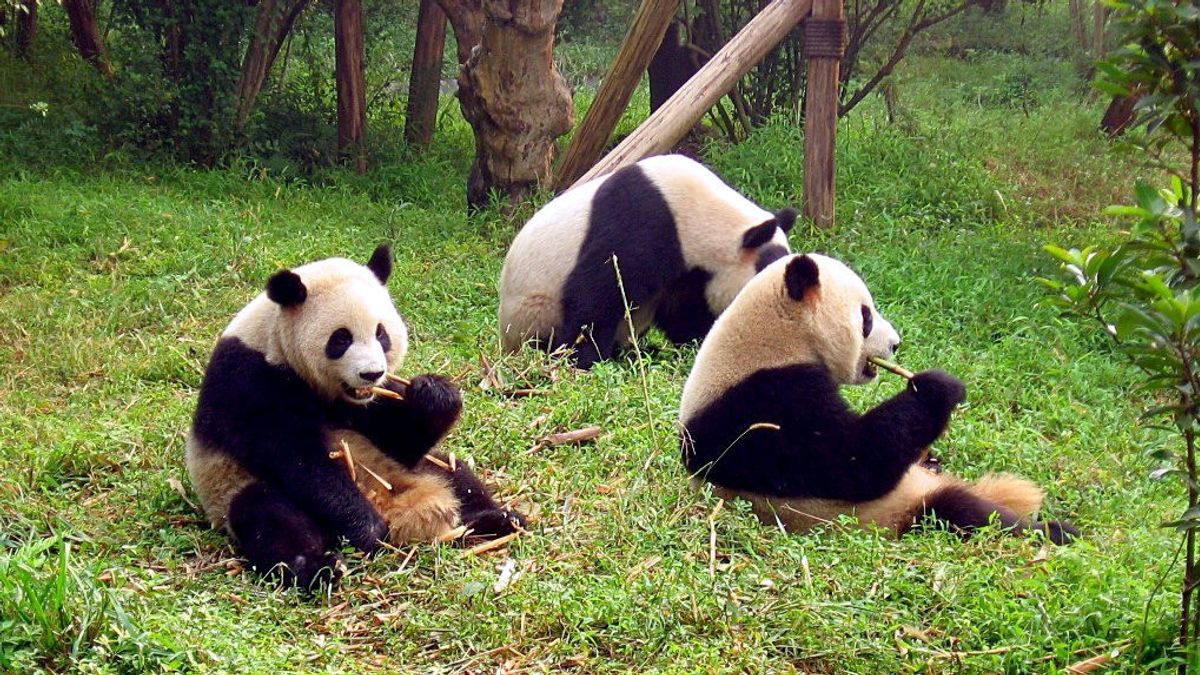


TOKYO - A popular pair of pandas at a Japanese zoo will be returned to China by the end of January, a move that will leave Japan without pandas for the first time in about half a century and disappoint most of the public, the Tokyo metropolitan government said on Monday.
The last day visitors can see Xiao Xiao and her sister, Lei Lei, at Ueno Zoo, where they have lived since birth in 2021, namely on January 25.
The deadline for the return of the panda pair to China is approaching in February based on the bilateral lease agreement.
Prospects for another panda loan, which is considered a diplomatic symbol of friendship between Japan and China, remain uncertain amid deteriorating relations between the two neighboring countries after Prime Minister Sanae Takaichi's recent statement on Taiwan.
Because the two pandas in Tokyo were born from mothers loaned for breeding research, their ownership is in China. The Bamboo Curtain country is known to have long used giant pandas as a diplomatic outreach tool and goodwill towards other countries.
Responding to the possibility that Japan will not have a panda for the first time in about 50 years, Chief Cabinet Secretary Minoru Kihara said the country "hopes to see continued exchanges through pandas," Kyodo News reported (15/12).
Kihara, the top government spokesman, added at a regular news conference the exchange "has long contributed to improving public sentiment in Japan and China."
In Beijing, when asked whether China planned to maintain cooperation with Japan in the future on the conservation of giant pandas, Foreign Ministry spokesman Guo Jiakun avoided answering the question directly, saying it should be directed to the relevant authorities.
"I think pandas are a symbol of friendship. Under normal circumstances, I would like to see China lend them (to Japan) again, but I guess it might be difficult given the current situation," said a woman in her 70s from Chiba Prefecture who was visiting a shopping street near the zoo with her husband.
A 78-year-old Tokyo resident said he remembered queuing to see newborn panda cub Xiang Xiang at the zoo in 2017 and regretted that children in Japan would not have the same opportunity.
In June, four giant pandas loaned to the Adventure World amusement park in Shirahama, Wakayama Prefecture, returned to China, leaving only the Ueno pair in Japan.
Since the first pair of giant pandas arrived in Japan from China in 1972 to mark the normalization of diplomatic relations, these iconic bears have won the hearts of many in Japanese society and brought economic benefits as a tourist attraction.
Lei Lei and Xiao Xiao were born from parents Shin Shin and her partner Ri Ri who arrived at the Ueno zoo in February 2011 after the previous resident panda, Ling Ling, died in 2008.
The two parents will be returned to China in 2024. Xiang Xiang, the older sister of the twin pandas, returned to China in 2023.
In addition to Ueno Zoo and Adventure World, Kobe Oji Zoo in Kobe, Hyogo Prefecture, was previously also home to a panda that was leased to Japan.
Japan's prospects of getting a replacement panda have dimmed after Takaichi said in parliament on November 7 that the emergency situation in Taiwan could become a "life-threatening situation" for Japan that could lead to action from the country's defense forces to support the United States.
This angered China as Beijing considers Taiwan part of its territory and insists the Taiwan issue is purely an "internal affair."
The English, Chinese, Japanese, Arabic, and French versions are automatically generated by the AI. So there may still be inaccuracies in translating, please always see Indonesian as our main language. (system supported by DigitalSiber.id)
Most Popular Tags
#Prabowo Subianto #donald trump #Febrie Adriansyah #8791 #giias 2026Popular


