



The Indonesian Ombudsman (ORI) found that there is still potential for maladministration in the form of requests and/or receipts of rewards at the international airport Immigration Checkpoint (TPI) service.
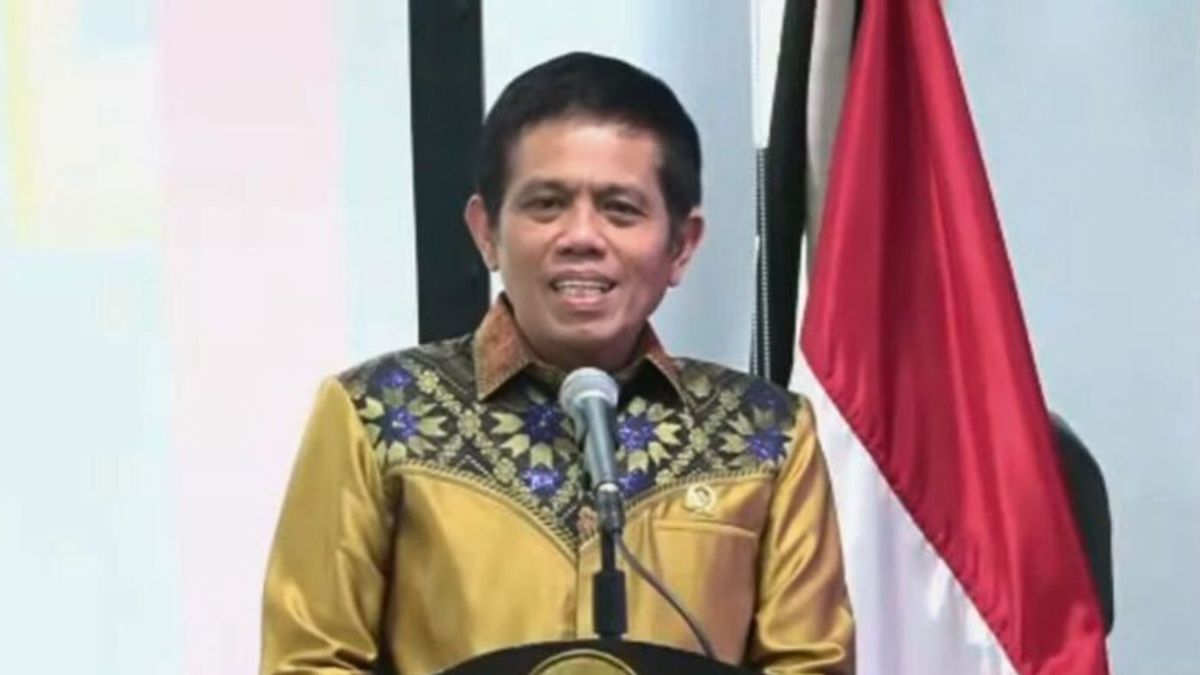
Members of the Jemsly Hutabarat Ombudsman revealed that this potential came from the findings of several aspects in the ORI systemic study, namely increasing the number of crossers, direct interaction between officers and passengers, layout design conditions and service systems at TPI, as well as monitoring facilities.
"There are also aspects of using Electronic Visa on Arrival (E-VoA) services and monitoring the use of fast tracks or priority routes," said Jemsly at the Public Discussion and Submission of Systemic Studies Analysis Result Reports in Jakarta, Thursday, November 27, reported by ANTARA.
Therefore, the Ombudsman advised the Coordinating Ministry for Regional Infrastructure and Development to coordinate policies for integrating digital services across agencies.
According to him, the coordination of the integration of the All Indonesia application system must be carried out so that it can be further integrated with the VoA and Visa-Free Service (BVK), so that it will further simplify the process for passers or passengers.
On the other hand, the Ministry of Immigration and Corrections (Imipas) is asked to digitize thoroughly the immigration service process, by expanding the implementation of E-VoA, autogate, and biometric verification systems throughout the international airport TPI, in order to reduce and minimize direct contact between officers and passengers.
In addition, Jemsly hopes that the Ministry of Imipas can increase internal supervision and use of digital record technology, by increasing CCTV coverage to the immigration inspection manual counter area and increasing the use of body cameras aka body cameras for officers throughout TPI, especially officers who interact directly with passers or passengers.
"Data from recording needs to be stored centrally to ensure the integrity of supervision," he said.
He added that Imipas is also expected to strengthen the ethics and culture of the integrity of the apparatus, by conducting training and/or increasing the understanding of the ethics of public services periodically for all Immigration officers, so that they have high integrity.
It is stated that increasing the capacity of immigration risk management also needs to be done through the development of risk-based surveillance systems to identify potential points for maladministration in immigration services.
Every potential risk in the form of pressure, opportunity, and rationalization, he said, there needs to be mitigation through a periodic compliance audit and rotation of officers and ensuring the implementation of the No Tipping policy socialization and a complaint mechanism that is easily accessible.
Meanwhile, he said that the Ministry of Transportation is also expected to strengthen the supervisory and coordination function of inter-institutions in airport areas and strengthen supervision of the use of Airport Pass Cards.
For PT Angkasa Pura and InJourney, he continued, it is recommended that there be improved layout and service facilities, by optimizing layout design and service lanes at the Arrival Terminal.
Jemsly believes that the restructuring of the VoA payment service counter, the TPI queue, and the autogate position, needs to be done so that it is more accessible and visually monitored and does not cause backflow of passengers.
"Thus it can reduce the buildup of passers or passengers and avoid unnecessary interactions with officers," said Jemsly.
The increase in socialization and service information, he continued, also needs to be carried out by the two state-owned companies, by increasing visual information in various languages regarding procedures for prohibiting reward.
He said the information in question needed to be installed in the queue area, autogate, and airport waiting room.
Likewise with strengthening the ethics and culture of the integrity of the apparatus, which is also needed by Angkasa Pura and InJourney through the implementation of training and/or increasing understanding of the ethics of public services periodically for all immigration officers, so that they have high integrity.
The English, Chinese, Japanese, Arabic, and French versions are automatically generated by the AI. So there may still be inaccuracies in translating, please always see Indonesian as our main language. (system supported by DigitalSiber.id)


