

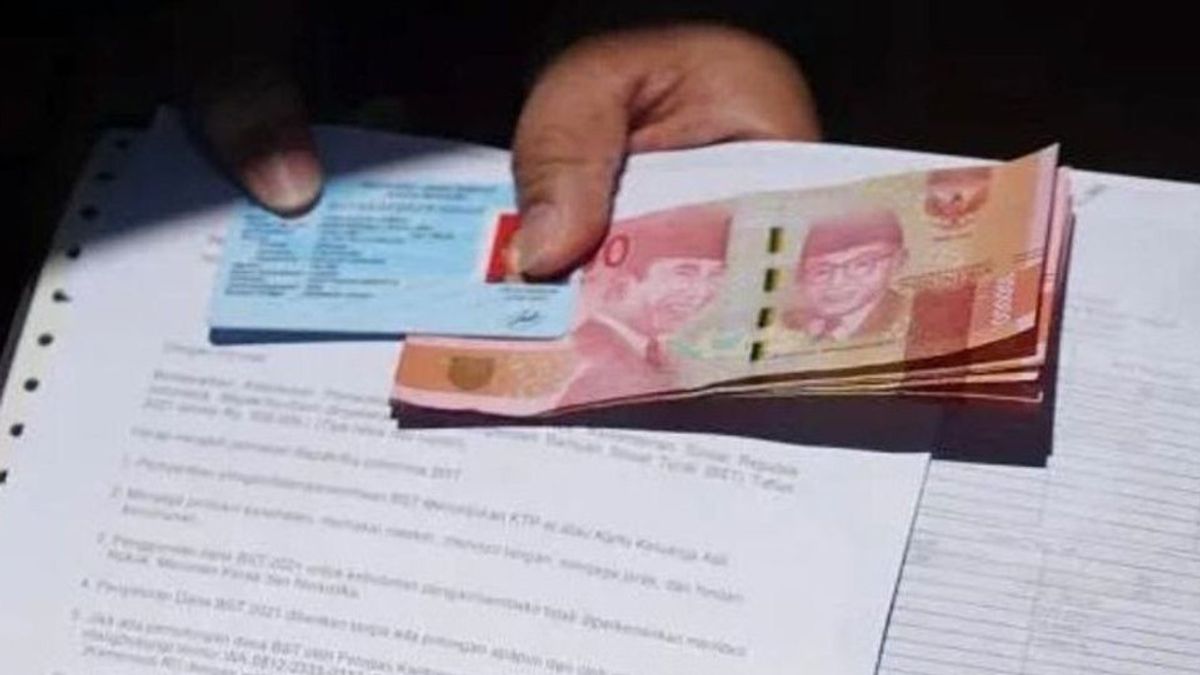


JAKARTA - The DKI Jakarta Provincial Government has allocated a social assistance budget (bansos) of approximately IDR 4.6 trillion in the 2026 APBD draft. From the composition of the budget, the largest portion of around IDR 3.3 trillion is allocated to the Jakarta Smart Card (KJP) Plus program.
However, the large budget is said to be not in line with conditions in the field, because there are still many residents who have not been touched by aid. There are still many complaints from residents who should be entitled to assistance but have not been recorded as recipients.
A member of the DKI Jakarta DPRD from the PSI faction, Kevin Wu, conveyed the findings after visiting a number of areas in West Jakarta.
"When I came down to meet with the community, I found that there are still many Jakarta residents who apparently still have not received social assistance from the DKI Provincial Government. In fact, many residents who are included in the criteria as recipients of social assistance are entitled to receive it," Kevin told reporters, Friday, November 21.
According to Kevin, the main problem that has been going on for a long time is that many residents have not been registered in the integrated social welfare data (DTKS). In fact, participation in DTKS is the initial requirement to get various types of social assistance, including KJP Plus.
"Many residents have complained that they have not been included in the DTKS, even though they should have the right to receive social assistance from the DKI Provincial Government. This is a serious problem caused by the lack of data collection in the field. This has caused many residents to eventually not be registered as receiving social assistance," he said.
Kevin encouraged the DKI Provincial Government to take more proactive steps, including changing service patterns so that they do not only wait for residents to come to the village. He assessed that the government needed to pick up the ball by checking regularly in the field.
SEE ALSO:
-
 | BERITA
Harga Ayam dan Telur Mulai Naik, Pemerintah Lakukan Penyesuaian Menu MBG
21 November 2025, 08:06 -
 | MEMORI
Kontroversi IKN: Kala Jokowi Berikan HGU hingga 190 Tahun ke Investor
21 November 2025, 07:00
"So far, residents who feel they have not entered the DTKS usually come to social services in their respective urban villages. What if we return this route to become the DKI Provincial Government who pick up the ball," said Kevin.
"So, instead of residents who come to the village to check their data at the social service, it is the urban village that should go to the community and carry out routine checks to find out if there are still residents who have not entered the DTKS, even though they have the right to get social assistance," he continued.
The English, Chinese, Japanese, Arabic, and French versions are automatically generated by the AI. So there may still be inaccuracies in translating, please always see Indonesian as our main language. (system supported by DigitalSiber.id)
Most Popular Tags
#Prabowo Subianto #donald trump #firearm #8791 #giias 2026Popular


