

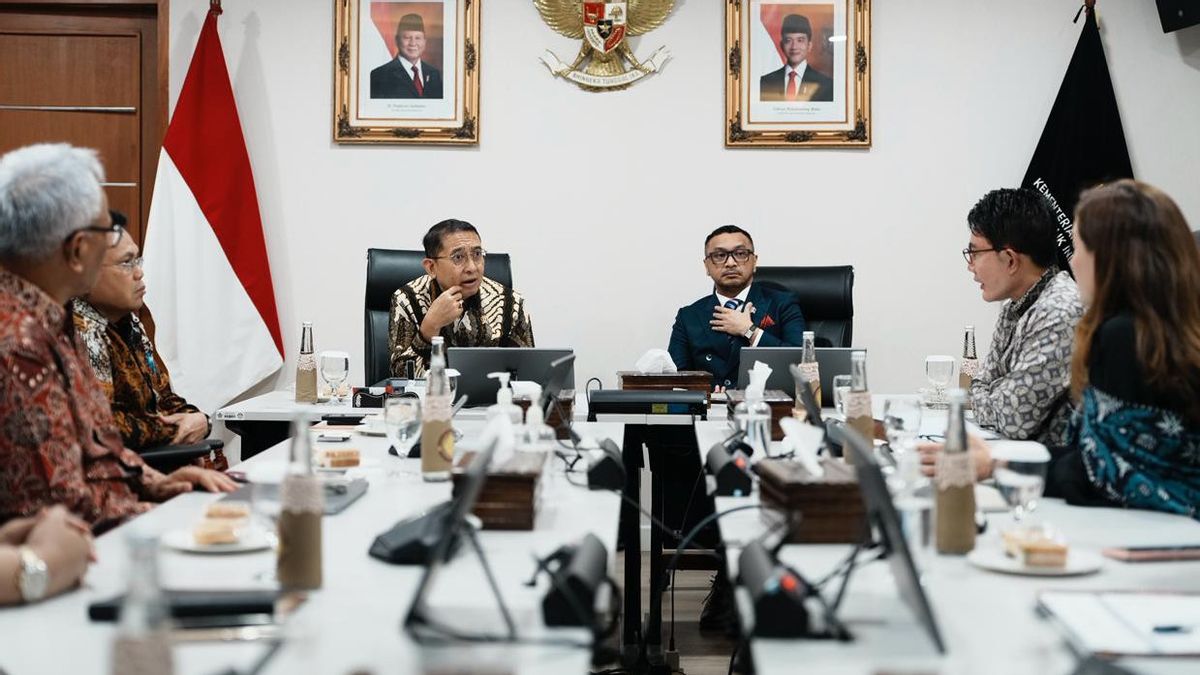


JAKARTA - Minister of Culture Fadli Zon fully supports the planned 2026 Malaysia Islamic Art and Design Festival, which will feature Islamic-Malay art installations in public spaces in Jakarta. This support was conveyed during an audience with the organizing team at the Ministry of Culture Office in Senayan, Jakarta, on Tuesday (11/18).
Fadli believes the festival's public art concept aligns with efforts to strengthen Indonesia's position as a country with great cultural diversity and the largest Muslim population in the world. He said the public art approach provides a new space to promote Islamic-Malay culture in an inclusive manner.
"I strongly support exhibitions with a public art concept, especially those that discuss Islamic-Malay culture. In Indonesia, there is a lot of artistic acculturation born from the intersection of Indonesian and Islamic cultures," said Fadli.
The Minister of Culture also mentioned the Gedung Pusaka Keraton Kanoman Museum in Cirebon as an example of a public space that has been successfully revitalized with modern installations and video mapping. He believes the transformation of an 18th-century warehouse into an exhibition space featuring visual narratives could serve as a model for the festival's art installations.
The Malaysia Islamic Art and Design Festival is scheduled for November 2026. Unlike other art events, this festival will place works in public locations in Jakarta and feature masters of Islamic-Malay art from various countries.
Paulina Gallardo, Director of & Advisory Ltd., emphasized the importance of cross-border collaboration. "This festival is the first initiative to celebrate Malay heritage from Indonesia, Malaysia, Brunei, Singapore, Southern Thailand, and the Southern Philippines," she said.
The audience was attended by festival representatives, Katha Chitta and Stephanie Uun. Representatives from the Ministry of Culture were also present, including Deputy Minister Giring Ganesha, Director General of Cultural Protection, Restu Gunawan, and a number of special staff and experts.
Fadli concluded the meeting by encouraging collaboration between the government, cultural practitioners, and the private sector. "By advancing Islamic-Malay art and culture, we can build a sustainable ecosystem that benefits artists," he emphasized.
The English, Chinese, Japanese, Arabic, and French versions are automatically generated by the AI. So there may still be inaccuracies in translating, please always see Indonesian as our main language. (system supported by DigitalSiber.id)
Most Popular Tags
#Prabowo Subianto #donald trump #2026 World Cup #Febrie Adriansyah #8791Popular


