
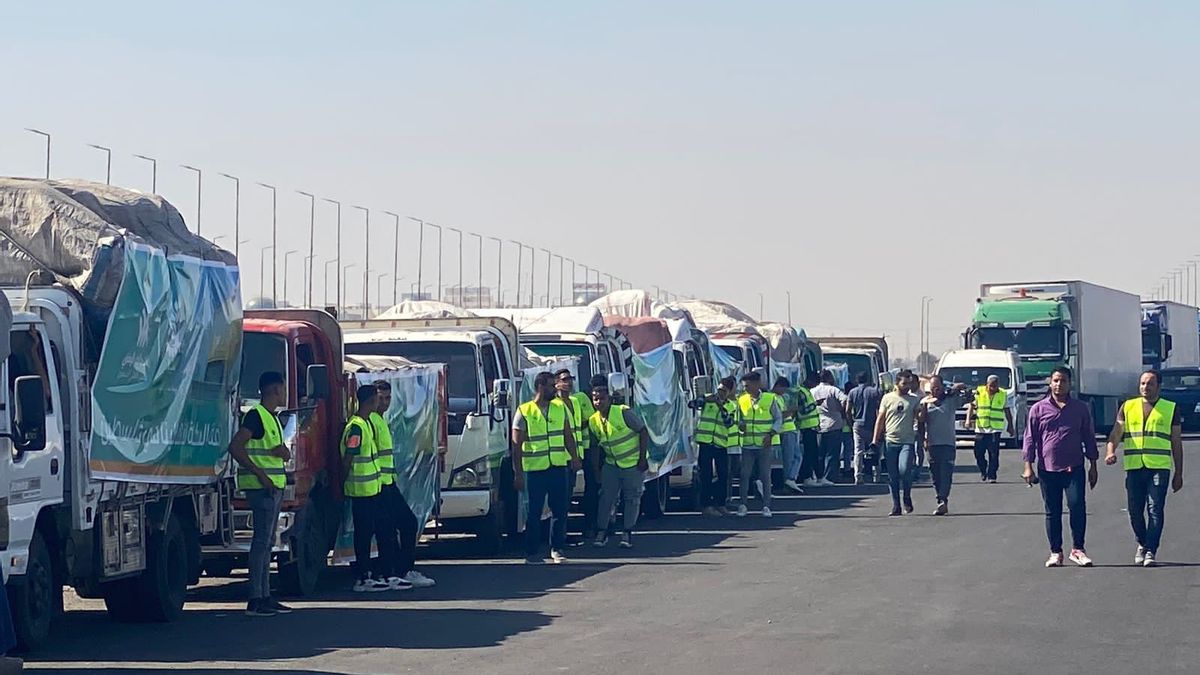


JAKARTA - UNICEF on Tuesday said a number of essential items for humanitarian aid, including syringes for vaccinations and milk bottles, were denied entry into the Gaza Strip by Israel.
This situation caused humanitarian aid institutions to prevent aid agencies from reaching those in need in these war-torn areas.
While UNICEF is carrying out a campaign to vaccinate mass children with a fragile ceasefire, the UN agency says it faces serious challenges in delivering 1.6 million syringes and solar-powered refrigerators to store vaccine bottles into Gaza. The syringe has been waiting for customs clearance since August, UNICEF said.
"Both syringes and refrigerators are considered versatile by Israel and these items are very difficult for us to obtain through permits and inspections, even though these items are urgent," said UNICEF spokesman Ricardo Pires.
"Useful" refers to items Israel considers to have the potential to be used in the military and civilian fields.
UNICEF launched the first round of three rounds of follow-up immunizations on Sunday to reach more than 40,000 children under the age of three who missed routine polio, Measles and pneumonia vaccines, after two years of war in Gaza.
On the first day of the campaign, UNICEF reached more than 2,400 children with various vaccines.
"The vaccination campaign has started, but we still have two more rounds, and for that we need more supplies," Pires said.
UNICEF said more humanitarian aid had entered Gaza, but some important items were still denied entry by Israeli authorities, including 938,000 bottles of ready-to-use baby milk and water truck parts.
"It's nearly a million bottles that can reach children who suffer from various levels of malnutrition," Pires explained at a press conference in Geneva.
Separately, COGAT, Israel's military wing, which oversees the flow of aid to Gaza, said Israel did not prevent the entry of syringes or cooling-related equipment.
Regarding versatile items, COGAT said they were very careful to ensure Hamas did not "hically exploit the aid for its own military development."
COGAT said it offered "alternative solutions" to international organizations for the entry of needed aid, but did not provide further details.
SEE ALSO:
-
 | BERITA
Presiden Macron akan Mengambil Tindakan Tegas Jika Israel Mencaplok Tepi Barat
12 November 2025, 09:00 -
 | BERITA
PM Israel dan Utusan Khusus AS Sepakati Rencana Pemindahan 200 Anggota Hamas di Rafah
12 November 2025, 08:00 -
 | BERITA
Presiden Macron dan Abbas Sepakat Bentuk Komite untuk Memperkuat Kenegaraan Palestina
12 November 2025, 07:00 -
 | BERITA
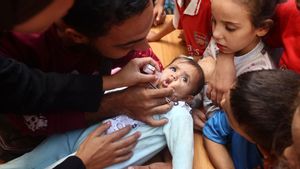
2.400 Anak-anak Divaksin pada Hari Pertama Program Vaksinasi di Jalur Gaza
12 November 2025, 06:00 -
 | BERITA
Presiden Korsel Lee Jae Myung Tidak akan Menoleransi Ujaran Kebencian
12 November 2025, 05:00
Hundreds of trucks carrying food, water, fuel, gas, medicines, medical equipment, tents, and residential equipment entering the Gaza Strip every day, COGAT said, in close coordination with the United Nations.
Palestinian militant groups Hamas and Israel agreed to a ceasefire of the conflict in Gaza on October 10. As part of the deal, access to humanitarian aid will be opened as widely as possible to the Palestinian enclave.
However, international humanitarian aid agencies have repeatedly said incoming aid was insufficient to meet the needs of a population of 2 million people most of whom were displaced and malnourished.
The English, Chinese, Japanese, Arabic, and French versions are automatically generated by the AI. So there may still be inaccuracies in translating, please always see Indonesian as our main language. (system supported by DigitalSiber.id)
Popular


