

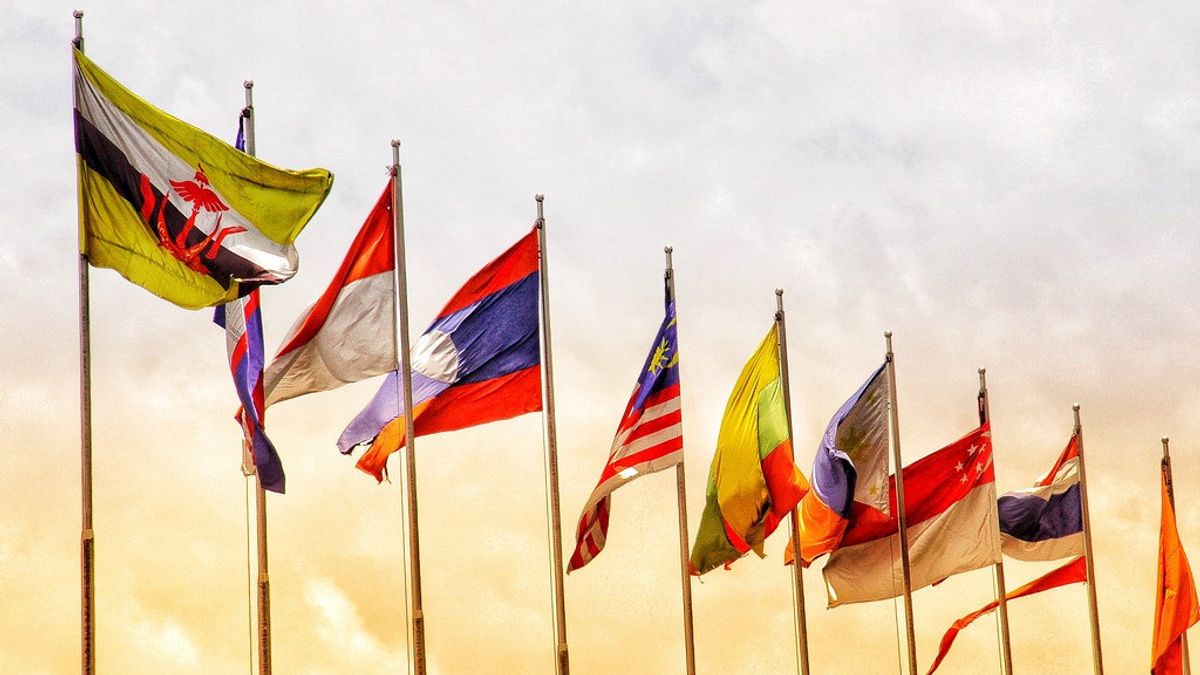


YOGYAKARTA Every ASEAN country (Association of Southeast Asian Nations) has resources that can be used as a source of foreign exchange. Each country, including Indonesia, utilizes its resources to improve the competitiveness and welfare of its citizens. So, what are the resources that are the advantages of no ASEAN countries? Let's find out the answer in the review below.
Adapting the Management Information System page for the Development of Sustainable Profession (SIM PKB), here are the resources that ASEAN countries have always been the mainstay of:
Indonesia as a member as well as the initiator of the establishment of ASEAN, has very abundant natural resources. The commodities that are superior to Indonesia come from the sugarcane plantation sector, palm oil, coffee, tobacco, white pepper, and coating wood.
In addition, Indonesia is also known to excel in the trade sector. Several Indonesian mining commodities that are selling well in the international market are copper, natural gas, gold, tin, metal, and LPG.
These various commodities were then exported to various countries to become foreign exchange reserves. Countries that are the destinations for Indonesian exports, namely Belgium, Luxembourg, Japan, America, and France.
Malaysia, which is also one of the founding countries of ASEAN, also has a potential resource that is no less great. Their mainstay commodities include palm oil, tin, rubber, the rice, bauxite, oil and gas, and gold.
The leading commodities are widely exported to countries such as China, Singapore, the United States, and Thailand.
Joining ASEAN in 1995, Vietnam has an advantage in the agricultural and energy sectors. Some of its superior resources are rice, soybeans, tea, rubber, coffee, coal, and petroleum.
Vietnam exports its production to China, South Korea, Japan and Taiwan.
Thailand, dubbed the Land of the White Elephant, has various high economic-valued resources. The country's main commodities include rice, corn, rubber, sugar cane, tin, copper, iron ore, cloves, and oil and natural gas.
Its export destination countries include China, the United States, Japan, Malaysia, Hong Kong, Australia, and Singapore.
Laos, which became a member of ASEAN in 1997, relies on resources from the agricultural and mining sectors. The country also has great potential for wood products, processed wood products, finished clothing, as well as minerals such as gold and copper.
The export destination countries of Laos include Thailand, China, and Vietnam.
The Philippines has a variety of superior resources in agriculture and mining. Its main commodities include rice, corn, and battery fiber. In the mining sector, the country is rich in copper, gold, silver, and iron ore.
The Philippines exports the results to China, Taiwan, South Korea, the United States, and Japan.
Myanmar has a large diversity of natural resources. In addition to mining and natural gas, the country also produces rice, copper, gold, tin, zinc, silver, gemstones, nickel, and rubber.
Its export destination countries include Thailand, China, India, Singapore, and Malaysia.
Cambodia, which joined ASEAN in 1999, also has resources such as gemstones, rubber, rice, wood, oil and natural gas.
Cambodian exports were widely shipped to the United States, European Union countries, Thailand, and China.
Different from other ASEAN countries, Singapore does not have significant natural resources. However, this country has made the service sector the backbone of its economy. The fields of banking, trade, education, and health are the main contributors to foreign exchange.
Singapore services are widely utilized by countries such as Malaysia, Hong Kong, China, Indonesia, the United States, Japan, Australia, and South Korea, especially in the field of finance and trade thanks to the strategic position of high service quality.
Brunei Darussalam, who officially joined ASEAN in 1984, is known for its natural wealth in the form of oil and natural gas. In addition, palm oil, rubber, and coconut are also the country's leading commodities.
The export destination countries of Brunei include Japan, Australia, Indonesia, South Africa, and the United States.
Timor Leste, who became the 11th member of ASEAN at the end of last October, is known to excel with natural petroleum and gas resources. These two mining commodities contributed most of the country's export revenue.
In addition, other superior resources include agricultural products such as coffee, vandalism, corn, and coconut. The country also has potential in minerals, such as chromium, cobalt, and nickel.
SEE ALSO:


Timor Leste's leading products are mainly exported to China, Singapore, Japan, and Indonesia.
That's a review of what resources are the advantages of each ASEAN country. Hopefully the information above can add insight to readers. Get news updates of other options only on VOI.ID.
The English, Chinese, Japanese, Arabic, and French versions are automatically generated by the AI. So there may still be inaccuracies in translating, please always see Indonesian as our main language. (system supported by DigitalSiber.id)
Most Popular Tags
#Prabowo Subianto #donald trump #2026 World Cup #venezuela #konflik timur tengahPopular


