



The Ministry of Finance has sparked a wave of protests from a number of regional heads. The governors considered the policy to be detrimental to the regions and considered it a form of the central government's arbitrariness towards local development.
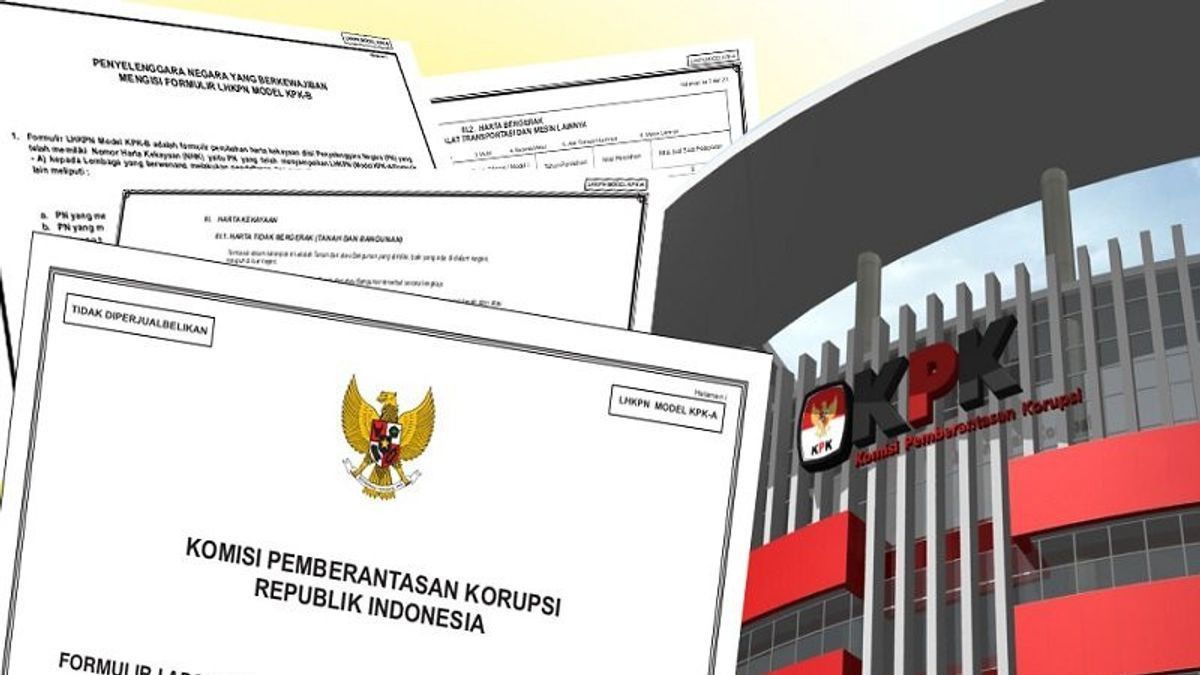
However, behind the public spotlight and political debates, there are contrast facts revealed by Indonesian Audit Watch (IAW): some of the governors who protested the most have not complied with the obligation to report wealth (LHKPN) to state supervisory agencies.
IAW's Founder Secretary, Iskandar Sitorus, said that the TKD pruning policy did not appear suddenly, but was based on two strong legal grounds. First, Presidential Instruction (Inpres) Number 1 of 2025 concerning State Expenditure Efficiency, which mandates evaluation and reallocation of spending in a more productive direction.
Second, the Decree of the Minister of Finance (KMK) Number 29 of 2025 which stipulates a total cuts of around IDR 50.59 trillion for TKD this year and a plan to reduce the allocation to IDR 693 trillion in 2026 from IDR 919.87 trillion previously.
"So, the claim that this is a form of punishment for the region is that simplification of financial conflicts becomes a political drama," said Iskandar in Jakarta, Tuesday, October 14.
According to him, the Supreme Audit Agency (BPK) for the last two decades has continued to issue repeated findings about the weakness of regional financial governance.
One example, in the Examination Result Report (LHP) on the Provincial Government of Central Java in 2016, BPK found that the Remaining Budget Financing (SILPA) amounted to Rp200.4 billion indications of the low absorption of non-synchronous budgets and planning.
"It is difficult to call the center arbitrary if trillions of funds are distributed, but the regions are unable to use it on time and on target," he said.
IAW also highlighted the results of the 2021 Cilacap Regency LKPD audit which showed ineffective spending and DAK physical programs that were not on target. Public funds that should strengthen community services have run out in ceremonial projects," he continued.
Iskandar assessed that the main problem was not the amount of funds, but the weakness of regional management and integrity. He emphasized that cutting TKD was actually a 'wake-up call' so that the regions were more disciplined and accountable.
Furthermore, IAW revealed that of the 18 governors who rejected the cutting policy, six of them did not yet have a valid LHKPN, namely Anwar Hafid (Central Sulawesi), Mahyeldi Ansharullah (West Sumatra), Jhon Tabo ( Mountain Papua), Muzakir Manaf (Aceh), Bobby Nasution (North Sumatra), and Lalu Muhammad Iqbal (West Nusa Tenggara).
"This is not just an administrative matter, but a matter of moral legitimacy. How can you demand trillions of rupiah in public funds if it is not transparent to personal wealth," said Iskandar.
SEE ALSO:


As a recommendation, IAW asked the Ministry of Finance and the Ministry of Home Affairs to open data on TKD cuts per region in a transparent manner, as well as increase coordination with the KPK to provide special supervision to regional heads who have not complied with LHKPN.
"Customing funds is not a threat, but a call for introspection. Report LHKPN first, then talk about regional funds," concluded Iskandar.
The English, Chinese, Japanese, Arabic, and French versions are automatically generated by the AI. So there may still be inaccuracies in translating, please always see Indonesian as our main language. (system supported by DigitalSiber.id)
Popular


