

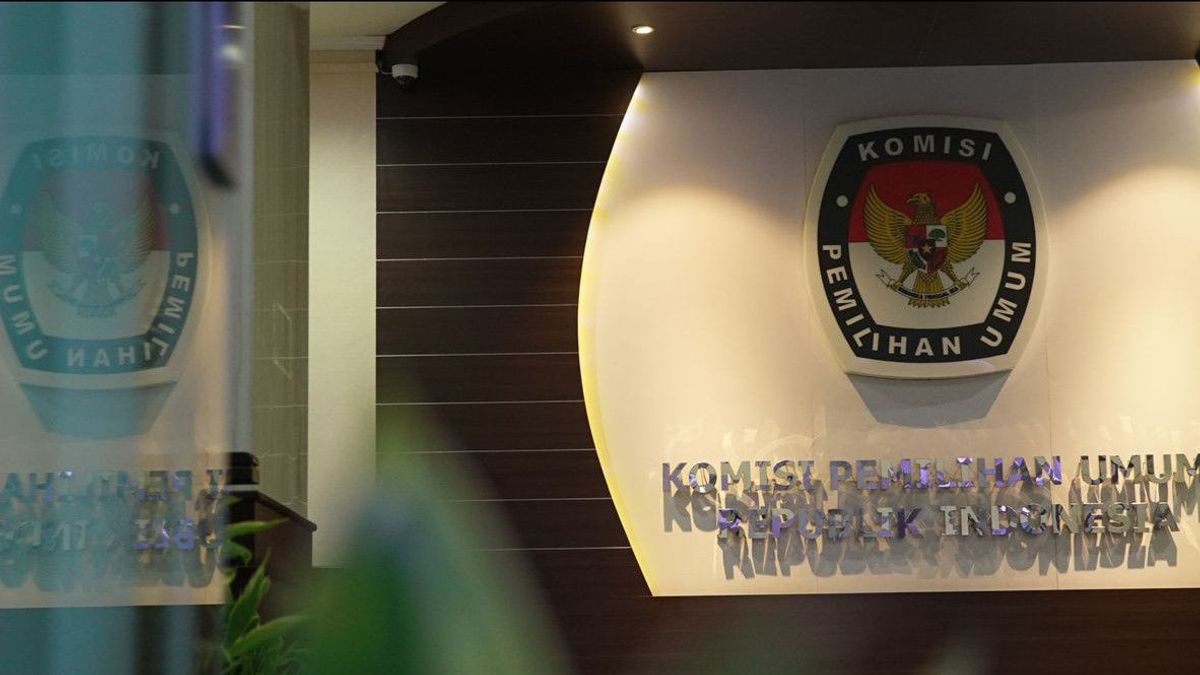


JAKARTA - KPU chairman Mochammad Afifuddin explained that his institution's basis for issuing a decision not to publish diploma documents which are requirements for presidential candidates (candidates) and vice presidential candidates (cawapres) to the public without approval.
Afifudin said the decision was issued in order to adjust the Law on Public Information Disclosure.
"Regarding the KPU decision, 731 only adjusts to the provisions in the Law on Public Information Disclosure in Law 2008. In general, for the data of a person, the parties who will later be regulated in the nomination of presidential and vice-presidential candidates, including the current data, are related to the excluded data, which are regulated in articles 17 letters g and h it must be, he can be disclosed with the approval of the person concerned or because of the court's decision as regulated in the information disclosure Law article 18 letter a paragraph 2," explained Afifuddin at the DPR building, Monday, September 15.
"So basically, we only adjust to certain documents in the 'rules to maintain confidentiality'. For example, related to medical records, then school documents or diplomas. Those are the ones concerned who must be asked later or on court decisions," he continued.
However, Afifuddin said life history lists can still be displayed for the public, only specifics such as medical records and diplomas as well as other personal data.
"If there is no life history. There is data that is not related to it. Yesterday, for example, the vision and mission of the life history list was immediately opened. Only related to excluded data or data that requires approval or court decisions to be disclosed. Not all data," he said.
"We immediately conveyed the CV in yesterday's presidential election. Please look at the traces of our election. CV is not (closed). If things that do not involve data that are not regulated in the Law on Public Information Disclosure, we will give it," he added.
SEE ALSO:
-
 | BERITA
Menlu AS Temui Netanyahu, Israel Hancurkan Puluhan Bangunan di Gaza
15 September 2025, 16:00

Afifuddin agrees that the public needs to know the data of public officials. However, the new KPU decision only slightly adjusts to the Law on Public Information Disclosure.
"(So everyone) is not suspended. You can ask. But when the KPU has to give certain requirements. For example, our ID card has a NIK, we don't spread someone's NIK. Including medical records. There is a specific in the regulation of the Law on Public Information Disclosure, which one is considered to be able to approve and not," said Afifuddin.
The English, Chinese, Japanese, Arabic, and French versions are automatically generated by the AI. So there may still be inaccuracies in translating, please always see Indonesian as our main language. (system supported by DigitalSiber.id)


