


JAKARTA UMJ legal expert Chairul Huda assessed that Article 56 paragraph (2) in the draft of the Asset Confiscation Bill has the potential to be misused into a negotiation tool if it has been passed into law without being revised.
Quoted from the bphn.go.id page, the draft article 56 paragraph (2) of the Asset Confiscation Bill states that the Attorney General can transfer assets of criminal acts, either before a court decision has obtained permanent legal force, or after a court decision has obtained permanent legal force.
According to Huda, the article contradicts several legal principles such as the principle of presumption of innocence considering that a person's property can be immediately confiscated just because it is suspected of committing a criminal act without having to wait for a court decision.
Supposedly, confiscation of someone's assets should wait for a court decision not to mix between assets resulting from corruption and those not from corruption. Although it is relatively difficult to prove whether the assets are from corruption crimes or not, law enforcement officials can refer to the money laundering law.
If there is no court decision, the Asset Confiscation Law has the potential to be misused as a means of pressure or negotiations on the handover of assets without a legal process. Thus, the suspect voluntarily handed over his corruption assets with an agreement not being processed by law. Finally, there was a settlement of corruption cases outside the court," explained Huda, Friday, September 5, 2025.
SEE ALSO:
-
 | BERITA
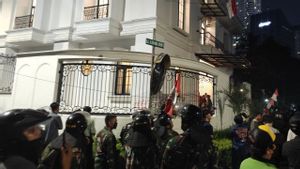
Depan Gedung DPR RI Hujan, Massa Kian Membludak Melompati Pagar Tol Gatot Subroto
28 Agustus 2025, 15:12

He also highlighted law enforcement against corruption crimes that have been going on so far, where law enforcement is more criminally oriented, not restoring state losses. "Well, here the Asset Confiscation Law is needed. If that happens, then the Asset Confiscation Law is cool," he added.
Huda hopes that the Asset Confiscation Bill can later be implemented with government officials to private parties who have the convenience of the government. If they are reluctant to hand over unreasonable wealth to the state, then the legal law is to be made suspects.
"Well, this can start from government officials, state-owned officials, private companies that can facilitate business from the government. Leave unreasonable wealth, if you don't want to, suspect," he said.
The English, Chinese, Japanese, Arabic, and French versions are automatically generated by the AI. So there may still be inaccuracies in translating, please always see Indonesian as our main language. (system supported by DigitalSiber.id)


