

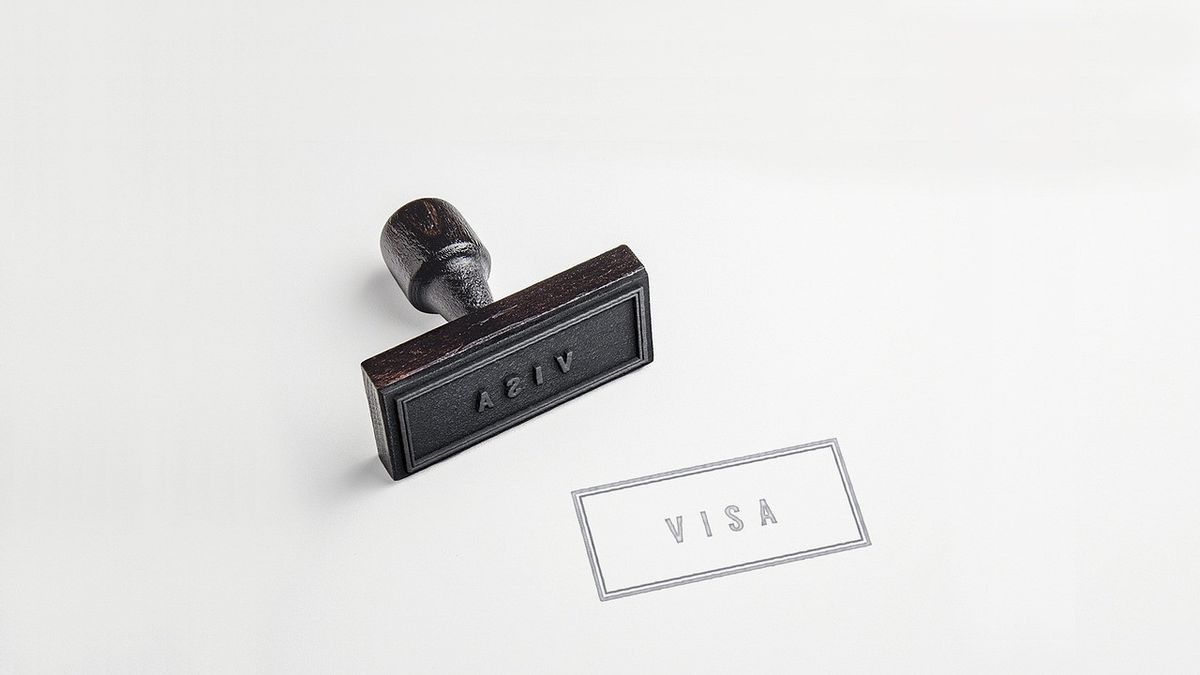


YOGYAKARTA - The Government of the United States (US) has again tightened the rules for applying for visas for business visits (B-1) and tourism (B-2). One of the latest policies in the international spotlight is the implementation of a nominal amount (visa bond) with a nominal value of up to USD 15,000 or around IDR 245 million (with an exchange rate of IDR 16,325 per US dollar).
This policy is part of a 12-month pilot program to reduce overstay infringement rates in the US. This policy is in effect from August 20, 2025 and targets countries with high overstay rates, or whose visa applicant verification system is considered weak by the US government.
According to the US State Department, the main objective of this policy is to reduce the number of visa violations, especially those living in the US exceeding the validity period of the granted visa.
The US government noted that although the overall overstay rate was only about 1.45% of the total 38 million foreign visitors in the fiscal year 2023, some countries showed very high numbers.
For example, Myanmar (Burma) has an overstay rate of 27%, Liberia reaches 19%, and Zambia and Malawi records 14.3% and 11.1%, respectively. These countries will be the initial targets for the implementation of bond visas.
However, until now, the official list of affected countries has not been fully announced. The US government said it would announce it completely before the date of policy implementation.
In this policy, the guarantees or bond visas imposed on visa applicants will vary, ranging from USD 5,000, USD 10,000, to a maximum of USD 15,000. This guarantee must be paid directly to the US Treasury before the visa is issued.
For applicants who comply with visa provisions, especially in terms of returning to their country of origin before the visa period ends, the guarantee money will be fully refunded. However, if there is a violation, such as overstaying or applying for asylum while in the US, the guarantee will be owned by the US government.
These funds can also be used to cover deportation costs. According to the Department of Homeland Security (DHS), deportation costs can reach more than USD 17,000 or around IDR 278 million per person.
As part of surveillance efforts, visa applicants from affected countries are also required to enter and leave certain airports in the US to facilitate tracking. In addition, face-to-face interviews are also required for the visa extension process, after being canceled during the pandemic.
Although it has not been stated which countries will follow this rule, Indonesia has the potential to be affected because it is not included in the Visa Waiver Program (VWP), a visa-free program that only applies to certain countries. For Indonesian citizens, this policy is a new challenge in submitting visas to the US.
Visa Amerika selama ini sudah dikenal sebagai salah satu yang paling sulit untuk diperoleh. Dengan tambahan syarat uang jaminan sebesar ratusan juta rupiah, bisa dipastikan akan semakin sulit, terutama bagi wisatawan atau pelaku bisnis dari negara-negara berkembang.
As is known, the Donald Trump administration has made immigration enforcement one of the main focuses of its policies. He signed an executive order "Protecting the American People from Invasion", which is the basis for the implementation of this bond visa policy.
SEE ALSO:
-
 | BERITA
Sprindik Keluar Usai Periksa Eks Menag Yaqut, KPK Dalami Dugaan Korupsi Haji
08 Agustus 2025, 06:15 -
 | TEKNOLOGI
Bocoran GPT-5 Ungkap Kemampuan Matematika dan Koding yang Lebih Hebat
08 Agustus 2025, 03:05

US State Department spokesman Tammy Bruce said this move was directed and made sense as part of US commitments to national immigration and security laws.
"This directed and reasonable step strengthens the government's commitment to US immigration law while preventing visa violations," said Bruce, Tuesday, August 5.
The English, Chinese, Japanese, Arabic, and French versions are automatically generated by the AI. So there may still be inaccuracies in translating, please always see Indonesian as our main language. (system supported by DigitalSiber.id)
Most Popular Tags
#Prabowo Subianto #donald trump #Febrie Adriansyah #8791 #giias 2026Popular


