
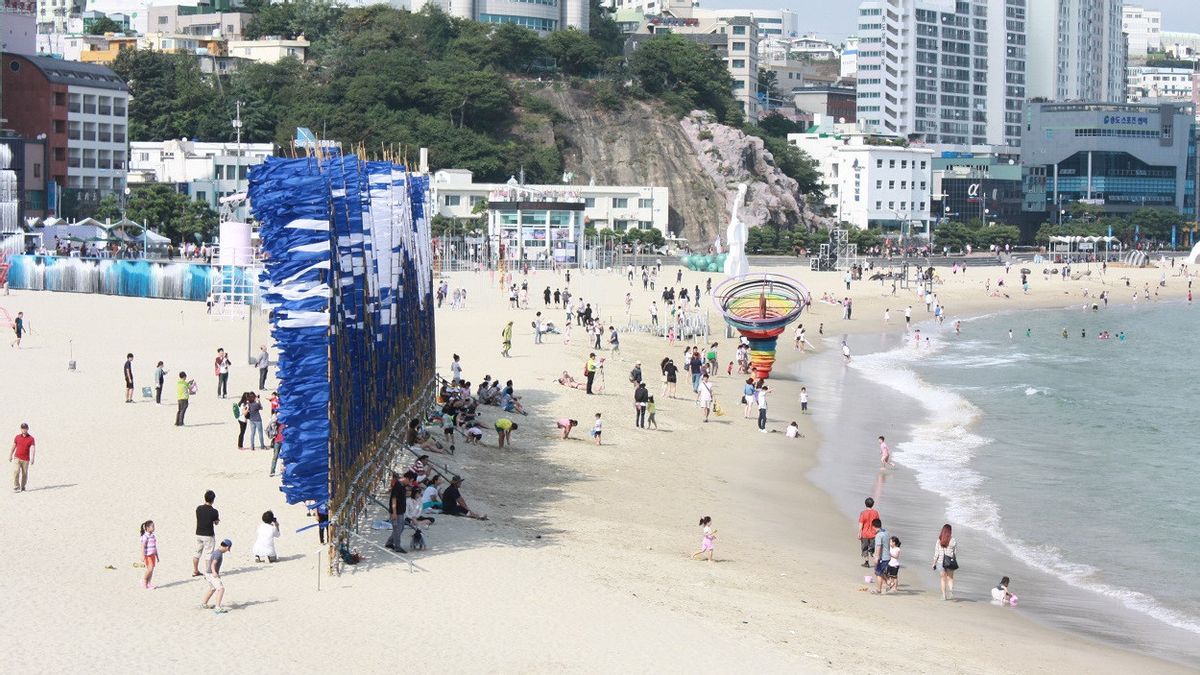


JAKARTA - South Korea's weather agency issued heatwave warnings for most countries this week, including Seoul, warning of a very hot day's day's temperature, a tropical night, followed by an increased risk of hot-related disease as the country faces its first major heat wave in the summer.
The South Korean Meteorology Agency (KMA) said on Monday the highest temperatures during the day ranged from 27 to 35 degrees Celsius across the country, with temperatures in most areas feeling like 33 degrees or higher due to humidity.
Seoul recorded its first tropical night of the year between Sunday and Monday, with temperatures dropping just up to 25.6 degrees Celsius, reported The Korea Times June 30.
Tropical night refers to conditions where the lowest temperature remains above 25 degrees between 6pm and 9 the next day. The first tropical night of the year in the capital came eight days later than last year.
As of Monday, heatwave warnings were in effect in several regions of North and South Jeolla provinces as well as South Gyeongsang Province, while most other areas, including Seoul, were still under heatwave warnings.
Heat wave notices are issued as temperatures are expected to reach 33 degrees Celsius or more for more than two days.
Meanwhile, heat wave warnings are issued when the highest temperature is 35 degrees or more lasting for more than two days, with the potential to cause serious health risks and disturbances across affected areas.
KMA warned that heat wave notifications and warnings could be expanded in the coming days.
The persistent entry of hot and humid air has kept the night temperature high, with cities like Gangneung in Gangwon and Pohang provinces in North Gyeongsang Province also experiencing tropical nights on Sunday, conditions expected to continue for a few more days.
This widespread heat is more than just discomfort, it poses a serious public health risk that demands immediate precautions.
KMA advises vulnerable groups, including parents and children, to be more careful to stay hydrated and limit outdoor activities.
Public businesses and services are urged to adjust operations to protect workers and provide cool shelters for those at risk, while extra caution is needed for those who work outdoors, in livestock facilities, or in bad indoor environments.
SEE ALSO:
-
 | BERITA
Iran Enggan Negosiasi dengan AS Jika Ada Tekanan dan Keinginan Mendikte
30 Juni 2025, 16:00



Seoul, Incheon, Gyeonggi Province, Daegu, as well as remote areas of Gyeongsang and Gangwon provinces experienced rain spread over 5 to 20 millimeters on Monday, which provided only a little relief from the heat. After the rain, the humidity is expected to remain high, causing the temperature to rise again.
KMA estimates the temperature from July to September is likely to remain above average, with a 50 percent chance of reading higher than usual for July and August.
Rainfall is expected to be near normal for the summer, but September can experience a above-average precipitation.
The English, Chinese, Japanese, Arabic, and French versions are automatically generated by the AI. So there may still be inaccuracies in translating, please always see Indonesian as our main language. (system supported by DigitalSiber.id)
Most Popular Tags
#Prabowo Subianto #donald trump #2026 World Cup #Febrie Adriansyah #8791Popular


