

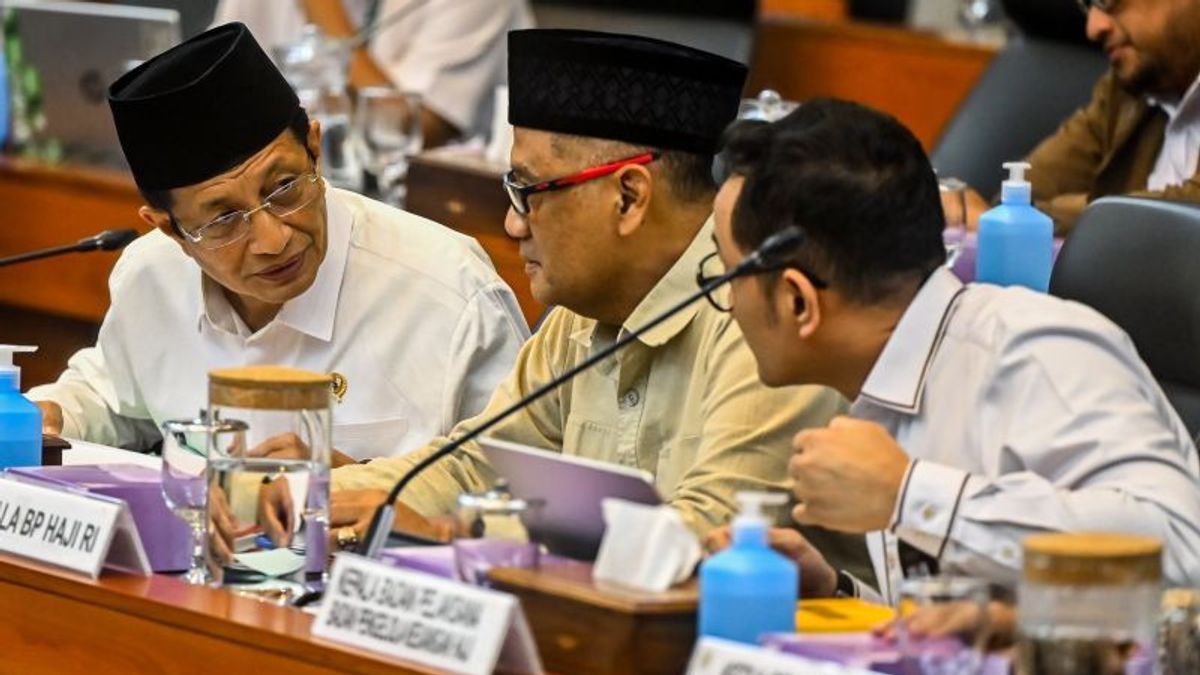


The discourse on disbanding the Hajj Financial Management Agency (BPKH) has been rejected by the Indonesian Hajj Brotherhood Association (IPHI). The organization considers that BPKH is the result of the struggle of the people who must be maintained as an independent institution in managing hajj funds.
Deputy Chairperson of IPHI, Mohamad Anshori, emphasized that the hajj funds do not belong to the state, but belong to the people, so that the management cannot be returned to the government. He assessed that the dissolution of BPKH was not a solution, but rather a setback that could disrupt the congregation's trust in Hajj financial governance.
"Before there was BPKH, the management of hajj funds was full of loopholes prone to abuse. The presence of BPKH had brought transparency and professionalism. If there was a shortage, it should have been corrected, not dissolved," said Anshori, quoting ANTARA, Sunday, March 10.
As a concrete step, IPHI proposed a revision of Law no. 34 of 2014 concerning Hajj Financial Management to strengthen the Hajj financial system that is more transparent, professional, and in favor of pilgrims.
SEE ALSO:
-
 | BERITA
Mendiktisaintek Satryo Legowo Lepas Jabatan: "Lebih Baik Mundur Daripada Diberhentikan"
19 Februari 2025, 16:18 -
 | BERITA
Kuli Bangunan Pelaku Pembunuhan Bos Ruko di Rawamangun Ditangkap di Jaksel
26 Februari 2025, 20:32





IPHI submitted five main proposals in the revision of the Hajj Finance Law:
1. Alignment of the role of BPKH and the Hajj Implementing Agency (BPH) to avoid overlaps in the regulations and implementation of Hajj.
2. Establishment of the Hajj Standing Committee to improve coordination across ministries and institutions, as well as optimize fiscal policies and the efficiency of Hajj costs.
3. Strengthening financial risk management, including the application of risk reserves (Risk Reserve) and hedging strategies to anticipate global economic fluctuations.
4. An investment restructuring and restructuring strategy is to maintain the stability of Hajj funds and regulate the quota of pilgrims so that they remain balanced with BPKH's financial capacity.
5. The efficiency and flexibility of Hajj services, including the implementation of long-term contracts for education, transportation, and consumption of pilgrims, as well as the integration of digital services in the management of hajj funds.
In addition, IPHI also proposes that Bank Muamalat Indonesia be used as Hajj and Umrah Banks, so that the management of Hajj finances is more integrated with the Islamic banking system in favor of pilgrims.
"BPKH must be stronger and more professional. We must not back down to an old system full of uncertainty. Therefore, the revision of this law is the best step to maintain the sustainability of the management of Hajj funds that are more transparent and benefit the congregation," said Anshori.
With these various proposals, IPHI hopes that the government and the DPR can take more strategic steps in improving the management of Hajj funds, without having to dissolve the BPKH.
The English, Chinese, Japanese, Arabic, and French versions are automatically generated by the AI. So there may still be inaccuracies in translating, please always see Indonesian as our main language. (system supported by DigitalSiber.id)
Popular


