


JAKARTA Kawasaki Motors is quite stealing attention at the 2025 Japan Mobility Show (JMS) which will last until November 9 with a main focus on green energy technology. In this exhibition, Kawasaki carries the theme Tradition and Innovation' and one of them shows off the mock-up model of hydrogen-powered motorcycles and hydrogen engines specifically for motorcycles.
The hydrogen motor exhibition at the Kawasaki booth is a symbol of the exploration of this "Geng Hijau" manufacturer against zero-emission mobility solutions. This development effort is part of a wider collaboration led by its parent company, Kawasaki Heavy Industries (KHI), which has focused on hydrogen as a renewable energy source since 2010. KHI has been involved in the entire hydrogen supply chain, from production to transportation.
Quoted from the old Japan Mobility Show, Monday, November 3, the research vehicle engine is called the Ninja H2 engine with a capacity of 998 cm3 four cylinders fresh with a supercharger, which has been modified for hydrogen fuel direct injection (DI) systems. The engine is mounted on a framework equipped with a hydrogen fuel tank and a fuel supply system.
This vehicle maintains a fun sensation typical of conventional motors, including vibrations and engine character, but by driving hydrogen fuel that produces the main emissions in the form of water.
SEE ALSO:
-
 | MOBIL
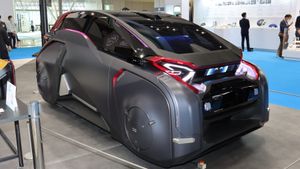
Toyoda Gosei Pamerkan Konsep FLESBY HY-CONCEPT, Terobosan Besar Mobilitas Hidrogen
03 November 2025, 11:22 -
 | OTOINFO
Proyek Mobil Nasional Tarik Minat Hyundai, Sinyal Kuat dari Investor Global
03 November 2025, 10:47 -
 | MOTOR
Ducati Panigale V4 Replika Francesco Bagnaia Siap Dilelang, Nilainya Capai Rp1 Miliar
03 November 2025, 10:17
The hydrogen engine development initiative is also in line with the commitments signed by five major Japanese automotive manufacturers including Kawasaki, Yamaha, Toyota, Subaru, and Mazda to jointly develop hydrogen-fueled internal combustion engines. This collaboration aims to expand the choice of zero emission technology in addition to pure electric vehicles (BEVs).
In addition to the hydrogen motor model, the Kawasaki booth at JMS 2025 also features other iconic models such as the Z900RS SE and W Series, in honor of the legacy of their classic motor entering its 60th anniversary. The contrast between the legendary relic and the prototype's hydrogen motor highlights Kawasaki's strategy to connect the past with a sustainable future.
Kawasaki's move in developing hydrogen motors is also an integral part of KHI's larger vision. KHI not only focuses on land transportation, but also displays a large liquid hydrogen carrier model. This confirms the role of Kawasaki in integrated mobility that crosses land, sea and air, while at the same time supporting KHI's goal of achieving carbon neutrality in their factories and domestic offices by 2030.
The English, Chinese, Japanese, Arabic, and French versions are automatically generated by the AI. So there may still be inaccuracies in translating, please always see Indonesian as our main language. (system supported by DigitalSiber.id)
Most Popular Tags
#Prabowo Subianto #donald trump #firearm #8791 #giias 2026Popular


