

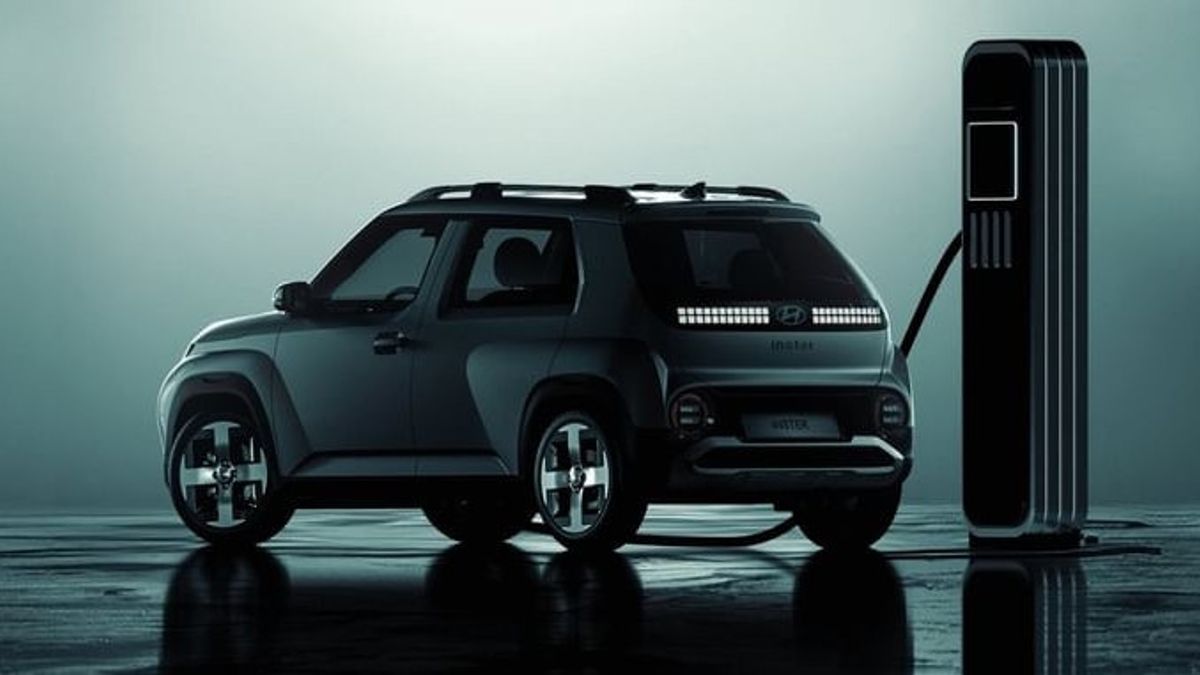


Hyundai Motor Company has confirmed that it is preparing its first fully produced compact electric car in India and is scheduled to launch in 2027. The model will be designed, developed, and manufactured at the Hyundai plant located in Sriperumbudur, Tamil Nadu.
This move is part of Hyundai's great strategy to expand the ranks of electric vehicles in the developing country market with more efficient production costs. Hyundai's President Director and CEO, Jose Mu Wayoz, revealed that the compact electric car will most likely be based on the Inster EV model that was introduced earlier globally.
"We are committed to presenting affordable electric vehicles but still prioritizing technology and high quality," Mumenoz said in a statement, as quoted from Autocariandia, Thursday, October 16.
SEE ALSO:
-
 | OTOINFO
Subaru Bakal Boyong Dua Konsep STI Baru di Japan Mobility Show, Apa Saja?
16 Oktober 2025, 09:22

This car will use the E-GMP (K) platform, a simplified version of Hyundai's global electric platform to make it more suitable for the affordable price segment. In terms of specifications, Hyundai will offer two battery variants.
Standard Range version uses a 42 kWh battery with a distance of about 300 kilometers, while the Long Range variant is equipped with a 49 kWh battery which can cover up to 355 kilometers based on the WLTP cycle.
The electric motor produces about 97 hp and 147 Nm of torque for the standard variant, while the higher variant produces 115 hp of power with similar torque. Hyundai also prepares a number of excellent features that are usually found in high-end cars.
That includes the ADAS Level 2 driver assistance system, smart connectivity with over-the-air (OTA) updates, as well as a modern infotainment system. These features show that even though it is positioned in a compact segment, this car still carries Hyundai's signature technology DNA.
Produced locally in India, this electric car will use the battery from Exide Energy, as part of an effort to localize the supply chain of electric vehicles. The exact price has not been announced, but it is estimated to range from around 10 liters, or around Rp. 189 million.
This Hyundai compact electric car will later become a direct competitor to Tata Punch EV, which currently dominates the small electric vehicle segment in India. Hyundai's biggest challenge is to maintain a balance between affordable prices, performance, and battery life so that it can be accepted by the wider market.
The English, Chinese, Japanese, Arabic, and French versions are automatically generated by the AI. So there may still be inaccuracies in translating, please always see Indonesian as our main language. (system supported by DigitalSiber.id)


