

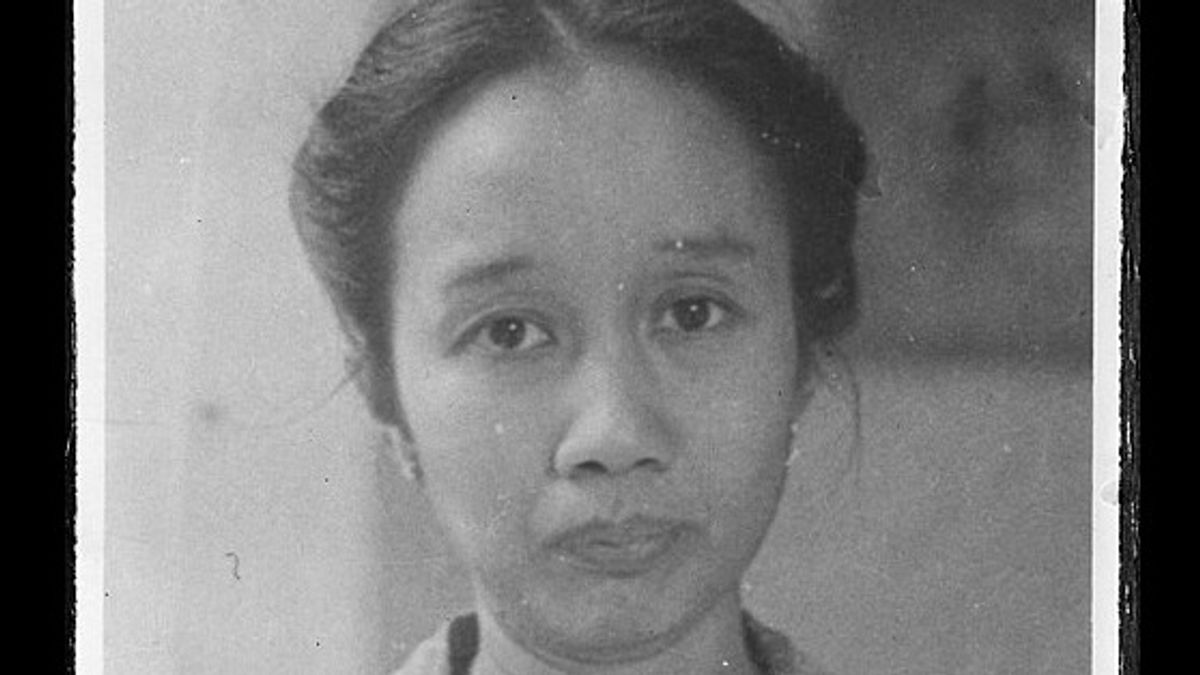


JAKARTA - The lives of women in the Dutch colonial era are not doing well. Discrimination for the sake of discrimination is often felt by women. In fact, women are the ones who feel the most impact of colonialism. Their access to their rights is too difficult.
This condition moved Maria Ulfah Santoso. The first Bumiputra woman who won a law degree moved to improve the fate of women. Gender equality is the focus. The most memorable breakthrough is her role in fighting for women's rights in the Marriage Law (UU).
The Dutch colonialism had a big impact on the fate of women. They become marginalized people. Women are considered the people who feel the most pain as colonized nations. The colonial government of the Dutch East Indies often considered them to be insulted, only useful in kitchens and mattresses.
This grief is increasing with discrimination facing women. Instead of being on par with European women, Bumiputra women are far behind the men of Bumiputra. Access is partly in the field of education and work.
Women are seen as not having to go to high school. In the end, they only serve their husbands. If they work, the salary received is much smaller than that of men. Not to mention, women are also low in the eyes of the law. They are easily divorced.
They are not allowed to protest in front of the court. They can't file for divorce to court like men. A series of pain made Itje move. Itje (as he is often called) who incidentally priyayi's son immediately established himself to defend women.
The woman who was born in Serang on August 18, 1911, saw higher education as her recitation for women. She was initially interested in becoming a doctor. However, he considered that profession could not support the life of the Bumiputra woman to be raised.
She, who was later able to access education to the Netherlands, began to strengthen her dream of becoming the first Bumiputra woman with a law certificate. Itje Street is open. She was able to take legal lessons at Leiden University and graduated in 1933.
The lecture made Itje sense. Itje eaten a lot of books. Itje became the first Bumiputra woman to win the Meester in de Rechten (Legal Work) title. This success made Itje strengthen his way back to the archipelago and fight for the interests of his people.
"I also want when I return to Indonesia to contribute my energy and thoughts to advance our people, especially women who still have a very lack of education. I also put forward how big the influence of the 'Young Youth Spill' on me when I was still in high school in Jakarta"
After that, it seems that Sutan Sjahrir already knows how I thought. I was invited to a meeting of the anticolonialism league held at the Cinema Building at Hooge Woerd in Leiden. There I was introduced to the main speaker named Jef Last. I was given a book about the story of a Chinese girl, a fighter and a follower of Mao Tse Tung (Mao Zi Dong), "said Itje in the book Mengenang Sjahrir (2013).
Itje's return to the archipelago brought a new spirit. She is increasingly sensitive to the fate of women. Moreover, the life of a married woman. She saw that a woman was easily divorced by her husband.
There are reasons for not being able to produce offspring. There are also those who are only because their wives are sick. The position of women is increasingly insulted when their husbands try to do polygamy. This action made Itje furious, not playing.
Itje realized that women in the eyes of the law could not even sue for divorce from their husbands. However, they must be able to swallow all the bad stigma from the community to become widows. Then, it is also considered a family disgrace.
The portrait made Itje move. Women should not be considered low. Itje also merged itself into the activities of women's movements. he moved to become chairman of the Investigation Committee of the Law on Islamic Marriage in 1938. He wanted the lives of women to be raised.
A series of activities then made the Indonesian Prime Minister, Sutan Sjahrir, to appoint him as Minister of Social Affairs in 1946-1947. However, his position as minister may be brief. However, his struggle to defend the rights of women through the modern Marriage Act continues.
SEE ALSO:
-
 | MEMORI
Memori Pilpres 2019: Kala Prabowo Subianto Sindir Jokowi yang Tak Pernah Bicara di Panggung PBB
27 September 2025, 07:15 -
 | MEMORI
Emmanuel Macron di Indonesia: Presiden Prancis yang Bikin Jalanan Jakarta Macet Parah
26 September 2025, 08:45 -
 | MEMORI
Kasus Ferdy Sambo: Kala Mahfud MD Kritik Reformasi Polri Alami Kemunduran
24 September 2025, 08:45 -
 | MEMORI
Ki Hajar Dewantara dan Internasionale: Nyala Api Lagu Pembakar Semangat Kaum Buruh
22 September 2025, 21:30
At its peak, Itje became part of the Investigating Committee for Marriage, Talak and Referral Law Regulations (NTR) in 1950. He is tasked with checking the existing Marriage Law. The goal is to provide change and justice for women.
The biggest role of Itje is to make women have the same right in filing for divorce. A thing that used to be can only be done by men. The result was brilliant even though the right came into effect through Law Number 1 ahun 1974 Jo Law number 7 of 1989.
It contained the wife and husband being able to file for divorce through court hearings. Andil Itje was later recognized by many parties. The lives of Indonesian women are lifted. Itje also continues to fight for women's emancipation. He does not want women to be seen as weak.
"Indeed, there are men who mock: hard work for women is the implementation of pure emancipation? OK, but isn't it that men are not required to contain and give birth? If the woman's body is damaged by hard work, what will happen to the children they are born and born? , "Itje said as quoted by Tempo magazine in his report entitled Lecture on Women (1977).
The English, Chinese, Japanese, Arabic, and French versions are automatically generated by the AI. So there may still be inaccuracies in translating, please always see Indonesian as our main language. (system supported by DigitalSiber.id)


