
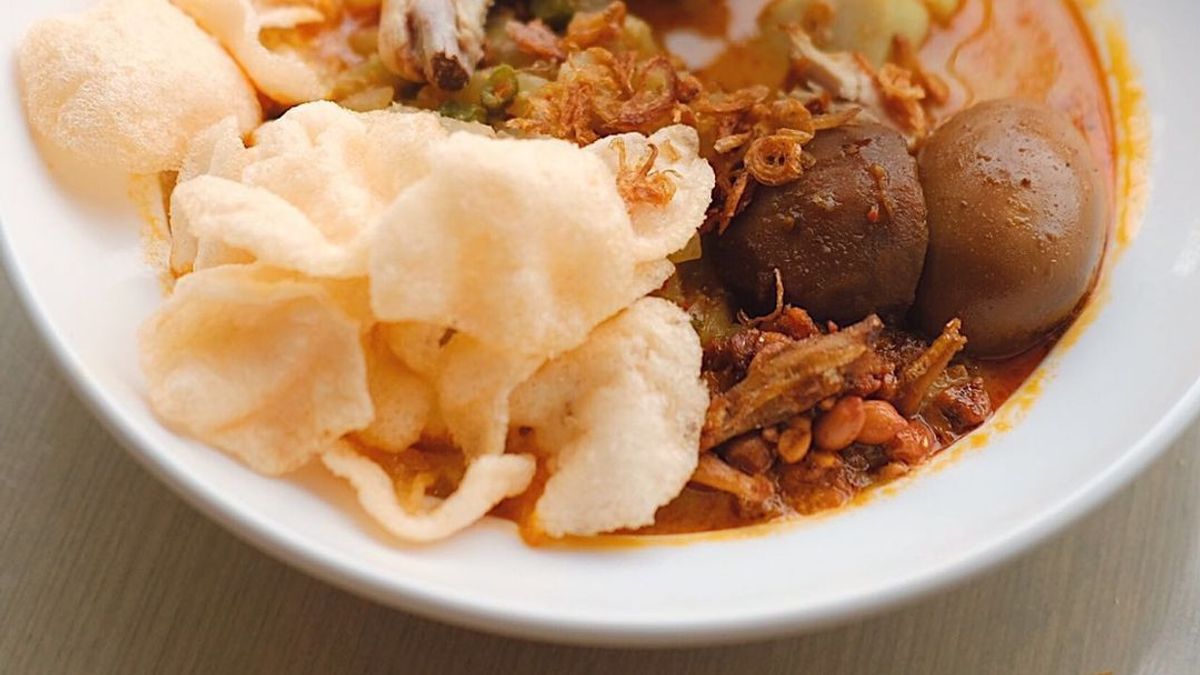


JAKARTA - Fifteen days after Chinese New Year, the Chinese community will celebrate another closing celebration known as Cap Go Meh. Just like Chinese New Year, Cap Go Meh is also not spared with the mainstay of typical culinary offerings, one of which is Cap Go Meh Lontong.
Cap Go Meh noodles are an adaptation of Indonesian Chinese people to Indonesian local cuisine, especially Java. The history of Cap Go Meh noodles began with Chinese immigrants who, when they arrived in the country, settled in port cities on the north coast of Java Island, such as Semarang, Pekalongan, Lasem, and Surabaya since the Majapahit era.
Settling on Java Island makes Chinese people familiar with one of the Nusantara foods, namely Lontong. Finally, when celebrating Cap Go Meh in the country, they also replaced Yuanxiao, a kind of onde cake that is usually served during Cap Go Meh in China, with lontong. Well, since then, the name of the Cap Go Meh Lontong dish has finally been known.
Adaptation of Indonesian Chinese Society to Nusantara Cuisine This dish is believed to be a symbol of cultural assimilation between Chinese immigrants and the indigenous people of Java. Cap Go Meh noodles are also believed to be a food that brings good luck because of the dense texture of the noodles. This is in contrast to porridge, which is forbidden to eat when celebrating Chinese New Year because it is believed to bring bad luck.
The shape of the long lontong is also considered to symbolize long life. Eggs as one of the complementary menus are also believed to be a symbol of luck, while the coconut milk soup with turmeric is believed to be a symbol of gold and luck. No wonder Lontong is chosen as a typical culinary of Cap Go Meh so that the closing of the new year celebration is shrouded with a lot of luck.
The presentation of Cap Go Meh noodles is no different from the usual noodles. The side dishes are yellow coconut milk soup, lodeh vegetables, fried ati sambal, pickles, pickled eggs, koya powder, beef abdon, sambal, and crackers.
Curious about the taste of Cap Gomeh noodles? You can make this snack yourself at home. Launching Unilever Food Solutions, Tuesday, February 13, here is the recipe and how to make Cap Go Meh noodles.
Making Opor Chicken1 Broiler Chicken, cut into 10 pieces
500 ml of thick coconut milk
2 liters of Water
20 gr Chicken flavoring
60 gr yellow chicken basic seasoning
50 ml Oil
3 leaves of lemongrass
80 gr Red chili, stir fry and grind finely
Make Lontong600 g Rice, wash and drain
20 sheets of Banana Leaves, to wrap
How to Make Sambal Goreng Hati Ampela500 gr Ampela liver, washed, drained and sliced thick
50 ml of tamarind, apply to the ampela heart, wash again
100 ml of Light Coconut Milk
10 cloves of Red Onion, mashed
8 cloves of garlic, mashed
2 cm lemongrass, mashed
30 ml Sweet Soy Sauce
Cooking Lodeh Vegetables500 gr Young jackfruit
400 g Long beans, cut 3 cm
3 bauh Eggplant, cut into cubes
50 gr of melinjo leaves
150 gr of Siam Pumpkin, cut into cubes
100 gr of cashew nuts
500 gr Young corn, cut into cubes
50 gr Red chili, cut into cubes
50 gr Green chilies, cut into cubes
6 leaves of lemongrass
30 g Rebon shrimp
1.5 liter thick coconut milk
1 liter of liquid coconut milk
30 g chicken flavoring
Making Abing Seasoning1 coconut, grated, then roasted with orange leaves until the oil comes out. Then set aside
5 leaves of lime orange leaves
10 pieces of boiled chicken eggs
50 gr Jaggery, grated
10 pieces of medium sized tofu, fried
20 gr of tamarind squeezed with a little water
How to Make Cap Gomeh NoodlesLontong
Opor ayam
Lodeh vegetables
Sambal Goreng Hati Ampela
Abing seasoning
Preparation Making Chicken Opor Stir the basic seasoning for yellow chicken, add the cut chicken, and ground red chili. Stir until the water comes out, add water, and bay leaves. Add coconut milk and chicken seasoning. Taste the taste Making Lontong Prepare the banana leaves then cut them then bake for a while. Roll it like a cake and put it in the pan and add water until it is submerged. Boil for 5-6 hours, if the water is almost finished add more hot water. If the rice feels solid it means it is cooked, then rinse with cold mature water so that the banana leaves remain clean. Then put it sideways so that there is no more water left. Making Sambal Goreng Hati Ampela Stir the seasoning until fragrant, then add red chili and stir until it changes color. Add lemongrass, bay leaves, and ampela meat, cook until soft. Add coconut milk, chicken seasoning, and sweet soy sauce. Add bay leaves and lemongrass. Cook until the coconut thickens and ready to serve. Cooking Vegetable Lodeh Young jackfruit is boiled with coconut milk until cooked. Then add the seasoning, shrimp, bay leaves, and lemongrass. Add sweet potato, melinjo fruit, chili, eggplant, beans, and thick coconut milk. Cook until cooked and remove. Making Abing Seasoning Mix all the ingredients for abing seasoning and cook into one while stirring occasionally. Cook until the seasoning thickens and is absorbed by the tofu and eggs. Add bay leaves and lemongrass. Cook until the coconut thickens and ready to serve.How to Make Cap Gomeh Noodles
Arrange the lontong on the plate. Pour the chicken broth and lodeh vegetables on top of the lontong. Pour the fried ati ampela sambal and abing seasoning. Cap Gomeh lontong is ready to be served.The English, Chinese, Japanese, Arabic, and French versions are automatically generated by the AI. So there may still be inaccuracies in translating, please always see Indonesian as our main language. (system supported by DigitalSiber.id)
Most Popular Tags
#Prabowo Subianto #donald trump #earthquake #independence day #8791 #hut riPopular
