
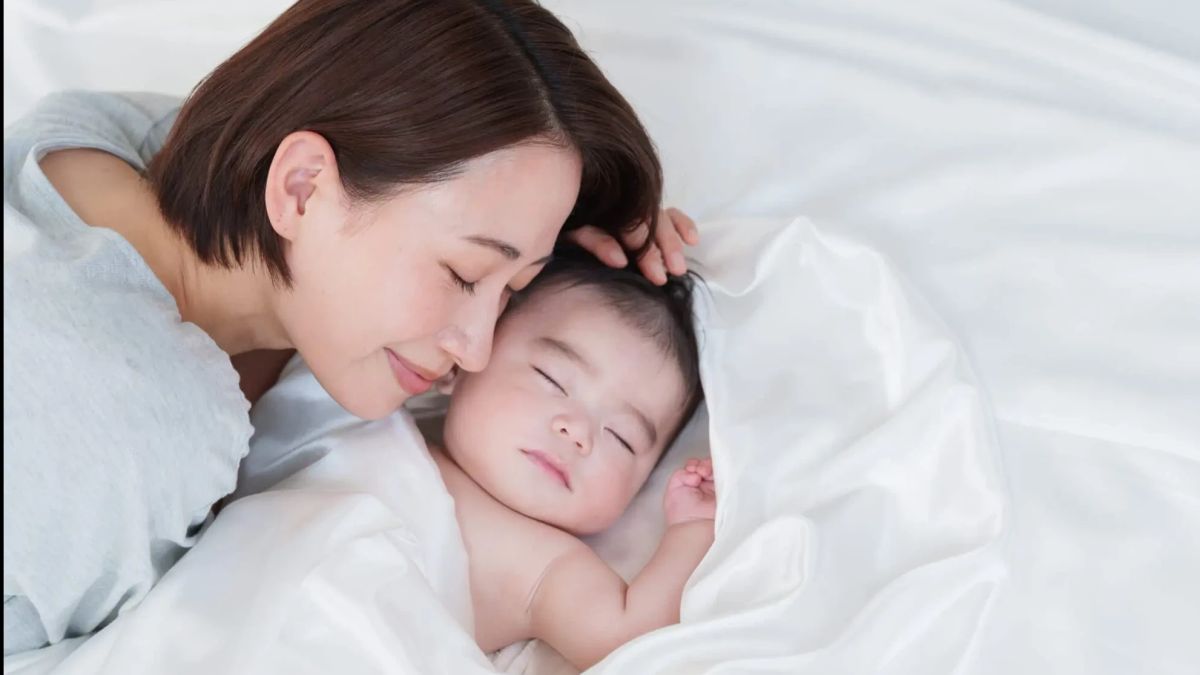


YOGYAKARTA - Making the house feel "smells" is fun, but when there is a baby, the main priority is clean air. Many people are looking for safe scents around babies because they are afraid that the smell of smoke, perfume, or room deodorants can interfere with the baby's breathing and skin.
These concerns are reasonable: babies have still-developing airways and are more sensitive to irritants in the air, especially if exposure occurs repeatedly in a closed space. Indoor air quality is important because children spend most of their time indoors.
Why are babies more sensitive to smells?Basically, "aroma" comes from particles and volatile chemical compounds (volatile) that are inhaled. In adults, mild exposure may only feel like "perfume", but in infants it can trigger nasal irritation, coughing, wheezing, or skin to be more reactive especially in infants with a history of allergies, family asthma, or atopic dermatitis. Studies and reviews on fragrance ingredients show that at certain concentrations, some fragrance compounds can be irritating or trigger respiratory sensitization.
The main principle: "the less, the safer"If you want to make sure that the aroma is safe around the baby, the safest benchmark is:
Prefer "fragrance-free" for baby and household products. Avoid sources of aroma that come from burning (smoke / fine particles). Ventilation: "healthy" fragrances usually come from fresh air, not from sprays.The American Academy of Pediatrics (AAP) emphasizes the importance of reducing exposure to chemicals from self-care products and paying attention to a healthy environment for children.
Safe Smells Around BabiesInstead of chasing "strong scents", target a neutral, clean, and well-ventilated home. A relatively safer choice:
Natural, unadded scents: the "clean" smell of fragrance-free laundry, sun-dried sheets, and good air circulation. Fragrance-free baby care products: fragrance-free soap, shampoo, lotion help reduce the risk of irritation from additional fragrances. Non-aroma deodorants: clean the source of the smell (diaper/wet cloth, milk residue), use the exhaust fan in the kitchen/bathroom, and open the windows periodically.Aromas that should be avoided near babiesHere are the sources of "fragrance" that actually often worsen the quality of indoor air:
Spray/aerosol room freshener and plug-in air freshenerScented products can release VOCs (volatile organic compounds) into the air. Research documents VOC emissions from scented products indoors, including "baby" products that are scented.
2. Aromatherapy candles and incense/incense
Burning produces smoke and fine particles that are less ideal for baby's breath. Air quality authorities recommend avoiding burning candles/incense in the house as a step to reduce indoor air pollution.
3. Diffuser essential oil (especially in the baby room)
Essential oils are highly concentrated. A number of clinical guidelines emphasize caution, and there are even health service guidelines that explicitly state that essential oils should not be used on infants.
Medical sources also remind that the use of essential oils in children requires vigilance (for example, the risk of toxicity if swallowed and the potential for certain effects at a young age).
The point: a safe scent around the baby is a scent that does not come from strong perfume ingredients, is not smoke, and does not stay long in a closed space. In addition, do you know When Can Children Wear Perfume?
So after knowing the safe aromas around the baby, check out other interesting news at VOI.ID, it's time to revolutionize the news!
The English, Chinese, Japanese, Arabic, and French versions are automatically generated by the AI. So there may still be inaccuracies in translating, please always see Indonesian as our main language. (system supported by DigitalSiber.id)


