
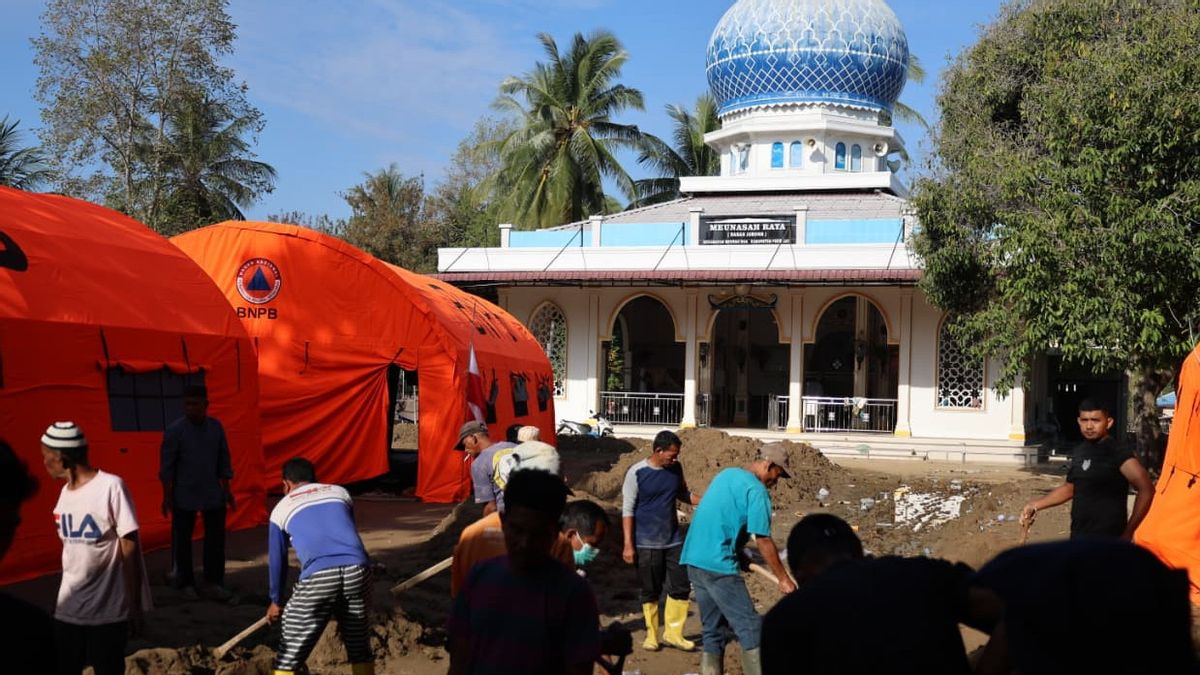


JAKARTA - Post-disaster recovery often focuses only on the development of physical infrastructure such as roads and bridges. However, after the Aceh hydro-meteorological disaster of November 2025, the government through the Ministry of Culture launched a different strategy called the Aceh Cultural Ecosystem Recovery Unit (SPEK) Work Scheme 2026.
This step is not just a ceremonial. SPEK is designed to restore the "soul" of Aceh which was affected when people's houses and belongings were destroyed.
Impact Data: 1,471 Cultural Actors Affected by the Disaster Not only damaged objects, but also threatened the continuity of traditions. The Regional Cultural Preservation Agency (BPK) Region I recorded significant impacts:
1.471 cultural entities affected: Including artists, culturalists, cultural heritage caretakers, to cultural village companions.
Heritage at Risk: Many cultural heritage sites require a quick assessment to prevent permanent damage.
Generation Crisis: Arts and culture students from 17 regencies/cities lost facilities to continue their work.
Art as a Trauma Treatment One of the unique points in SPEK Aceh is the use of traditional games as a trauma healing medium for children. Involving 385 artists actively, this program proves that art has a healing power that is not possessed by ordinary logistical assistance.
"Culture must be positioned as the foundation of social resilience, not just a complement to physical recovery," the narrative in the scheme states.
The English, Chinese, Japanese, Arabic, and French versions are automatically generated by the AI. So there may still be inaccuracies in translating, please always see Indonesian as our main language. (system supported by DigitalSiber.id)


