
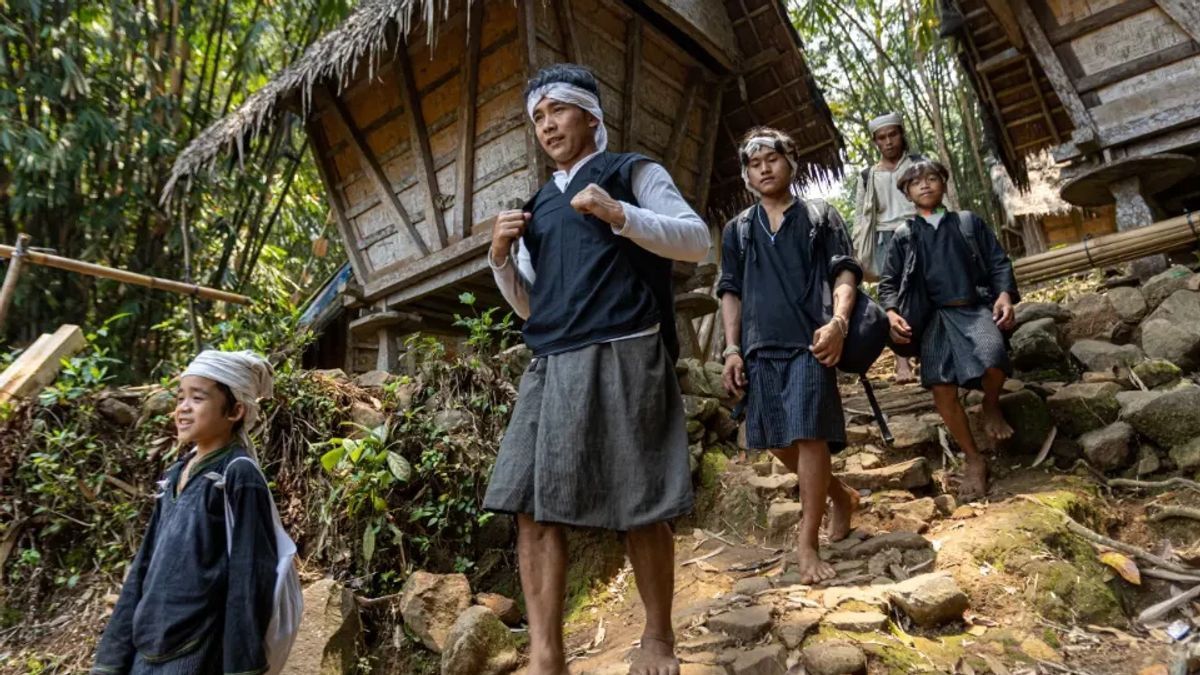


YOGYAKARTA - The Kanekes people, or often referred to as the Baduy tribe, are a Sunda indigenous group living in Lebak Regency, Banten. The Baduy people are already famous as a group that still holds on to the traditions and culture of their ancestors. One of them is the kawalu adat ceremony. What is the kawalu ritual? Kawalu becomes a manifestation and expression of gratitude for the success of agriculture, which is realized by fasting. This traditional ceremony is one way for the Baduy people to maintain the pikukuh karuhun.
What is Kawalu Ritual?Quoted from a writing, Seba, the Peak of the Baduy Community Ritual in Lebak Regency, Banten Province, written by Nandang Rusnandar, who quoted Kurnia, revealed that the pikukuh karuhun is a doctrine that requires them to undergo various things as the mandate of their ancestors.
Quoted from the culture.kemendikbud.go.id page, Kawalu comes from the word walu which means back or home. This ceremony can also be called ngukus or burning incense to accompany the worship offerings. In general, at every Kawalu event, incense is always burned as a form of respect for the ancestors.
Implemented three times a yearThe Baduy community carries out the kawalu ritual three times a year, including in the months of Kasa, Karo, and Katiga. The meaning of this fasting is to cleanse oneself from bad desires. In the month of Kasa, they carry out the kawalu tembey or early kawalu. On the 16th, all Baduy people will fast. They do this fasting for one night until the 17th.
The implementation of the Kawalu fasting of the Kanekes people starts at 5 pm the day before H, and ends at 5 pm the next day. During fasting, they refrain from eating and drinking from the beginning of fasting until the end of breaking the fast.
On that date, they will change their clothes to new and clean ones. Then a series of rituals are carried out, such as making a meal (especially for women), bathing in the river, reading mantras by the puun (chief of the Baduy custom), and closed with a meal (breaking the fast). Fasting in the Karo month is also called kawalu tengah, while in the Katiga month it is called kawalu tutug.
Ngalaksa ritualIn the tutug village, Baduy residents, both tungtu (Baduy Dalam) and panamping (Baduy Luar), hold a ritual ngalaksa or make typical laksa food. This procession is carried out by mothers. In the writing of the Seba Ceremony in the Baduy Society, Endang Supriatna explains, laksa is a food made from rice flour and shaped like noodles, then printed into a dough place called sangku.
Nandang also wrote that people who make laksa must be people who have a clean and honest heart.
When holding a ngalaksa, Baduy residents use it to count the number of residents. Technically, each head of household is required to hand over the rice stalk ties to the local village kokolot (elders) according to the number of members of his or her family.
This is an overview of what the kawalu ritual is, which is carried out by the Baduy people. Hopefully useful. Visit VOI.id for other interesting information.
The English, Chinese, Japanese, Arabic, and French versions are automatically generated by the AI. So there may still be inaccuracies in translating, please always see Indonesian as our main language. (system supported by DigitalSiber.id)
Popular


