
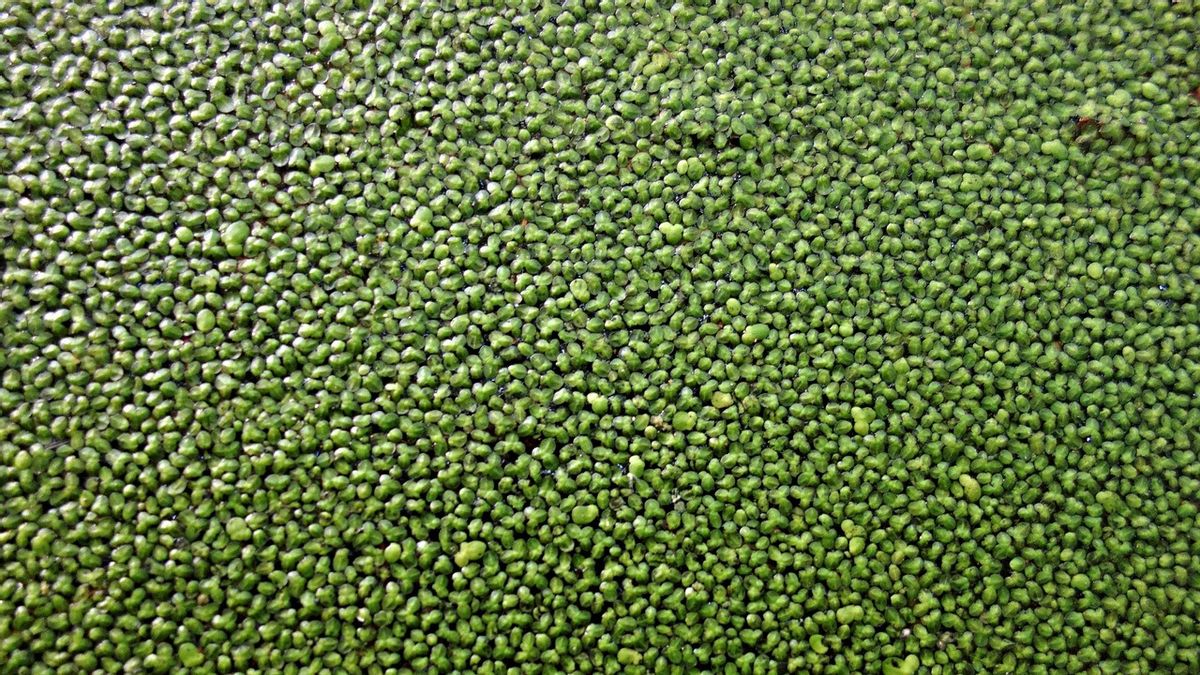


YOGYAKARTA - Some of us may think that the smallest fruit in the world is raisins, blueberries, or cherries. Although small in size, these fruits do not carry the title of the smallest fruit in the world.
In the world of botany, there are fruits that are much smaller than the fruits that we have known so far. So, what kind of fruit is meant? Check out the complete information in the article below.
The Name of the Smallest Fruit in the WorldQuoted from the Guinness World Records website, the smallest fruit in the world is a fruit from the duckweed plant (a small flowering plant that lives in water) which belongs to the genus Wolffia. Because the size of the plant's body is less than one millimeter, the fruit it produces seems to occupy most of its parent body.
For the Wolffia augusta species, the fruit is only about 0.25 mm or equivalent to 1/100 inch in size, with a weight of about 70 micrograms (1/400,000 ounce).
This plant comes from the Lemnaceae family and can be found in the North American and South American regions.
Interestingly, this fruit is even smaller than a single cell in many plants and animals, and smaller than an average grain of table salt.
In the species Wolffia globossa, also known as Asian watermal, the size of the plant is only about one-third of an inch or 0.8 cm, while for the fruit it ranges from 0.7 to 1.5 millimeters or the size of a thief ant (oil ant).
If placed on the palm of the hand, this fruit only looks like a small dot that is almost invisible.
Because of its very small size, this fruit is certainly not suitable for consumption as a snack.
The Nutritional Content of the Smallest Fruit in the WorldDespite being very small, the fruit produced by duckweed plants contains incredible nutrients.
Research published in the journal Food Chemistry found that this little fruit is rich in protein and omega-3 fatty acids. Wolffia globosa contains more than 45 percent protein and provides about 15 types of essential amino acids.
In one serving of about 2/3 cup, this superfood offers 5 grams of protein, 4 grams of fiber, and only 45 calories. The abundance of its nutritional content seems to be out of proportion with its very small size, quoted from the Clean Eating Mag page.
Further research found more advantages from this tiny plant. Wolffia globosa is also high in calcium, magnesium, iron, selenium, and manganese. In addition, there are also phytosterols, which are nutrients related to cholesterol. The content of vitamins is also very impressive, because it contains vitamins A, E, B12, and B complex vitamins.
This fruit contains many vitamins and minerals that the body needs every day, so it provides very high nutritional value in one serving. Therefore, Wolffia globosa has the potential to become a new superfood in the future when it is widely available.
That's the information about the smallest fruit in the world. Visit VOI.id to get updates on other selected news.
The English, Chinese, Japanese, Arabic, and French versions are automatically generated by the AI. So there may still be inaccuracies in translating, please always see Indonesian as our main language. (system supported by DigitalSiber.id)


