
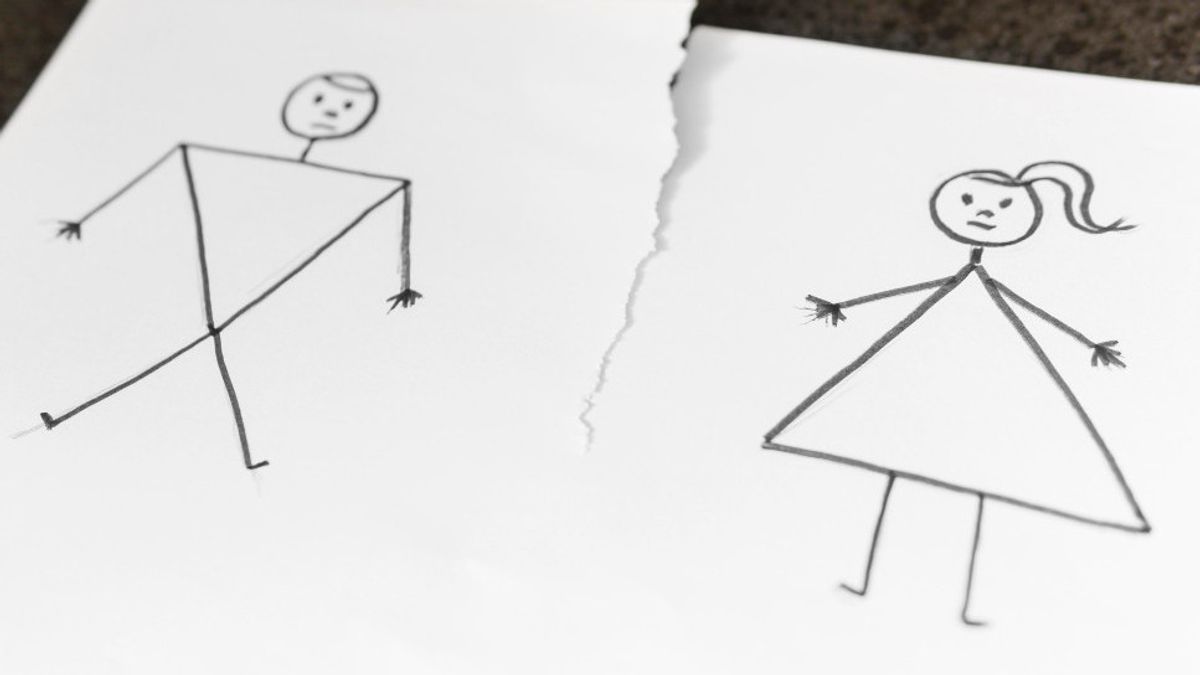


YOGYAKARTA - In the dynamics of modern relationships, the term cut off is increasingly used, especially when someone chooses to keep a distance for emotional tranquility. However, what is cut off in a relationship, and why is it often equated with ghosting? For some people, cut off is not a form of disappearing without empathy, but a psychological decision born out of the need to maintain self-boundaries. Understanding the meaning and reasons behind cut off helps you see relationships from a more mature and emotionally healthy perspective.
What is cut off in a relationship?In general, the cut off in a relationship is a conscious decision to stop communicating or interacting with someone because the relationship is no longer considered emotionally healthy. Launching E-Notalone, Thursday, January 1, this decision can occur in romantic relationships, friendships, even family relationships. Cut off is not always done because of a major conflict, but because of the accumulation of fatigue, not being appreciated, or continuing to be in a pattern of painful relationships.
From a psychological point of view, this action is often related to the need for self-protection. When a relationship drains more emotional energy than it gives support, the brain naturally encourages individuals to create distance as a form of survival mechanism. In this context, cut off is not an impulsive action, but rather the result of a long enough reflection.
After understanding what a cut off in a relationship is, it is important to look at the reasons behind the decision. Much of the literature on relationship psychology explains that cut off often arises when personal boundaries are repeatedly violated. When communication no longer goes well and attempts to improve the relationship always end in the same conflict, one may feel the need to stop completely.
In addition, cut off is also often done to maintain mental health. Emotionally stressful relationships can trigger prolonged stress, anxiety, and even lower self-confidence. In this condition, staying away does not mean giving up, but becoming a way to restore emotional balance and re-recognize your own self-worth.
Cut off is not ghosting, here's the differenceAlthough often equated, cut off and ghosting have quite a clear difference. Ghosting is the act of suddenly disappearing without explanation, where someone just cuts off communication and leaves the other party in confusion. There is no clarity, no closure, and often causes prolonged emotional wounds.
Meanwhile, the cut off is usually done with more structured awareness and reasons. Although it is not always accompanied by a long explanation, this decision is born from a mature internal process. In some cases, the cut off even starts with honest communication, although it still feels heavy for both parties.
Emotional impact of cut off and ghostingSpeaking of its impact, ghosting tends to leave a big question mark for the person left behind. This uncertainty makes it difficult for someone to get emotional closure and continue to question what went wrong in the relationship. Not infrequently, this has an impact on self-confidence and how to view future relationships.
On the other hand, cut off more often gives internal clarity to the party who does it. Although it can still cause guilt or loss, this decision helps a person feel more in control of his or her life and emotions. From a psychological point of view, the clarity of the limit is often healthier than a relationship that continues without direction.
When can cut off be a healthy choice?Not all conflicts have to end with a cut off. However, when the relationship continues to hurt emotionally and shows no change, a cut off can be a realistic option. In this context, getting away is not about breaking off the relationship rudely, but about stopping the pattern that is self-destructive.
Choosing a cut off also requires emotional maturity. You need to understand that maintaining mental health is not a form of egoism, but a responsibility to yourself. Healthy relationships should give a safe space, not fear or fatigue that keeps repeating.
In the end, understanding what a cut off in a relationship is helps you realize that not all distance means indifference. Unlike ghosting which often leaves emotional confusion, cut off generally comes from an awareness of self-limitation and mental health. In the context of relationships and psychology, this decision can be a reflective step to maintain emotional balance and quality of life. Healthy relationships are not always about surviving, but also about knowing when to give space.
The English, Chinese, Japanese, Arabic, and French versions are automatically generated by the AI. So there may still be inaccuracies in translating, please always see Indonesian as our main language. (system supported by DigitalSiber.id)


