
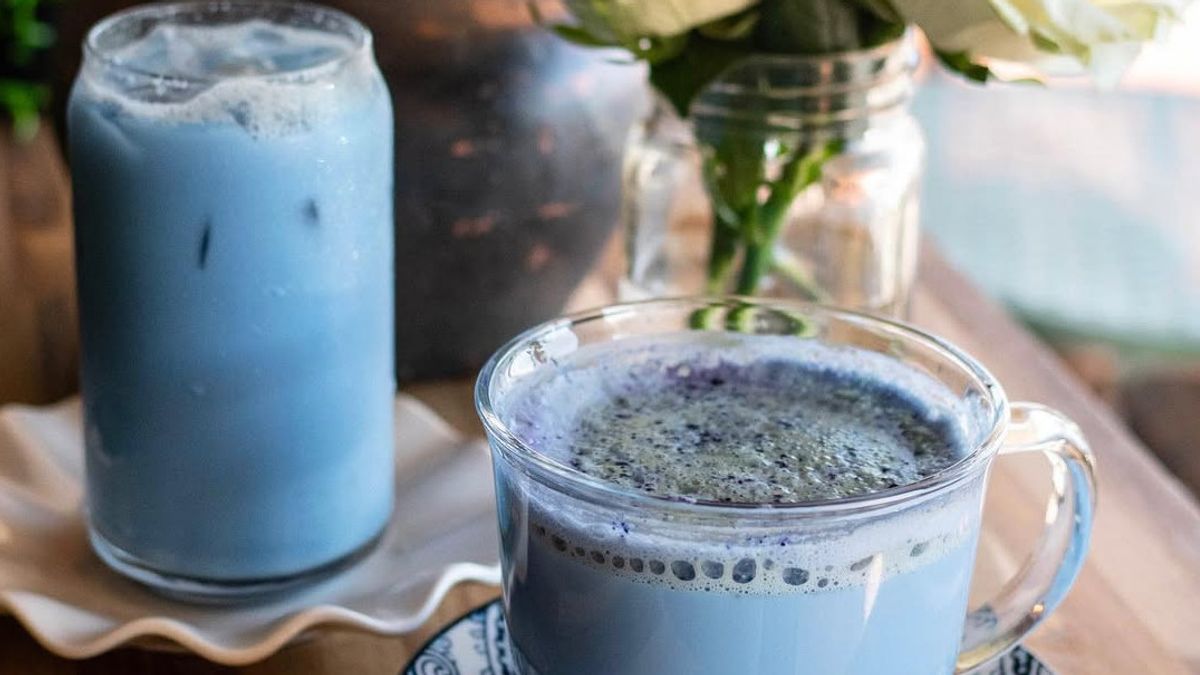


JAKARTA - Lately, a bright blue drink called blue matcha is increasingly seen in cafes, social media, and trendy beverage products. At first glance, the name sounds like a new variant of green matcha. However, in fact, blue matcha is not at all derived from tea leaves.
Although it contains the word matcha, the main ingredient of blue matcha is the butterfly pea flower with the scientific name Clitoria ternatea. Reported from the Matcha Direct page, the blue color comes from the natural pigment in the flower, which is dried and ground into a powder resembling matcha.
Turmeric flowers have long been used in Southeast Asia, especially Thailand, as a natural food coloring. The brewed water is often used to give color to traditional cakes, rice, and drinks. In recent years, its popularity has increased due to its unique and visually appealing appearance.
The main attraction of blue matcha lies in its color that can change. The content of anthocyanin in the lotus flower is sensitive to acidity levels. When lemon juice or other acidic ingredients are added, the blue color can turn purple. This effect is what makes blue matcha often viral on social media.
Although it looks like tea, blue matcha is not used in the Japanese tea drinking tradition because it is not the original matcha.
The most obvious difference between blue matcha and green matcha lies in its ingredients and content. Green matcha is made from finely ground tea leaves and contains caffeine. While blue matcha comes from the extract of the lotus flower and does not contain caffeine.
Both contain antioxidants. Green matcha is rich in catechins, while blue matcha contains anthocyanins. Because it is caffeine-free, blue matcha is often chosen by those who want to enjoy an interesting colored drink without stimulant effects.
The blue pigment from the blue lotus flower is known to be quite stable when dissolved in water and has been approved as a natural food coloring in various countries. As interest in natural ingredients increases, blue matcha is an attractive alternative amid the trend of reducing synthetic dyes.
Even so, the popularity of blue matcha is more driven by its appearance than its taste. Therefore, this drink is more often presented as a modern creation than a traditional drink.
Although research in humans is still limited, it is known that passion flower contains antioxidants that are believed to help fight free radicals. Traditionally, this flower is also used to maintain eye, skin, and hair health. Several animal studies have shown potential benefits in helping control inflammation and fat metabolism.
Although it is not derived from green tea, blue matcha offers a different experience through its striking blue color and caffeine-free. No wonder this drink is increasingly favored as a unique alternative for those who want to try something different from matcha in general.
The English, Chinese, Japanese, Arabic, and French versions are automatically generated by the AI. So there may still be inaccuracies in translating, please always see Indonesian as our main language. (system supported by DigitalSiber.id)


